State Lawmakers Will Decide Who Pays for New Power Demand. Decide It First in Your Own Building.
As data centers add demand to the grid, someone will have to cover the cost of new power plants and transmission lines. Owners who know when and how their buildings use power will be ready for whatever their state decides, and can make fairer cost decisions inside their own buildings today.
Someone is going to pay for the power plants and transmission lines that new data centers need, and in many states that question is still open. Whatever gets decided will show up on commercial utility bills, including yours. The owners who handle it best will be the ones who already know when their buildings draw power and which tenants are drawing it.
Cities have been handling this on their own
So far, cities and counties have been the ones dealing with data centers. The Texas Energy and Power Newsletter reports that local governments have worked through the tradeoffs without comprehensive state or federal policy to guide them. A data center brings jobs and tax base. It also strains local power, water, and land, and each community has had to weigh that on its own.
The newsletter also notes that it isn't clear how much authority local governments actually have over data center development. When a city can't be sure its rules will hold up, I think pressure builds for state lawmakers and regulators to step in. Each state will move at its own pace, and some may never act.
That's where it reaches you. A city council decides where a data center goes. A state decision can change how utility costs are divided among different kinds of customers, and that changes what your building pays for each hour of power it uses.
The one fact every possible rule depends on
Nobody can tell you how your state will rule, and the newsletter doesn't try. A change could come as higher charges at peak hours, new programs that pay you to use less at certain times, or a different split between large users and everyone else.
Each of those turns on the same fact about your building: how its power use rises and falls across the day and the year. A building that peaks on hot summer afternoons will feel a peak-hour charge very differently from one that runs steady around the clock. If you have that pattern, you can read a new rule and know what it means for your property within a day. If you don't, you find out from the next bill.
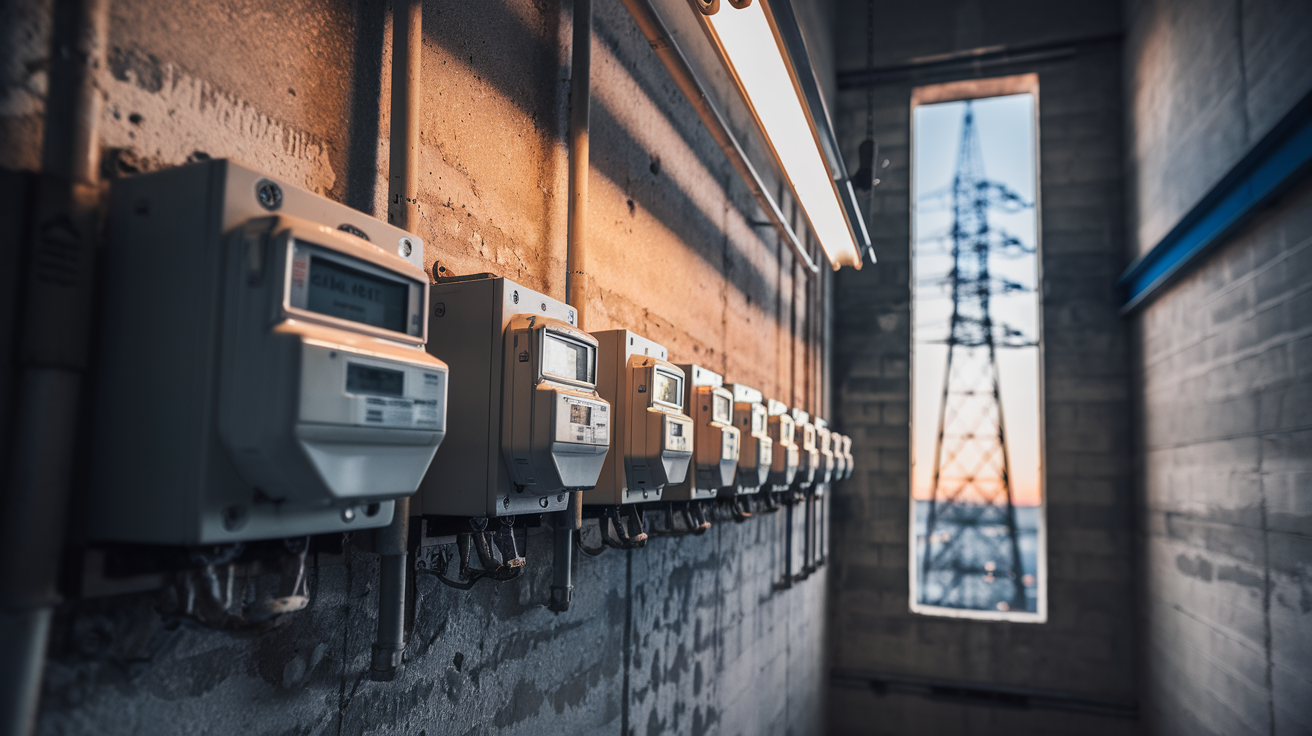
Most owners don't have it. The interval data, meaning the meter readings taken at short, regular intervals through the day, usually sits in a utility portal, the building automation system, or a vendor's platform. Somebody set up the login years ago, and nobody exports the history on a schedule. The monthly bill gets paid and filed, and that's the only record anyone looks at.
If you don't own your data and digital infrastructure, your vendors do. Here, that means the record of how your building uses power lives behind someone else's login, in a format you can't easily get out. Your building produces that data every day, and you should be able to pull it up whenever a decision calls for it.
What the data does for you before any rule changes
You don't have to wait for your state. Two decisions get better as soon as you have the usage pattern.
Tenant allocation. The data center fight is a fairness question: should the customers creating new demand carry more of the cost? Your building faces the same question on a smaller scale. A dental office that closes at five and a call center that runs all night use very different amounts of power. If you split the bill by square footage, the dentist is helping pay for the call center. Sub-metering lets you split it by what each tenant actually draws, and the tenant using the power usually understands why it should pay.
Peak timing. On many commercial bills, part of the charge is set by the building's single busiest moment. Once you can see that moment, small timing changes become possible. Starting the HVAC a little later on hot mornings, for example, might keep the building from stacking onto the peak with almost no effect on comfort. Whether that works in your building depends on your own data, and a few weeks of testing will tell you.
Both show up in NOI, the income left after operating expenses, and buyers and lenders value your building as a multiple of NOI. A lower utility line can be worth more at your next refinance or sale than the monthly savings suggest. How much of it you keep depends on your leases. In a triple-net building much of it passes through to tenants, so confirm the split with your team before you put it in a forecast.
As I said on Peak Property Performance Ep. 50, "Optimism cannot become a substitute for evidence." That goes for a new tariff as much as for anything else you decide about a building.
Where Property Intelligence™ and Property Brain™ fit
You can start with the records you already have. With Property Intelligence™, you compare your utilities, insurance readiness, and occupancy with applicable benchmarks and get prioritized plays. It works from your bills and exports, so nothing in the building has to change first. For this topic, the first report tells you whether your utility costs are out of line with similar buildings and which plays to work on first.
A benchmark tells you where you stand, and the next question is usually why. When your electricity costs run high and the bills can't explain it, that's the job for Property Brain™: analyze data across your property's systems to investigate how the building is operating and answer questions the benchmark leaves open. That's where the interval data, the HVAC schedules, and the occupancy records come together, and where you'd test whether a later start actually moves the peak. The usage history also ends up in a record you control, so it stays with you when a vendor or property manager changes.
If you own several buildings in a state that takes up this question, a new rule will reach all of them at once. Portfolio Brain™ lets you analyze across those properties to compare performance and see where a change that works in one building applies to the others.
Where do you want to start?
If your goal is to lower your operating expenses, or to be ready for your next refinance or sale before a new rate lands, start with Property Intelligence™ on one property and see what the first report shows.
Own your data & digital infrastructure. Operate with strategic foresight. Build for the long game.
Bill Douglas is the CEO of OpticWise, where he leads the company's mission to help commercial real estate owners take control of their data and digital infrastructure. With over three decades of entrepreneurial experience and a track record of leading companies onto the Inc. 5000 list, Bill brings a systems-minded, owner-first approach to everything OpticWise delivers. He holds a mechanical engineering degree from Georgia Tech and is a graduate of MIT's Enterprise Forum Entrepreneurial Masters Program. Bill is the co-author of Peak Property Performance (Fast Company Press).
Your Next Step
Where do you want to start?
Pick the goal that matters most. We start with Property Intelligence™ on one of your properties, month to month, and you see what the first report shows.