
Your team is using AI. Why isn't NOI moving?
Your team is probably saving hours every week with AI, and your operating statement probably looks the way it did a year ago. Utility costs, recoveries, insurance and vendor spend haven't moved because someone opened a chat window.
The time savings are real, and they show up in faster drafts and shorter meetings. Net operating income is a different number: it is what the property earns after paying its operating expenses, and it is what your lender, your buyer and your investors look at. Saved hours only change that number when someone uses them to fix something in the building.
A recent survey shows where teams are stuck. Ren's survey of CRE professionals, reported by CRE Daily and summarized by The Real Estate Solutionist, found that 67% of respondents consider themselves experts at writing prompts. Only 23% feel expert at connecting AI to the tools they use every day, and just 5% said their current tools meet their needs. The survey measured how people rate their own skills. My guess is that it also describes where most firms are: comfortable asking AI questions, and much less sure how to get it into the systems where the building's records live.
That matters more as firms start using AI to assemble reports, because reporting depends on records, and most AI tools can't get to them.
Why answers don't turn into operating results
Take recoveries. The ledger shows what you billed tenants for their share of operating expenses. The lease says what you were allowed to bill: which expenses count, which are capped, and how the share is calculated. When the two disagree, either you under-billed and lost income, or you over-billed and owe a tenant a refund. Your team only finds out by reading both side by side.
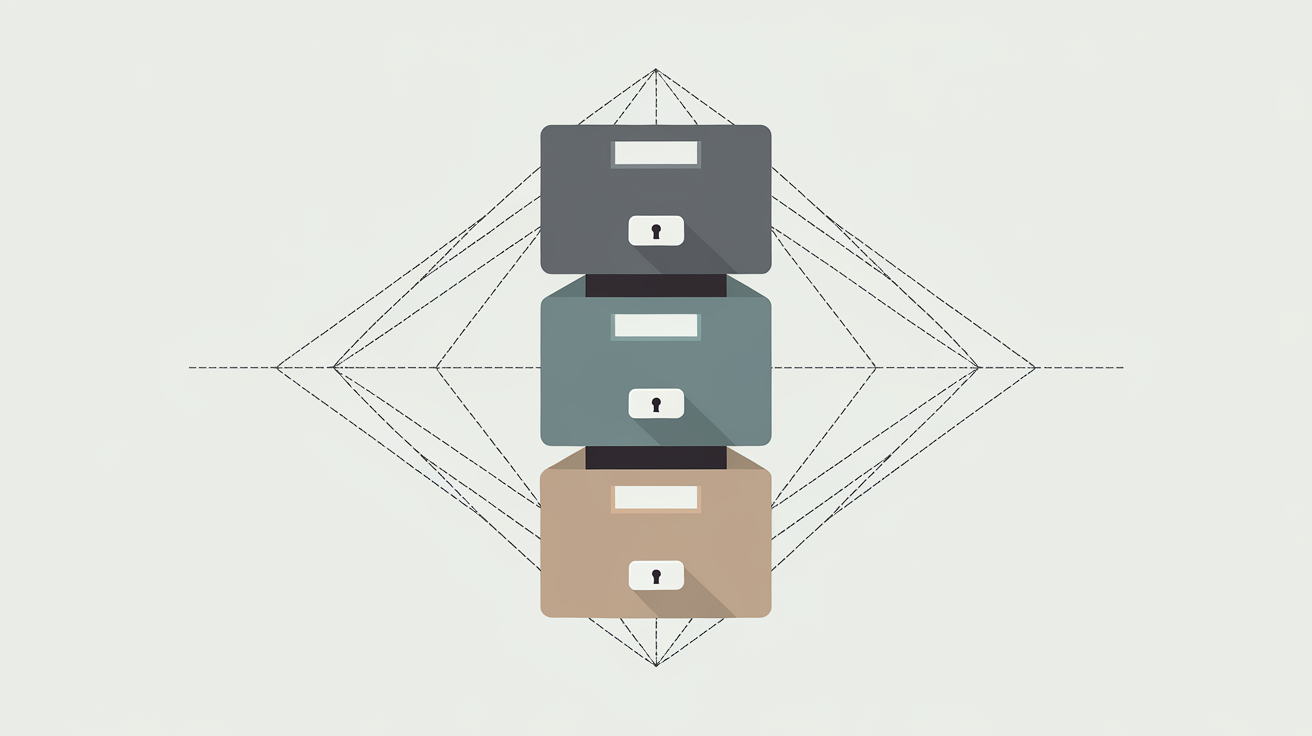
In most buildings, those records sit in separate places. The leases and ledger sit in the property management system. Utility data sits with the utility or a billing service. Building data sits in the building management system, the meters and the access control platform. Each one comes from a different vendor, with its own login and its own names for the same suite or tenant. It's like keeping the two halves of every receipt in different drawers, each locked by a different person. You own the drawers, but putting a receipt back together still takes a request, a wait and a spreadsheet.
Put an AI tool on top of that arrangement and it does useful work inside any single system. It can summarize a lease, draft a tenant notice or explain a line on a report. What it can't do is check a recovery invoice against the lease that governs it, because it never sees the two together. The hours it saves go into writing and summarizing, and the recovery errors stay where they were.
You can wait for vendors to build more integrations between their products. Every one of those connections is a business decision another company makes on its own schedule, and that company can slow down, charge for or drop the connection. If you don't own your data & digital infrastructure, your vendors do.
The confident wrong number
AI also creates a new risk. Ask it to assemble figures from records it can't check, and it still produces an answer that looks finished.
Thesis Driven described the work involved when it announced a workshop on automating investor reporting. At smaller firms, investor reporting falls to the partners and whoever keeps the books. Someone chases reports from the property managers, someone lines up rent rolls that arrive in different formats, and the capital accounts get rolled forward in a spreadsheet. AI can now take on much of that assembly. A wrong figure looks exactly as polished as a right one, though, and once the partners sign the report, it's theirs.
You've probably seen a version of this without AI. The asset manager asks for certain KPIs and gets them, cleaned up and summarized, with the context that would explain them left out. Nobody can say which system a figure came from or what was adjusted along the way. AI produces that kind of report faster, and the polished writing around an error makes it harder to spot.
Software companies are starting to ask whether AI can check property data before it goes out. Re-Leased, a property management software company, recently ran a webinar on that question, promoted through Propmodo. That kind of check works best when it can trace a number back to the record behind it.
Here is what's at risk if it can't. A figure in an investor letter becomes your figure once you sign it. A figure in a lender package helps decide how much the lender will lend. If a buyer's diligence team later finds numbers that don't trace back to source records, they will use that to ask for a lower price.
Three tests for your records
You can ask your team about three things this month.
The first is access. Can you get the records without asking a vendor for permission? That means export rights written into your contracts, admin credentials held by the owner, and history that stays with the building when a vendor or a property manager changes.
The second is matching. When the records come out, does a suite, a meter or a tenant have the same name in the lease file, the ledger and the utility data? If it doesn't, every report starts with someone matching names by hand, and an AI tool would face the same problem.
The third is tracing. Can every figure in a report be followed back to the record it came from? Does the history go back far enough to show a trend? And does someone own the written policy for how AI may use the data and who signs off on what it produces?
Go back to recoveries. When the leases, the ledger and the expense records share names and sit where your team can pull them, reconciling them could become a monthly routine. An AI tool could flag every invoice that doesn't match its lease, and a person could decide what to do about each one before the annual reconciliation turns it into a tenant dispute.
That routine shows up directly in what the property is worth. A buyer prices a property roughly as its annual net operating income divided by the cap rate. At a 6% cap rate, each dollar of income the building keeps every year adds about $16.67 to the price. Income lost through billing errors lowers that price, and a buyer who finds the errors in diligence will price in the cost of fixing them.
The order of operations, and where to start
Peak Property Performance® lays out the order this work happens in, starting with what you own and ending with which tools act on it. We call it the PPP 5C™ plan: Clarify, Connect, Collect, Coordinate and Control.
Clarify comes first. You define what success looks like, map who owns which records, find where money is leaking, and document what is trustworthy and portable. Connect sets up secure, owner-controlled connectivity that repeats from one property to the next. Collect captures and normalizes the data into a consistent model you can reuse. Coordinate sets the rules: who can access the data, how it is checked, how long history is kept and how it may be used. Control is the last step. Any decision engine, whether a vendor's platform, your own analytics or any large language model, acts on that data under your permissions. Since the foundation is yours, you could change AI tools next year without rebuilding it.
Each of the three tests sits inside that sequence. Access is settled in Clarify and Connect, matching in Collect, and tracing in Coordinate. AI comes in at Control, once the records it depends on can be pulled, matched and checked.
You can start on one property. There are three tiers, and each answers a bigger question:
- Property Intelligence™: Compare your utilities, insurance readiness, and occupancy with applicable benchmarks and get prioritized plays.
- Property Brain™: Analyze data across your property's systems to investigate how the building is operating and answer questions the benchmark leaves open.
- Portfolio Brain™: Analyze across properties to compare performance, investigate shared issues, and assess where an improvement applies elsewhere.
If your goal is to give your investors and partners clearer, more reliable answers, put one property on Property Intelligence™, month to month, with a money-back guarantee, and see what the first report shows you about the records behind the numbers you sign.
Own your data & digital infrastructure. Operate with strategic foresight. Build for the long game.