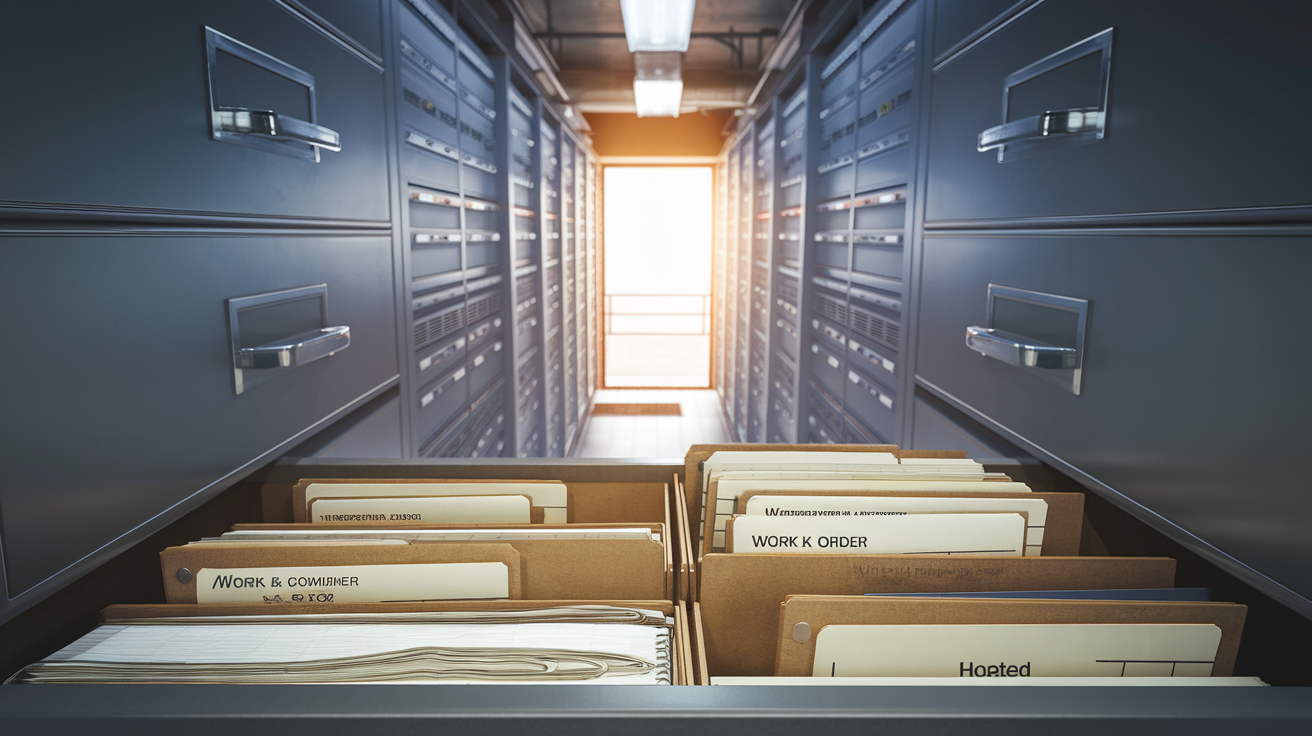
Someone wants to buy your building's history
Peter Lohmann writes a property management newsletter. In an issue titled "Frontier AI Labs are Buying PM Operational Data," he describes an email offering to buy property management operating records. He took it for a scam. When he looked into it, he found the offer was real.

Those records cover every work order your team opened and closed, every vendor ticket, every leasing conversation that got logged, and every meter reading your buildings have produced, often going back years. Together they are the day-to-day account of how your properties run. If someone is willing to pay for that account, you should know who would be on the selling end of the deal. In a lot of buildings, I don't think it would be the owner.
Why operating records are worth paying for
Brian Potter at Construction Physics writes that the enormous advance in AI capabilities has largely been driven by the availability of vast amounts of training data. That explains the email. The detail that teaches a model how real buildings run sits inside operating systems, behind logins. It includes how long a leak took to fix, which unit called four times about the same thermostat, and how a vendor's response time changed across a year. Nobody can scrape it off a website, so whoever controls access to it has something a buyer wants.
Some of the most useful operating detail never gets recorded at all. A CRETI case study on Grotto points out that multifamily has spent a decade investing in technology across the leasing process. Even so, the conversations between prospective renters and the people converting them remain largely unmeasured. Those conversations are where a prospect becomes a resident, and most owners keep no lasting record of them.
When I say "operating history," then, I mean three kinds of record: what your building systems report, what your teams and vendors do in response, and what passes between your people and your residents or tenants. Some of it you generate today and store in a vendor's platform. Some of it nobody captures.
Who actually holds the keys
You can hold legal title to your data and still have no practical control over it, and practical control decides who can use the data, sell it, or shut it off. Three questions will tell you where you stand. Whose admin credentials does each platform run under? Who has the right to export the full history in a usable format? Whose name is on the contract with the vendor?
For many owners, the answers are uncomfortable. The platforms run under the vendor's credentials. The export rights are vague, or they cover a summary report and leave out the underlying records. In a lot of third-party management arrangements, the management company holds the property management system contract directly. You're accountable for the asset's performance, and you have no contract with the vendor holding its data.
If you don't own your data & digital infrastructure, your vendors do.
The RealPage and EliseAI dispute shows how that plays out. Multifamily Dive reported that RealPage paused its integration with EliseAI. RealPage CEO Dirk Wakeham said EliseAI never submitted its Apollo AI agent for review. He also said he was getting reports it was "actively trying to work around our controls." Suppose you ran apartments on that platform and wanted EliseAI's agent working with your leasing data. Whether you could connect it depended on RealPage's review process and its business relationships, and the pause took that connection away for as long as the dispute lasts.
A change of management company shows the same problem from the inside. An owner brings in a new operator. The new team logs in to a fresh instance of the software, and the work orders, resident notes, and vendor tickets stay behind with the old contract. The new team builds a record from day one. When the asset manager later asks why repair costs on one building climbed, nobody can look back past the switch.
What control is worth at renewal, refi, and exit
When you don't control the operating history, four decisions get harder, and each one costs you money.
The first is choosing your AI. A tool that forecasts maintenance, scores leasing performance, or flags utility waste has to read that history. When a platform decides which tools can connect and on what terms, it narrows your choices before you've evaluated a single product.
The second is renewal terms. A vendor's pricing reflects how expensive it would be for you to leave. If moving means abandoning years of records, the vendor knows that switching would cost you more than a price increase, and it prices the renewal with that in mind. An owner who can export the full history in a usable format can seriously consider a competing bid, and the incumbent knows that too.
The third is continuity. Machine learning needs six to nine months of history before it starts finding trends you can act on. Each time the history resets, after a vendor swap or an operator change, that clock starts over, along with the wait for any tool you were counting on.
The fourth is what the building is worth, and asset managers feel this one most. A price is NOI divided by the cap rate, so every dollar of NOI you can measure and defend adds many dollars of asset value at sale. That applies to every gain that comes from controlling your data & digital infrastructure: utility optimization, better insurance positioning, ancillary revenue, and less operational friction. A buyer will pay for those gains only if you can show where the dollars came from, month by month, in records the buyer can check.
I expect buyers with their own analytics teams to start asking for operating history during diligence the way they already ask for rent rolls. A buyer of a used aircraft pays more when the full maintenance log comes with it, because the log shows how the plane was cared for. Without the log, the buyer assumes the worst about everything they can't verify and lowers the offer. A building's operating history is its maintenance log, and most buildings change hands without one, which gives the buyer a reason to pay less.
Building the history you keep
Propmodo reported that Fisher Brothers built a small internal lab to work out how AI fits into a century-old portfolio running on legacy systems. A firm with that much operating history still had to set up dedicated work to figure out how to put AI to use on it. I'd expect the same of almost any owner whose records are spread across older systems and several vendors.
Negotiating a better export clause improves one contract at one renewal. The next vendor, the next operator change, and the AI tool you haven't picked yet will each bring the question back. The lasting fix is to set up the portfolio so operating history is captured under your credentials, in a data model you control, from the moment each system produces it.
That is the work the Peak Property Performance® PPP 5C™ plan is built for:
- Clarify: map who holds the credentials, export rights, and contracts for every system at the property, and document which history is trustworthy and portable today.
- Connect: put the connectivity each system runs on under owner credentials, built the same way at every property.
- Collect: capture each system's records into one consistent model you keep, whatever happens to the vendor or the operator.
- Coordinate: set the rules for who can see what, how long records are kept, and whether anyone may license or sell them. If your history is worth money, you should be the one deciding that.
- Control: let any AI tool, vendor platform, or internal analytics act on that history under your permissions, and swap them out when something better comes along.
Once that layer exists at one property, the building has an operating memory: a governed record that you own and that any approved tool can read. We call it the Property Brain™. Standardize it across properties and it becomes the Portfolio Brain™. The history and the intelligence built on it then keep growing across buildings, and nothing resets at a new address or a vendor change.
A test you can run this week
Ask your team to pull twelve months of raw work orders from one property, with timestamps, vendor names, and close-out notes, in a file you could hand to another system. Then see how long it takes and who had to approve it. If it comes back in a day under your own login, you're in good shape. If it takes a call to the vendor or a request through the management company, or what comes back is a summary report with the records left out, you've found out where your history really lives. You'll want that settled before the platform's next renewal.
If you want help with that, start with a PPP Review on one asset. We'll map who holds the credentials and export rights for every system. We'll show you which history you can keep today and lay out the steps to bring the rest under your control. Do one building first, then use what you learn to set the standard for the rest of the portfolio.
Own your data & digital infrastructure. Operate with strategic foresight. Build for the long game.