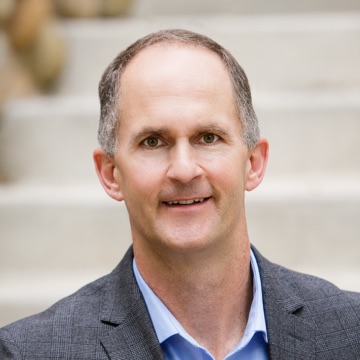
Multifamily owners are hearing the same promise everywhere: artificial intelligence will make operations faster, leaner, and more profitable. Maybe. But in the real world, most operators are still wrestling with a more basic problem: scattered systems, inconsistent processes, unclear metrics, and teams who are already overloaded. In this episode of Peak Property Performance®, we sat down with Gino Barbaro, CEO of Barbaro360 and co-host of the Jake & Gino Real Estate Podcast, to talk about what it actually takes to build better multifamily operations through AI, data, and operational discipline. The takeaway was simple: technology only works when the business underneath it is disciplined enough to use it.
That matters because AI is not a magic layer you sprinkle on top of messy operations. It amplifies whatever is already there. If your work orders are inconsistent, your resident communications are fragmented, your leasing data sits in one platform, your maintenance history lives somewhere else, and nobody owns the operating standard, AI will not fix the business. It will expose the gaps faster. As we said in the conversation, the goal is not technology for technology’s sake. The goal is execution, resident experience, and stronger property performance. You can listen to the full episode for the complete discussion.
Treat Every Property Like a Business, Not a Bet
Gino’s operating philosophy did not come from theory. It came from getting into the multifamily business, making mistakes, and realizing that owning apartments is not the same thing as running an apartment business. That distinction is everything. A 25-unit property is not just an asset on a spreadsheet. It has revenue, expenses, service expectations, resident relationships, maintenance obligations, vendor dependencies, and an operating rhythm. In other words, it is a business with its own profit and loss reality.
Gino said one of the biggest early mistakes he and his partner Jake made was not treating their portfolio like a business soon enough. Like many owners, they started with the instinct to do everything themselves. He described it as the “I’m-a guy” mentality: “I’m-a do this, I’m-a do that.” That works for a while, until it doesn’t. By around 100 units, burnout forced the issue. They had to stop relying on hustle and start building systems.
“We didn’t treat it as a business as much as we should have. And that’s what most investors do. They don’t really look at it as a functioning business, as a future stream of revenue.”
That shift led them to invest in operating frameworks like EOS/Traction and Scaling Up. Not because frameworks are trendy, but because a growing portfolio without repeatable systems becomes fragile. Hiring becomes reactive. Maintenance becomes inconsistent. Resident experience depends too much on whoever happens to be on site that day. Decisions get made from gut feel instead of operating evidence. And when the market tightens, those weaknesses show up fast.
This is where we see many owners hit the wall. They buy right, finance creatively, maybe even improve rents, but never build the operational foundation that protects performance. The property may look fine in a model, but the business underneath is leaky. That is why the Peak Property Performance® mindset starts with clarity: what are we operating toward, what systems support that outcome, and what information do we need to know whether we are actually improving?
Profit Per Unit Beats Vanity Metrics
Gino’s team runs the business around a metric he calls PPU: profit per unit. Not unit count. Not total revenue. Not how large the portfolio looks from the outside. Profit per unit. That focus came from rejecting the idea that bigger is automatically better. After building experience across $350 million in deals and 1,900 units, Gino and Jake stepped back and asked what kind of company they actually wanted to own.
Their answer was not “the biggest portfolio possible.” It was a controlled, vertically integrated multifamily business that they could operate well. That matters because vertical integration changes the growth equation. If you manage your own assets, you cannot simply buy 1,000 units in two months and expect the machine to absorb it. You need property management capacity. You need maintenance techs. You need training. You need leadership. You need operating standards. As Gino put it, they cannot outgrow their infrastructure.
That line should land hard for CRE owners. Growth beyond infrastructure is not scale. It is risk. We have seen this across commercial real estate: owners add assets faster than their operating model can support, then blame the software, the manager, the market, or the staff when performance breaks down. But the issue is often structural. The business did not Clarify what good looks like, Connect the right systems and people, Collect the right data, Coordinate the workflows, and Control the environment. That is the PPP 5C™ framework in practice.
“Revenue is vanity, profit margin is sanity, and cash is king.”
Gino connected that lesson back to his father, an old-school Italian pizzeria owner, who said it even more simply: “It’s not what you make, it’s what you keep.” In multifamily, that principle gets ignored when operators chase unit count, syndication volume, or quick flips. Gino was direct about the consequences: when an owner buys a building just to put “lipstick on it” and sell it to the next buyer, the residents suffer. Maintenance gets deferred. Management lacks continuity. The property becomes a transaction instead of a business.
Profit per unit forces a different operating posture. It asks: after income, expenses, service obligations, and real execution, what is left? It also changes underwriting. Gino is not just asking what the deal produces today. He is asking what profitability can look like 18 to 24 months from now if the team operates it well. That is a more durable lens than revenue growth alone, especially in a market where capital costs, insurance, payroll, and resident expectations are all rising.
AI Adoption Starts With Operational Discipline
Drew opened the episode by framing the real AI challenge: getting multifamily teams past resistance so technology improves execution instead of adding another silo. That is the right problem to solve. Most teams are not resisting AI because they hate innovation. They resist because they have lived through too many tools that promised simplicity and delivered more logins, more duplicate entry, more disconnected workflows, and more confusion about who owns the process.
Gino’s view is practical: AI should not replace employees. It should remove repetitive work so employees can focus on serving residents. That is an important distinction. Multifamily is still a customer-facing business. Residents walk into offices. They submit maintenance requests. They call when something breaks. They expect responsiveness, clarity, and follow-through. Technology can help, but it cannot compensate for a culture that does not care about service.
Gino used the phrase “Chick-fil-A of apartments” to describe the kind of customer experience they want to build. That is not about chicken sandwiches. It is about consistency, training, and a service model people can feel. In apartment operations, that might mean a resident gets a clear response when a work order is submitted, the maintenance team has complete context before arriving, management can see completion times by property, and leadership knows whether service quality is improving or slipping.
That is where AI becomes useful, but only after the operating foundation is in place. For example, AI can help turn messy maintenance notes into cleaner documentation. It can help teams draft resident communications faster. It can summarize recurring service issues across properties. It can make reporting less painful. But if the team has not agreed on what gets documented, where it gets stored, who reviews it, and how it drives action, the tool becomes another disconnected layer.
This is why leadership matters in every technology rollout. Teams need to understand how a new tool makes their job easier, not just how it gives ownership another dashboard. The operator’s job is to connect the technology to the daily pain: fewer repetitive tasks, faster documentation, better handoffs, clearer accountability, and more time spent with residents. Small wins create trust. Trust creates adoption. Adoption creates better data. Better data creates better decisions.
And that brings us to the deeper issue underneath AI: ownership. AI is only as valuable as the data behind it. If the operating data is trapped inside vendor platforms, fragmented across systems, or inaccessible when you need it, the owner is not really in control. Our reframe line is blunt for a reason: If you don't own your data & digital infrastructure, your vendors do. For multifamily owners, that is no longer a technical side issue. It is an operating risk.
Software Is Not the Same as Visibility
One of the most important lines in the conversation was not about AI at all. It was about visibility. Bill put it plainly: just because you have software does not mean you can see what is actually happening in the business. Every platform has a dashboard. Every dashboard has charts. But if the underlying data is incomplete, inconsistent, or not tied to an operating decision, the dashboard becomes noise.
Gino gave a concrete example from maintenance. For a long time, his team did not know their percentage of completed work orders across the portfolio. Not because they did not care about maintenance, but because the metric had not become part of the management rhythm. Once they started tracking it, they found some properties were around 60% completion. That was not a technology problem first. It was an operating visibility problem.
“If you don’t measure it, you can’t manage it. So we started measuring it. And then all of a sudden, we set it to 95%.”
That is where data & digital infrastructure becomes practical. The point is not to collect every possible metric. The point is to clarify the few numbers that tell you whether the business is delivering on its promise. For Gino, work order completion mattered because he wanted to become the “Chick-fil-A of apartments.” You cannot claim a service culture while ignoring maintenance follow-through. The data had to connect directly to the resident experience.
This is also where our PPP 5C™ framework becomes useful. Owners need to Clarify the outcome, Connect the systems, Collect clean data, Coordinate the operating response, and Control the infrastructure so the business is not dependent on vendor-defined visibility. The reframe is simple: If you don’t own your data & digital infrastructure, your vendors do. And if your vendors define what you can see, they quietly shape what you can manage.
Pick Metrics That Change Behavior
The best metrics are not the ones that look impressive in an investor update. They are the ones that change what teams do on Monday morning. Gino’s maintenance example worked because it created focus. Once the company set a 95% work order completion target and had districts compete, behavior changed. The metric became part of the culture, not just a number in a system.
Then the conversation moved one layer deeper. Someone recently asked Gino about first-time fix rate. In other words, when a technician closes a work order, was the issue actually resolved on the first visit? That is a better operational question than “Was the ticket closed?” because it gets closer to the resident’s reality. A resident does not care that a system says “complete” if the technician has to come back twice and the issue still lingers.
This is where Drew’s architect lens matters. A metric is only useful if the process underneath it is well-defined. What counts as a completed work order? Who closes it? Is there resident confirmation? Are callbacks tracked separately? Can the team distinguish between lack of parts, technician skill, scheduling problems, and resident access issues? Without those definitions, AI will not make maintenance smarter. It will simply process inconsistent inputs faster.
“Technology is not going to be the end-all be-all because you do need humans. It is a customer-centric and it is a forward-facing business.”
That is the balance owners need to strike. Technology can run in the background, automate follow-up, surface patterns, and help teams see where performance is slipping. But property management is still a people business. Someone has to answer the resident who is upset about hot water. Someone has to train the onsite team to listen, de-escalate, and solve the problem. The right infrastructure supports that human moment instead of pretending to replace it.
Build for Cash Flow, Focus, and Control
Gino also brought the conversation back to the fundamentals: revenue, margin, and cash. In a market where many operators became obsessed with unit count, acquisition volume, and exit multiples, his reminder was timely. A property that generates revenue but does not produce durable cash flow is not a strong business. It is an obligation. And when the market shifts, weak operations get exposed quickly.
“Revenue is vanity, profit margin is sanity, and cash is king.”
That thinking shaped how Gino and Jake approached focus. They tried other asset types early on. Mobile home parks. Mixed-use. Retail. Storage. Some of those lessons were painful. Eventually, they chose to stay focused on multifamily because they understood the customer, the recurring revenue model, and the operating requirements. As Gino put it, you cannot become the Chick-fil-A of apartments if you are constantly pulling the team into unfamiliar asset classes.
That does not mean every owner must own only one type of asset. It does mean every owner needs a clear operating thesis. What are you great at? What resident, tenant, or customer experience are you trying to deliver? Which metrics prove that experience is happening? Which systems support it? Which vendors control critical data? Which processes still live in someone’s head? These questions are not abstract. They determine whether the business can scale without becoming fragile.
For CRE owners, the actionable takeaway is straightforward. Start by identifying the three to five operating outcomes that matter most to asset performance: economic occupancy, retention, work order completion, first-time fix rate, delinquency, leasing velocity, or another metric tied to your strategy. Then audit the systems and processes behind each one. Where is the data created? Who owns it? Is it accurate? Can teams act on it weekly? If not, you do not have an AI problem yet. You have an infrastructure problem.
That is the deeper message behind the Peak Property Performance® book and the conversations we are having on the Peak Property Performance® Podcast. Better performance does not come from chasing the next tool. It comes from building the operating discipline and data & digital infrastructure that let good teams execute consistently. Clarify the business outcome. Connect the right systems. Collect data you can trust. Coordinate action across teams. Control the infrastructure that your performance depends on. That is how owners move from scattered effort to repeatable value creation.
Bill Douglas is the CEO of OpticWise, where he leads the company's mission to help commercial real estate owners take control of their data and digital infrastructure. With over three decades of entrepreneurial experience and a track record of leading companies onto the Inc. 5000 list, Bill brings a systems-minded, owner-first approach to everything OpticWise delivers. He holds a mechanical engineering degree from Georgia Tech and is a graduate of MIT's Enterprise Forum Entrepreneurial Masters Program. Bill is the co-author of Peak Property Performance (Fast Company Press).
Drew Hall is the Founder and Chief Architect at OpticWise. He brings deep experience designing high-performance networks for demanding clients in both the commercial and federal sectors, including professional engagements with IBM and the US Department of the Interior. Drew's expertise is in extending advanced technologies to meet the unique needs of commercial real estate, and under his technical leadership, OpticWise has developed the SIC® engineering standard that powers owner-controlled data and digital infrastructure across properties. He holds a computer science degree from Baylor University and is the co-author of Peak Property Performance (Fast Company Press).
Your Next Step
Complimentary CRE Data & Digital Review Session
One building. Map who owns what, where data lives, who has permission to act on it, and where operational burden stacks up vs your KPIs.