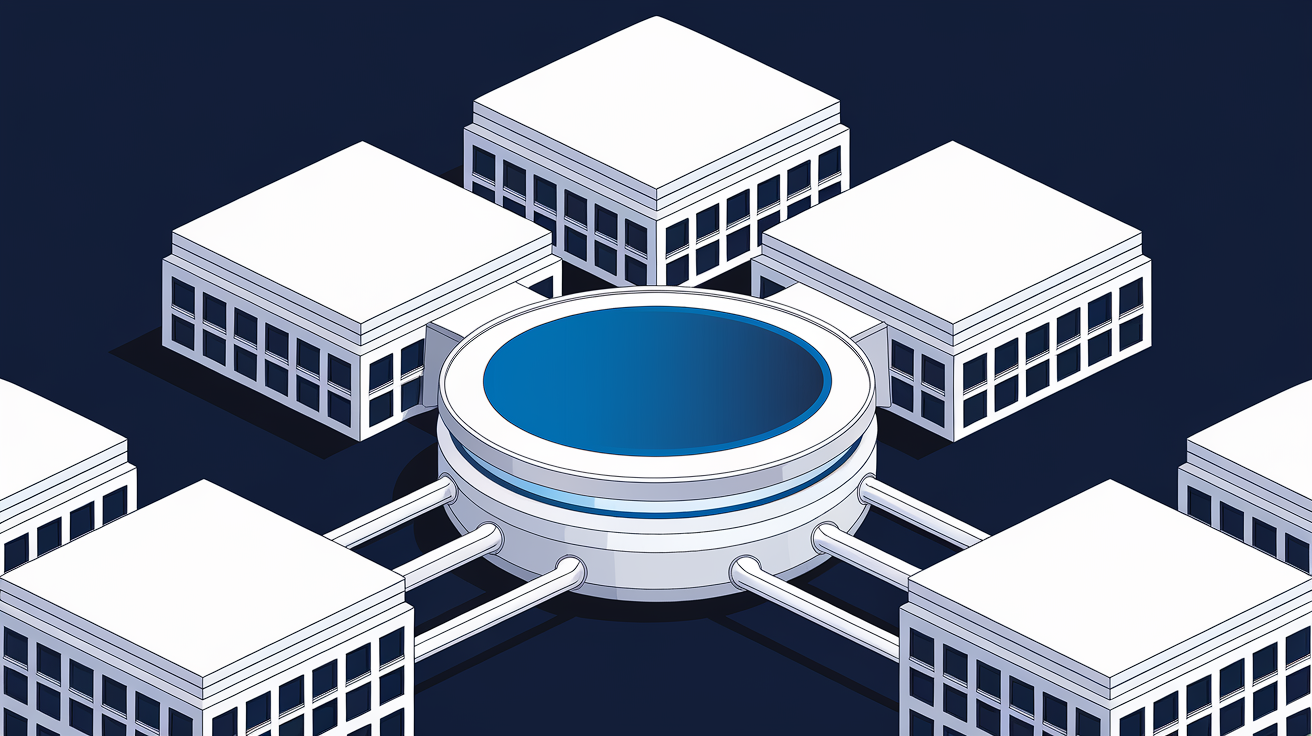
AI value in CRE is moving from vendor demos to owner-controlled workflows. The durable advantage is not the model. It is your data, your operating logic, and the data & digital infrastructure that lets it scale.
For the last two years, too much of the AI conversation has sounded like a vendor beauty contest. Which model is smarter? Which chatbot is smoother? Which demo feels more impressive in a conference room?
That is not where durable value is created.
The real shift is happening inside operating workflows. The winners will not be the owners who pick the flashiest tool. The winners will be the owners who turn proprietary operating knowledge into repeatable, governed workflows across assets.
That requires more than software. It requires owner-controlled data & digital infrastructure.
If you do not own the foundation, you do not own the compounding effect.
And in this market, compounding operational intelligence is not a nice-to-have. It is a valuation issue.
The Market Is Moving From AI Tools to AI Workflows
The latest signal is not subtle. In real estate, AI value is shifting away from tool selection and toward proprietary operating capacity.
Thesis Driven’s AI-Powered GP Report points to general partners building internal AI workflows instead of simply buying generic tools. That matters because GPs sit close to capital allocation. They do not care about AI as theater. They care about faster underwriting, better asset surveillance, cleaner reporting, and sharper decision-making.
That is the right lens for owners.
AI does not create advantage because it can summarize a lease or generate a memo. Those are useful tasks, but they are not strategy. Advantage comes when the workflow reflects how you run the asset, how you measure risk, how you price decisions, how you manage exceptions, and how you protect NOI.
Most owners miss this.
They evaluate AI like they evaluated prior software categories: feature list, user interface, vendor pitch, implementation timeline. That is backwards. The better question is: which of our proprietary workflows should become repeatable intelligence assets?
A leasing workflow. A capital planning workflow. A utility variance workflow. A debt compliance workflow. A tenant retention risk workflow. A diligence readiness workflow.
Those are not generic. They are built from your operating history, your investment thesis, your vendor patterns, your asset constraints, and your risk tolerance.
That is where value lives.
The Demo Is Not the Moat
I have sat in the owner’s chair. I know the pressure.
You have an investment committee asking for better visibility. You have refi pressure affecting the hold-period math. You have insurance costs moving faster than the budget cycle. You have tenants expecting better experience. You have vendors each claiming their system is the source of truth.
Then AI arrives with another promise: faster decisions.
Fine. But faster decisions based on weak data are just faster mistakes.
The practical gap is already visible. A Multifamily Dive piece asking teams when they last read their AI transcripts end to end described renters asking real questions and landing in a “Sorry, I didn’t understand that” loop. The article framed it as the gap between scripted logic and true GenAI, and Multifamily Dive’s transcript warning is a useful reminder for every owner: AI performance is not proven in the demo. It is proven in the messy operating reality.
A transcript failure in leasing is not just a technology problem. It can become a conversion problem. A retention problem. A brand problem. At scale, it becomes an NOI problem.
That is why owners need to stop asking, “Which AI product should we buy?” and start asking, “Which operating workflows should we own?”
The distinction matters.
A vendor demo shows what the vendor can do with a controlled path. An owner workflow shows what your portfolio can repeat under real conditions. One is a sales moment. The other is a strategic asset.
If you do not own the workflow, the data feeding it, and the permissions that govern it, then you are renting intelligence from someone else.
If you don't own your data & digital infrastructure, your vendors do.
That line is not a slogan. It is the operating reality of the next CRE cycle.
Computer Vision and Agents Raise the Stakes
The next wave of AI in real estate will not stay inside a text box.
Thesis Driven’s Deep Dive on SurfaceAI highlights the movement of computer vision and agentic AI into real estate operations. That is a major signal. Once AI starts reading physical environments, flagging conditions, and prompting action, the question changes.
It is no longer just, “Can this tool answer a question?”
It becomes, “Can this system observe the asset, interpret what matters, recommend the right action, and do it under owner-controlled rules?”
That is a different level of operational exposure.
A computer vision model may identify a condition. An agent may trigger a workflow. A vendor platform may log an event. But who controls the data trail? Who decides retention? Who governs access? Who validates the operating rule? Who can compare the same issue across fifty assets?
Those are owner questions.
Without owner-controlled data & digital infrastructure, every new AI capability becomes another island. One camera vendor sees one thing. One access control vendor sees another. One work order system holds another fragment. One leasing tool captures another partial record.
The owner gets activity, but not intelligence.
And activity does not protect valuation.
What protects valuation is governed visibility into the drivers of NOI, risk, tenant experience, and capital planning. AI can accelerate that only if the owner controls the foundation underneath it.
That is why data & digital infrastructure is no longer a back-office concern. It is part of the asset’s operating model.
AEC Is Sending the Same Message
The same pattern is showing up in architecture, engineering, and construction.
A Thesis Driven workshop on AI in AEC notes that design and construction have different dynamics from general real estate operations: higher stakes, greater cost of errors, and regulated environments where liability follows decisions. The key takeaway from Thesis Driven’s AEC workshop framing is not that AI replaces professional judgment. It is that firms with internal capacity, better systems of record, and faster error detection can move with more confidence.
Owners should pay attention.
A building’s digital condition will increasingly affect design, construction, capital planning, and diligence. If your asset data is fragmented, stale, or trapped in vendor systems, you will not get the full benefit of AI-assisted planning. You will also carry more risk when decisions need to be defended.
That matters in capital projects.
An asset manager does not approve digital CapEx because it sounds modern. The asset manager approves it because it can reduce OpEx variance, protect revenue, support refi readiness, improve tenant retention, or reduce risk that shows up in diligence.
AI can help. But only when it is tied to trustworthy systems of record.
That is the owner’s opportunity: build the data & digital infrastructure so every future tool, model, or workflow plugs into a governed foundation you control.
What Most Owners Should Do Next
T
he answer is not to pause AI. The answer is to stop treating AI as a standalone procurement decision.
Start with the workflows.
Pick the operating decisions that actually affect the investment. I would start with areas where poor visibility already costs money: energy variance, network downtime, access events, leasing response quality, tenant experience signals, capital planning, insurance documentation, and diligence readiness.
Then ask five questions.
First, what data does this workflow need to be trustworthy?
Second, who owns that data today?
Third, is the data portable across assets?
Fourth, who controls identity, access, permissions, and retention?
Fifth, can the workflow scale from one property to a portfolio without rebuilding it every time?
That last question is where most strategies fail.
A one-off AI workflow may be interesting. A portfolio-grade workflow is valuable. The difference is the data & digital infrastructure layer beneath it.
This is where Peak Property Performance® becomes practical. The PPP 5C™ plan gives owners a sequence for moving from fragmented systems to owner-controlled intelligence.
Clarify the current state. What systems exist? Which vendors hold which data? Which operating decisions matter most? Where is the leakage?
Connect the asset through managed data & digital infrastructure that the owner controls.
Collect high-fidelity operating data into a consistent, usable structure.
Coordinate systems, vendors, identity, permissions, privacy, lineage, and rules of use.
Control the intelligence layer so workflows can act under owner-defined guardrails.
This is not theory. It is the operating path from property-level visibility to portfolio-level intelligence.
The OpticWise Read
At OpticWise, we look at AI through two layers.
Layer 1 is managed data & digital infrastructure: the network, connectivity, device, and systems foundation that makes the asset digitally operable. This includes the SIC® platform for security, data & digital infrastructure, and connectivity; BoT® / Building of Things® standards for the device layer; ElasticISP® for owner-controlled managed connectivity; and the 5S® user experience promise of Seamless Mobility, Security, Stability, Speed, and Service.
Layer 2 is the owner-controlled intelligence layer: Property Brain™ at the asset level and Portfolio Brain™ across assets.
That second layer is where AI workflows become durable. Not because one model wins forever. It will not. Models will continue to change. Costs will continue to move. Vendor claims will keep shifting.
The owner’s durable advantage is the layer above the model: proprietary data, operating workflows, orchestration rules, and institutional knowledge encoded into systems the owner controls.
That is the strategy.
Not another dashboard. Not another disconnected tool. Not another vendor-owned data trap.
An owner-controlled operating intelligence layer that lets you test tools, change vendors, and improve workflows without rewiring the asset every time.
That is how AI becomes more than automation. It becomes a portfolio capability.
And in asset management terms, that means better visibility into NOI drivers, better risk control, better diligence support, better capital planning, and better refi readiness.
The Owner’s Call to Action
Here is my recommendation.
Do not start by asking for an AI roadmap. Start by asking for a data & digital infrastructure review tied to the investment plan.
Pick one property. Identify the workflows that matter most to NOI defense and risk reduction. Map the data required to support those workflows. Find out where that data lives, who controls it, and whether it can move.
Then build the standard so the next property is easier.
That is how this compounds.
AI will keep getting louder. Vendor demos will keep getting better. But the owners who win will not be the ones chasing every new product. They will be the ones turning their own operating logic into repeatable, governed intelligence.
Own the workflow. Own the data. Own the foundation.
Own your data & digital infrastructure. Operate with strategic foresight. Build for the long game.
Bill Douglas is the CEO of OpticWise, where he leads the company's mission to help commercial real estate owners take control of their data and digital infrastructure. With over three decades of entrepreneurial experience and a track record of leading companies onto the Inc. 5000 list, Bill brings a systems-minded, owner-first approach to everything OpticWise delivers. He holds a mechanical engineering degree from Georgia Tech and is a graduate of MIT's Enterprise Forum Entrepreneurial Masters Program. Bill is the co-author of Peak Property Performance (Fast Company Press).
Your Next Step
Complimentary CRE Data & Digital Review Session
One building. Map who owns what, where data lives, who has permission to act on it, and where operational burden stacks up vs your KPIs.