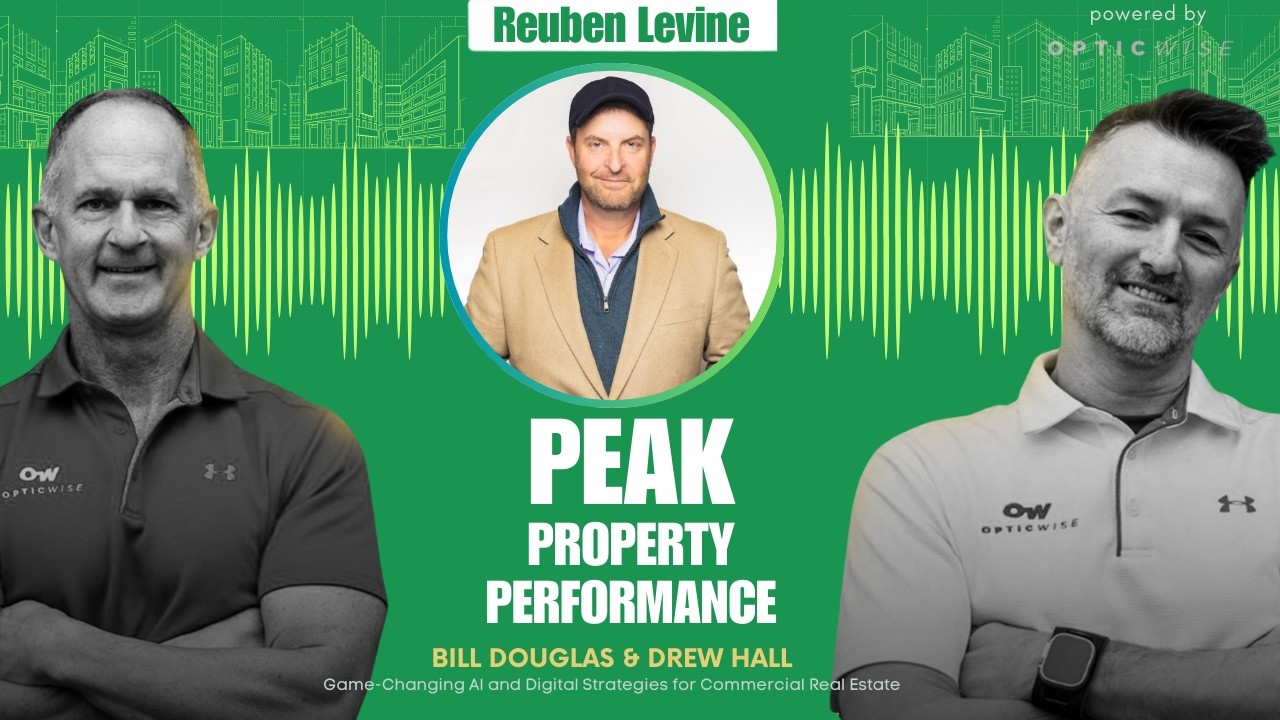
In the ever-evolving landscape of commercial real estate, one phrase encapsulates the essential shift that owners and operators must embrace: "If you don't own your data & digital infrastructure, your vendors do." This mantra is at the heart of a transformative journey that commercial real estate (CRE) stakeholders must undertake to thrive in the current market. In the latest episode of the Peak Property Performance podcast, we explore this concept with Reuben Levine, founder and CEO of Stringbeam Technologies, as we delve into the power of data and digital infrastructure in facilities management. Listen to the full episode for insights that could redefine your approach to operational efficiency.
The Untapped Goldmine of Facilities Data
It's a common misconception among CRE owners that they lack data. In reality, as Drew Hall points out in the podcast, "Most buildings are producing data all over the place." This data, ranging from human workflows to contractor performance, is a goldmine of untapped potential. Reuben Levine highlights the seismic shift in the industry, driven by a combination of aging workforce demographics and the need for more efficient operations.
Levine describes how a significant portion of the industry has aged out or been displaced, creating a vacuum that demands a new approach. "The statistics I've seen is that 40% of the industry disappeared in the last six years," he notes. With such a dramatic change, leveraging existing data becomes crucial for optimizing operations and improving ROI.
Building owners need to recognize the wealth of information they have at their disposal. As Levine explains, "There's so much margin in this labor and just understanding that and having it revealed to you is a very powerful moment." This revelation can lead to significant savings and improved decision-making, particularly when it comes to service contracts and vendor negotiations.
Automation and Robotics: Beyond the Hype
The conversation around automation and robotics in property management often centers on the promise of a smarter, more efficient built environment. However, as Drew Hall emphasizes, the reality is that Internet of Things (IoT) devices and sensors alone do not make a building smart. "A lot of times I'm talking about with clients, IOT is just the sensor, it doesn't make your building smart just because they can hear and listen and see," he says.
The true value lies in what you do with the data. Reuben Levine provides concrete examples of how data can be used to identify patterns and improve operations. For instance, in environments like data centers or hospitals, understanding the intricacies of vertical transportation or air ventilation can prevent costly downtimes. "The insurance costs of a data center going down or a hospital going down in the middle of an operation is so high," Levine explains.
By integrating data with autonomous decision-making processes, building owners can create a truly smart and responsive environment. As Hall puts it, "We like to use the word autonomous, like put some if-then loops in it... the building starts to think, I use air quotes, because it's really not thinking, you're telling it what its options are."
Building a Data Moat for CRE Owners
The concept of building a "moat" around your operational data is central to maintaining control and reaping the benefits of your data assets. This involves more than just collecting data; it's about owning and leveraging it to gain a competitive edge. As Reuben Levine articulates, "If the ownership falls in the hands of your third-party provider, they've built a moat around you."
Levine warns of the dangers of relinquishing data ownership to vendors, especially with the increasing trend of property management firms consolidating their data infrastructure. "The way we're going to be able to remain sticky is if we can go ahead and own the data plumbing," he says, highlighting a strategic move by companies like JLL and JCI in acquiring tech firms to solidify their hold on data.
The path forward for CRE owners involves reclaiming control over their data and ensuring that it serves their strategic interests. By doing so, they can enhance operational efficiency, reduce costs, and ultimately deliver a better experience for tenants. This proactive approach not only secures the data asset but also positions owners to leverage emerging technologies more effectively.
Building a data moat is not just about protection, it's about empowerment. As we discuss in the podcast, creating a system where data informs and drives decision-making is the key to unlocking new levels of property performance and sustainability.
For more insights on turning data into actionable ROI, listen to the full episode of the Peak Property Performance podcast.
Building a Data Moat for CRE Owners
In the realm of commercial real estate, safeguarding your data is akin to constructing a moat around your castle. As Reuben Levine eloquently puts it, "Building the moat itself, that's going to hold that water for a sustainable period of time and be able to collect that water and hold onto it." This "water" represents the invaluable data that your property generates. It's about more than just having access, it's about ownership and strategic utilization.
Levine emphasizes the importance of creating a data plumbing system that allows owners to control and manage their information efficiently. This means not only collecting data but ensuring that it remains under your jurisdiction, even when shared with partners. "If you rely on someone else, he's going to be as inefficient as the prior management," Levine warns, highlighting the need for direct oversight.
This approach aligns with our PPP 5C™ framework, particularly the "Control" aspect. By owning your data, you can coordinate its use to enhance operational efficiency and cost savings. It's a strategic imperative for any CRE owner looking to remain competitive in today's market.
Data-Driven Decision Making: Moving Beyond AI Hype
The conversation around artificial intelligence in property management is often filled with grand promises, yet the reality is more nuanced. As Bill Douglas points out, "AI has been so fast and so strong coming on, and almost oversold." The key lies not in the AI itself, but in how it's used to interpret and act upon the data collected.
Levine further clarifies this by saying, "The data is still not in your hand. The data is in their hands." This highlights a crucial gap in the industry: the need for property owners to not just have access to data, but to actively use it to inform business decisions. It's about integrating this data into a cohesive strategy that benefits both the property and its tenants.
By leveraging data effectively, owners can move beyond the hype of AI and focus on tangible outcomes. This involves looking across multiple data silos and using machine learning to identify areas for operational improvement. It's a mindset shift that requires the right tools and framework, which we outline in our Peak Property Performance® book.
Creating a Unified Data Ecosystem
One of the most significant challenges in property management today is the fragmentation of data across various systems. As Levine notes, "Every single building has its own collection pools, create those collection pools, own that information and give it to your partners to be successful for you." This is where the concept of a unified data ecosystem comes into play.
By integrating disparate systems, owners can create a comprehensive view of their operations. This not only enhances transparency but also facilitates better decision-making and vendor management. Drew Hall adds, "It's about processing capability... If they have their data." The power of having a unified data ecosystem lies in its ability to provide actionable insights that lead to improved property performance.
Owners can start small by focusing on specific areas within their properties and gradually expand these efforts. It's a process of continuous improvement that can yield significant benefits over time. For more insights on this topic, tune into the Peak Property Performance® Podcast.
Actionable Takeaways for CRE Owners
The journey to owning your data and digital infrastructure is not without its challenges, but the rewards are substantial. Here are some actionable takeaways for CRE owners:
- Start with a Strategy: Define clear objectives around data ownership and management, aligned with your overall business goals.
- Invest in the Right Tools: Utilize technology that allows for the integration and analysis of data across various systems.
- Engage Your Team: Foster a culture of data-driven decision-making by involving all stakeholders in the process.
- Monitor and Adjust: Continuously review your data strategy to ensure it remains effective and aligned with market changes.
By taking these steps, you can transform your property operations and stay ahead in a rapidly evolving industry.
About OpticWise: OpticWise provides owner-controlled data & digital infrastructure for commercial real estate, from PPP Audits to portfolio-wide intelligence. See how we operate or read customer outcomes.
Peak Property Performance® Podcast
Have a story to share?
We're always looking for CRE leaders with real-world experience in data, digital infrastructure, and building operations.
Request to Be on the Show