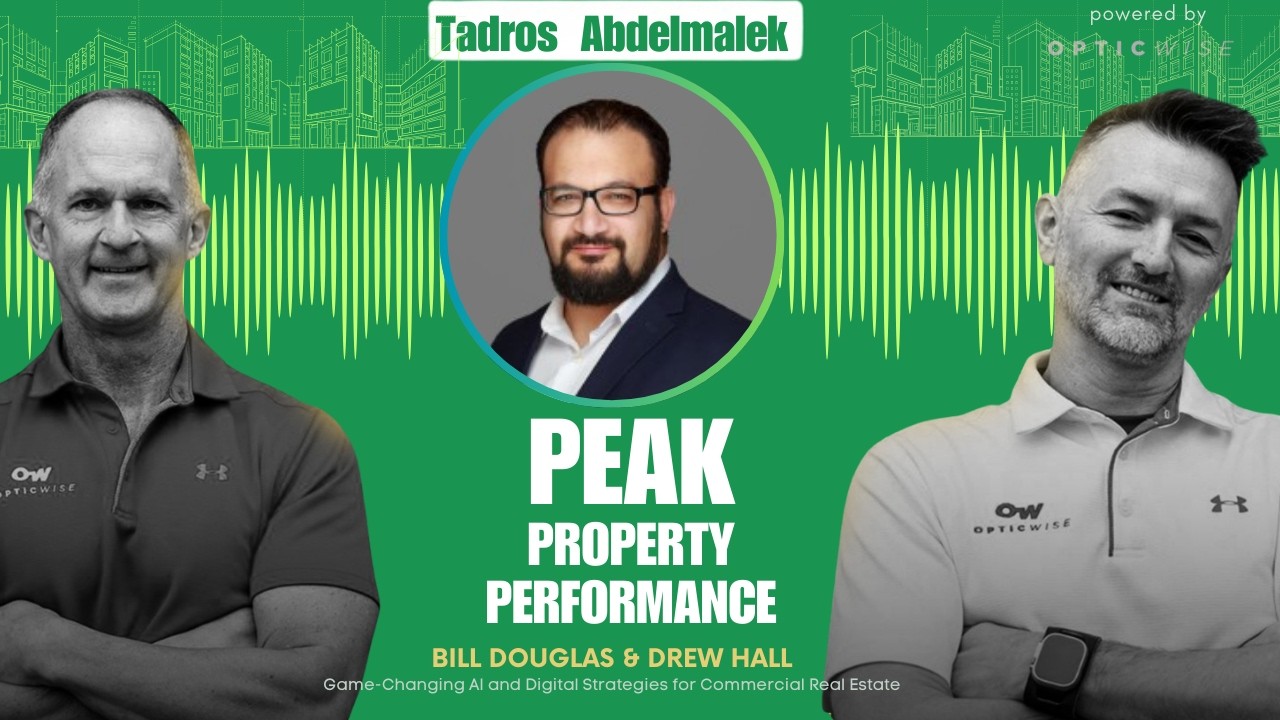
In the fast-paced world of commercial real estate, student housing stands out as a particularly unforgiving asset class. With its tightly compressed leasing cycles and complex resident interactions, it's no surprise that student housing often exposes operational blind spots more rapidly than other sectors. In this week's episode of Peak Property Performance®, we delve into the critical role of data ownership and digital discipline in navigating these challenges. Listen to the full episode to hear more insights from our conversation with Drew Hall, Bill Douglas, and special guest Tadros Abdelmalek.
Tracking Lead Sources: The Bill Story
In the world of student housing, understanding where your leads come from is not just useful, it's essential. The challenge lies in the compressed leasing cycle, which requires precise and timely data to make informed decisions. Tadros Abdelmalek shared a compelling example of how tracking lead sources with intentionality can lead to better marketing strategies and, ultimately, higher occupancy rates.
"All too often, the people on site treat it as a drop-down menu," Tadros explained. "How did you hear about us? Word of mouth. There's no structure. The person sitting behind that computer doesn't actually understand how important that source mechanism is."
By taking a more investigative approach, Tadros's team was able to identify key influencers, like 'Bill,' who referred multiple new residents. This insight allowed them to double down on effective strategies, such as resident referrals, and even directly engage with these influencers to further amplify their impact.
Get this guy a mug or a t-shirt, put him on commission, or hire Bill, right? As a part of the program.
This approach is emblematic of the PPP 5C™ framework, particularly in terms of Collect and Coordinate data to drive strategic decisions. Understanding the source of your leads is the first step in optimizing your marketing spend and enhancing your property's overall performance.
Reward Structures and the Seven-Conversation Follow-Up Rule
Effective student housing operations go beyond just filling units; they require a deep understanding of both the data and the human elements involved. Tadros highlighted the importance of reward structures and consistent follow-up as tools to improve leasing outcomes. He emphasized that it often takes at least seven conversations to convert a prospect, underscoring the necessity of persistence and strategic data tracking.
"The data shows you're not going to close on your prospect within the first or second conversation," he noted. "It actually takes about seven conversations to convert."
This insight is not just applicable to leasing but extends to all operational aspects of student housing. By aligning reward structures with desired behaviors, such as disciplined follow-up and data-driven decision-making, property managers can ensure that their teams are fully invested in the success of the asset.
Incorporating these practices into daily operations transforms the theoretical frameworks of Peak Property Performance into tangible results. It's about setting guardrails and creating a culture where data transparency and disciplined execution become the norm.
Operations as Engine, Resident Experience as Secret Sauce
While operations are the backbone of any property, in student housing, the resident experience is what sets a property apart. Tadros stressed the importance of integrating hospitality principles, such as anticipatory service, into the student housing experience. This approach not only enhances resident satisfaction but also builds a defensible competitive edge.
"In student housing and real estate, if you can anticipate what your customers need before they actually need it, you're going to be one step ahead on the resident experience," he shared.
By treating residents as the CEOs of the property, managers can differentiate their offerings in a crowded market. This perspective aligns with the broader PPP approach, where owning your data and digital infrastructure translates directly into a superior resident experience, protecting NOI and fostering long-term success.
Incorporating these insights into your operations can transform your student housing properties from merely functional spaces into thriving communities. For more comprehensive strategies and tips, listen to the full episode.
Operations as Engine, Resident Experience as Secret Sauce
The role of operations in student housing cannot be overstated. It is the engine that keeps everything running smoothly, but the resident experience is the secret sauce that truly elevates a property. As Tadros Abdelmalek highlighted, "You can have the best amenities and the most visually appealing property, but if you don't treat your residents as if they're the CEOs of the property, it doesn't matter how great your property is." This is where the concepts of hospitality and customer service come into play.
Borrowing from the hospitality industry, anticipatory service can significantly enhance the resident experience. By anticipating resident needs before they arise, properties can stay one step ahead. For instance, just as a waiter might bring two glasses of water without being asked, property managers can implement systems that predict and fulfill resident needs proactively. This approach not only increases satisfaction but also strengthens the property's reputation and retention rates.
The resident experience is your raw business sense. It's your defensible moat. It's the culture that attracts you to get the margins the business is running on.
Integrating resident experience into operations is not just about efficiency but about creating a unique and defensible competitive advantage. By owning the digital infrastructure and controlling the data, CRE owners can craft a resident experience that is both seamless and impactful.
Why More Tech Isn't Always Better
In the realm of student housing, simplicity and reliability often trump the allure of feature-rich platforms. Drew Hall noted, "In student housing, simplicity and reliability tend to win out over feature-rich platforms. If feature-rich comes along for the ride, that's great, but simplicity and reliability are such a focus." The key is to select digital tools that enhance the resident experience without creating unnecessary complexity.
Many platforms promise to revolutionize property management, but they can also create friction if not carefully selected and integrated. The industry is flooded with promising platforms, each offering various features, but the challenge lies in choosing those that truly add value. As Teddy pointed out, "More tech doesn't always equal better performance. It's the tech that actually gives you clarity and supports your overall mission at the property."
The best operators I've seen have really clean reporting and a consistent weekly operating rhythm. Consistency by far is one of the most important things.
Chasing the latest tech trends can mask underlying process problems. It is crucial for operators to first understand their strategic goals and then choose technology that aligns with and supports those goals. Consistency in operations and technology use is key to driving meaningful results.
Reframing Data & Digital Infrastructure as Business Intelligence
In an era where technology is intertwined with every aspect of property management, it's essential to reframe the conversation around data and digital infrastructure. Instead of viewing it as a separate entity, consider it as integral to business intelligence. Teddy emphasized, "The only way you're going to be able to change their mind is that it lends itself to a better property management experience. It eases their burden on the property."
By approaching digital infrastructure as a form of business intelligence, property managers can gain insights that drive better decision-making and improve overall property performance. This perspective positions technology not merely as a tool but as a strategic asset that enhances the property's value and competitive positioning.
For CRE owners looking to harness the full potential of their properties, the Peak Property Performance® book offers a wealth of insights. It provides a comprehensive framework for integrating data and digital infrastructure into daily operations, ensuring that technology serves as a true enabler of success.
Final Thoughts: Actionable Takeaways for CRE Owners
The future of student housing lies at the intersection of data ownership, digital discipline, and resident experience. By embracing a strategic approach to digital infrastructure, CRE owners can unlock new levels of efficiency, satisfaction, and profitability. Here are the key takeaways:
- Embrace Data Ownership: Understand that if you don't own your data and digital infrastructure, your vendors do. Take control to drive strategic decisions.
- Focus on Resident Experience: Treat residents as the CEOs of your property by integrating anticipatory service and hospitality principles into your operations.
- Choose Technology Wisely: Prioritize simplicity and reliability in your tech stack to enhance, not complicate, the resident experience.
- Reframe Technology as Business Intelligence: View digital infrastructure as a strategic asset that informs better decision-making and elevates property management.
For more insights and real-world examples, tune into the Peak Property Performance® Podcast, where we continue to explore the evolving landscape of CRE and the transformative role of data and digital infrastructure.
About OpticWise: OpticWise provides owner-controlled data & digital infrastructure for commercial real estate, from PPP Audits to portfolio-wide intelligence. See how we operate or read customer outcomes.
Peak Property Performance® Podcast
Have a story to share?
We're always looking for CRE leaders with real-world experience in data, digital infrastructure, and building operations.
Request to Be on the Show