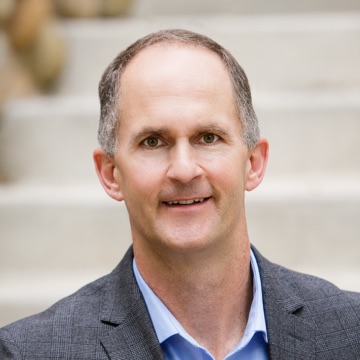
Multifamily performance is no longer being carried by a rising market. For years, many owners could buy well, benefit from cap-rate compression, and still produce strong returns even when operations were only average. That environment has changed. In this episode of Peak Property Performance®, Bill Douglas and Drew Hall speak with Andrew Reichert about what it really takes to scale a multifamily platform when value has to come from execution, not market momentum. The conversation gets practical quickly: focus, underwriting discipline, property operations, real-time data, and the hard truth that a pro forma is only as good as the operating reality behind it. You can listen to the full episode.
Focus is not a branding decision. It is an operating discipline.
Andrew Reichert helped build a vertically integrated multifamily platform spanning approximately 3,600 units across multiple states. That scale did not begin with a neatly designed operating model. It started with a duplex, a lack of capital, and a founder doing the work himself: leasing units, painting apartments, handling basic repairs, and learning the building from the inside out.
That early experience matters because it shaped the operating instincts behind the later platform. Andrew was not building vertical integration because it sounded sophisticated. He was doing maintenance, leasing, bookkeeping, and property management because the business could not yet afford specialists. Over time, the question changed from “Can I do this myself?” to “Where has my expertise hit its limit, and where do we need someone smarter in this seat?”
That shift is one of the first scaling lessons in the episode. Early-stage owners often confuse activity with capability. They are acquiring, renovating, leasing, managing, financing, and reporting all at once. The work gets done, but the organization does not necessarily get sharper. Andrew’s point is that scale exposes this weakness. A company can survive scattered effort at small scale. It cannot compound performance that way across markets, teams, and assets.
“The main thing that I would’ve done differently is focus.”
Andrew described an early fund that acquired 800 multifamily units and about 300,000 square feet of commercial property, split across retail and office. At the same time, the firm was handling stabilized multifamily, value-add multifamily, new construction, historic renovation, commercial property management, commercial leasing, retail property management, and retail leasing. Each of those businesses has a different operating rhythm, vendor base, staffing model, tenant profile, and data requirement. Trying to do all of them meant trying to be excellent at too many things at once.
Today, the strategy is much tighter: 100 to 150 unit, Class B workforce housing in the Midwest. That level of specificity is not just an investment thesis. It creates operational repeatability. The team can compare properties more intelligently, standardize turns, understand resident behavior, evaluate vendors, benchmark markets, and know what “good” looks like before the monthly financials arrive. Focus reduces noise, and in multifamily operations, reducing noise is often what allows useful data to become visible.
The business plan has to survive contact with operations.
One of the strongest parts of the episode is Andrew’s discussion of the gap between ownership and operations. In theory, vertical integration should close that gap because ownership, asset management, and property operations sit closer together. In practice, alignment still has to be designed into the process. It does not happen just because the teams share a company name.
Andrew’s view is that alignment starts before acquisition, during underwriting. Market data can produce a polished pro forma. Rent comps, sales comps, expense assumptions, renovation premiums, and capex plans can make a deal look compelling. But until the team responsible for managing the property evaluates what execution will actually require, the model is still theoretical.
“Until the team that’s going to actually manage that asset has looked at it and kicked the tires, so to speak, and said, I understand what it’s going to take to manage this asset, to maintain this asset, to do these capital expense projects, that underwriting model is just theory.”
This is where property operations provide a different kind of intelligence than market research. A property manager may know that a proposed renovation scope will take longer than projected because the local labor pool is thin. A maintenance leader may know that the building’s systems will create recurring issues that do not show up cleanly in the rent roll. A leasing team may know that the projected rent premium is technically visible in the market, but only for a tenant profile the asset is unlikely to attract.
Andrew described the natural tension between ownership and operations in a healthy way. Asset management pushes the business plan. Operations grounds it. Ownership may believe a renovated unit can achieve a certain monthly premium. Operations has to translate that ambition into the actual work: paint, flooring, scheduling, turns, leasing, resident communication, maintenance capacity, and the time cost of vacancy. When those perspectives are separated, the owner gets a cleaner spreadsheet and a weaker plan. When they are forced into the same conversation early, the model becomes more honest.
That honesty can prevent expensive mistakes. Andrew shared an example of buying what he described as a B asset in a C neighborhood, with the expectation that the team could improve the tenant base and lift performance over time. The pro forma assumed the business plan could be executed. The market disagreed. The lesson was not that the operations team failed, or that the projections lacked effort. The lesson was that the market would not support the plan.
Bill Douglas summarized it simply: “The market is the greatest truth teller.” That line matters for asset managers because it separates controllable execution from wishful underwriting. Data can help an owner see more clearly, but it cannot make a market support rents, resident profiles, or leasing velocity that are not realistic. Good operations data improves judgment. It does not repeal market limits.
NOI growth now depends on operational lead measures, not month-end explanations.
The episode turns from scaling and underwriting into the operating metrics that matter now. Andrew is direct about the shift. The old playbook of buying well, riding cap-rate compression, and selling into a rising market is no longer enough. Value has to come through NOI growth. That changes the role of the operator and the asset manager.
When value creation depends on NOI growth, the owner has to care about the operating mechanics that produce or destroy income. Andrew named delinquency, unit turn times, leasing velocity, vacant days, and resident retention as key measures. These are not abstract property management metrics. They are the daily and weekly drivers that show up later in the P&L.
- Delinquency compounds quickly because unpaid rent becomes an immediate drag on income and a management burden.
- Turn times matter because every delayed turn extends vacancy and reduces rentable days.
- Leasing velocity shows whether demand is converting into signed leases quickly enough.
- Vacant days translate operational delay into direct NOI impact.
- Resident retention protects income because keeping a good resident is usually cheaper than replacing one.
The deeper point is that owners cannot manage these measures effectively if they only review them after the month closes. A month-end P&L explains what already happened. It does not tell the team what to fix today. By the time vacancy, delinquency, or slow turns appear clearly in the financial statement, the economic damage has already started.
This is where the conversation connects directly to the Peak Property Performance® thesis. Buildings generate operating data constantly, but that data often sits across property management systems, vendor platforms, spreadsheets, access systems, maintenance workflows, and disconnected building systems. If you don’t own your data & digital infrastructure, your vendors do. And if the owner cannot trust, access, and use that data in time, the business keeps operating from lagging indicators.
Andrew’s example of projected occupancy 30, 60, and 90 days ahead is especially important. Projected occupancy is a lead measure. It gives the team time to act before vacancy becomes a financial result. If upcoming move-outs, renewal risk, leasing velocity, and current traffic point toward a future occupancy problem, the operator can adjust pricing, marketing, staffing, resident outreach, or renewal strategy early. That is a different operating posture than waiting for the financials to confirm the miss.
Underwriting only works when operations are in the room.
One of the strongest points in the conversation is that alignment between ownership and operations cannot begin after closing. By then, the pro forma has already become the business plan, capital has already been allocated, and the team is already living with assumptions that may or may not match the property. Andrew was clear that the operating team has to be involved before the asset is purchased.
“Until the team that’s going to actually manage that asset has looked at it and kicked the tires, so to speak, and said, I understand what it’s going to take to manage this asset, to maintain this asset, to do these capital expense projects, that underwriting model is just theory.”
That distinction matters for asset managers because underwriting is not only a finance exercise. It is a test of whether the plan can survive contact with the building, the submarket, the resident base, the vendor market, the staffing model, and the actual condition of the asset. A rent premium may look reasonable in the model, but the operating team has to understand the unit turns, the capital scope, the leasing velocity, the maintenance burden, and the resident profile required to earn it.
Andrew described the natural tension between the ownership side, which pushes the business plan forward, and the property management side, which sees the practical limits of execution. That tension is healthy when it is surfaced early. It becomes expensive when it is ignored. The point is not that the operator should always win or that ownership should always pull back. The point is that both perspectives need to be incorporated into a unified plan before the asset is acquired.
That is also where better data becomes valuable. Owners need more than market comps and trailing financials. They need operational reality: turn times, delinquency trends, vendor performance, maintenance patterns, leasing friction, utility behavior, insurance exposure, access control issues, and the condition of the data & digital infrastructure that supports the property. If that information is scattered across vendors and systems, the owner is underwriting with partial vision.
The market is the truth teller, and the P&L shows the consequences.
Andrew gave a blunt example from experience: a stronger asset in a weaker neighborhood may not be fixable through execution alone. The pro forma may assume a retenanting strategy, improved resident quality, higher rents, and a cleaner operating profile. But if the submarket does not support the plan, even a capable team can run out of room.
“The market is the greatest truth teller.”
That lesson connects directly to the new multifamily environment. For years, many owners benefited from cap-rate compression and broad market momentum. Andrew acknowledged that the old playbook worked for a time. You could buy right, ride the market, and produce strong returns even if operations were not as disciplined as they needed to be. That lever is weaker now. In some markets, it is gone.
Today, value creation has to come through NOI growth. That forces discipline across the entire P&L. Andrew named several operating metrics that deserve constant attention: delinquency, turn times, leasing velocity, vacant days, and resident retention. Each one affects cash flow differently, but they compound together. Delinquency bleeds quickly. Slow turns extend vacancy. Weak retention increases cost and operational drag. Poor leasing velocity turns a good renovation plan into idle inventory.
The expense side is just as important. Insurance increases, tax reassessments, waste contracts, utilities, and vendor costs can erase gains that looked solid on the income side. This is where owners need a clearer operating view of the building, not just a monthly report after the fact. IT is the brains of the company: email, accounting, property management systems, and reporting. OT is the nerves and muscles of the building: HVAC controls, access, lighting, submeters, leak detection, cameras, networks, and connected systems. You’ve got a plan for IT. We help you build a plan for OT, the tech that actually runs your buildings and drives NOI.
Real-time data turns management from reporting into execution.
The episode also moves past the buzz around AI and gets to the operating requirement underneath it. Andrew’s team has used data and machine learning for years, but his point was not that AI magically improves a portfolio. His point was more practical: better decisions require good data, and those decisions need to happen while there is still time to affect the outcome.
“If your data’s not good, your judgments based on that data are not going to be good.”
That is the AI conversation CRE owners should be having. The model is not the moat. The owner’s data, workflows, governance, and operating standard are the moat. A monthly P&L is useful, but it is a lagging indicator. By the time the report shows the miss, the vacancy has already happened, the delinquency has already aged, the expense has already hit, or the vendor issue has already created friction. Real-time data lets the team compare today’s decision against the budget, the business plan, and the operating condition of the asset.
This is where the thinking in the Peak Property Performance® book connects directly to the conversation. Owners do not become AI-ready by buying another dashboard. They become AI-ready when their data & digital infrastructure is owner-controlled, governed, trustworthy, and portable. If you don’t own your data & digital infrastructure, your vendors do. That is true whether the topic is leasing, utilities optimization, insurance documentation, access control, resident experience, or portfolio benchmarking.
For CRE owners, the actionable takeaway is straightforward. First, bring operations into underwriting before the asset is purchased. Second, define the lead measures that predict performance, not only the lag measures that report it. Third, look at IT + OT under an Owner Data Standard so the systems that run the building can inform the systems that run the business. Fourth, stop treating data & digital infrastructure as background plumbing. Digital is an investment that generates a return. If it does not generate a return, something is wrong.
The strongest multifamily platforms will not be the ones with the most software. They will be the ones with the clearest operating focus, the cleanest data, the strongest feedback loops, and the discipline to turn property-level learning into portfolio-level execution. That is the larger promise behind the Peak Property Performance® Podcast: practical conversations with CRE leaders who are building value through operations, not hoping the market does it for them.
About OpticWise: OpticWise provides owner-controlled data & digital infrastructure for commercial real estate — from PPP Audits to portfolio-wide intelligence. See how we operate or read customer outcomes.
Peak Property Performance® Podcast
Have a story to share?
We're always looking for CRE leaders with real-world experience in data, digital infrastructure, and building operations.
Request to Be on the Show