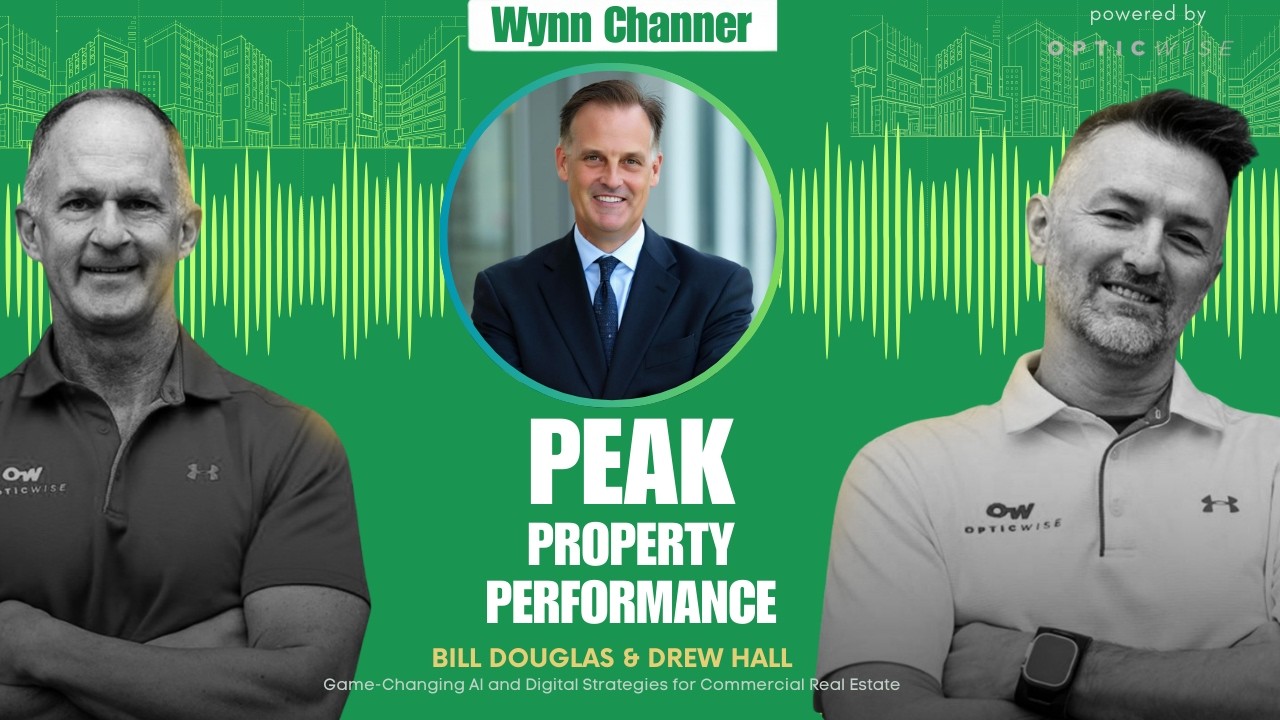
In the ever-evolving landscape of commercial real estate, digital infrastructure is no longer just a buzzword or a line item on an expense sheet. It's a transformative force reshaping tenant experiences and driving net operating income in ways that were unimaginable just a decade ago. In our latest Peak Property Performance® podcast episode, we dive deep with Wyn Channer, Senior Managing Director at JLL, to explore how embracing digital infrastructure can be a game-changer for landlords and corporate real estate strategists alike. If you're still viewing technology as a mere cost, it's time to rethink your approach. Remember, if you don't own your data & digital infrastructure, your vendors do.
Tenant Experience as a Value Driver
In today's competitive market, the tenant experience is becoming a crucial driver of value, shifting beyond the traditional focus on NOI. Wyn Channer highlights that many corporate tenants are no longer just looking for space; they are seeking environments that enhance employee engagement and productivity. This shift is especially apparent in urban centers like San Francisco, where the post-COVID landscape has dramatically altered tenant demands.
Drew Hall notes, "San Francisco went from a very large technology and financial hub of the United States to now being one of the largest occupiers of new startups in artificial intelligence." This transition illustrates how digital infrastructure can attract a new breed of tenants who prioritize technological capabilities and flexible work arrangements over conventional offerings.
The challenge for property owners is to adapt to these evolving expectations. As Wyn points out, "There are more companies today that are looking to the suburbs, that are looking to remote settings, that are looking to smaller, more efficient buildings." It's a clear indication that the demand for digital-savvy spaces is reshaping the commercial real estate landscape.
Impact of Remote Work on Commercial Real Estate
The rise of remote work has accelerated the need for robust digital infrastructure in commercial spaces. With employees now working from various locations, companies are rethinking their real estate strategies to accommodate a more dispersed workforce. This shift has been particularly pronounced in markets like San Francisco, where the availability of space post-COVID has enabled a surge in new startups.
Drew explains, "AI has just taken over the San Francisco market as a new breed of client," underscoring the need for infrastructure that supports cutting-edge industries. The ability to attract these tenants hinges on offering spaces that are not only technologically advanced but also flexible enough to adapt to future needs.
Bill Douglas emphasizes the importance of viewing digital infrastructure as an investment rather than an expense. "We talk a lot about digital, anything digital, systems, hardware, data should not be an expense on a P&L. It should be an asset with an expected return." This perspective shift is critical for owners looking to enhance the value of their properties in a rapidly changing market.
Monetizing Digital Infrastructure Investments
For many property owners, the notion of digital infrastructure as a monetizable asset is still a novel concept. Wyn Channer discusses how landlords can turn technology investments into revenue-generating opportunities, rather than viewing them as mere cost centers. The key is to integrate technology in ways that enhance tenant experience and operational efficiency simultaneously.
"There's not too many people that I've met that don't like the idea of it being something they can monetize," says Wyn. "What they have not seen is the appropriate coaching and advising to turn it into something that could be a moneymaker."
Bill echoes this sentiment, urging owners to re-evaluate how technology is accounted for in their financials. "If you look at your P&L and you see any technology typically bucketed as comms or something else as a burden, it needs to be analyzed because it should be an investment." By adopting this mindset, property owners can unlock new streams of income and future-proof their assets against obsolescence.
Ultimately, the path forward lies in embracing a strategic approach to digital infrastructure. By doing so, owners not only enhance their properties' appeal to tech-savvy tenants but also ensure that their investments yield tangible returns in an increasingly digital world.
Monetizing Digital Infrastructure Investments
For too long, digital infrastructure has been viewed as a necessary expense rather than an investment with potential returns. In our conversation, Wynn Channer emphasized the importance of reframing this mindset. "There's not too many people that I've met that don't like the idea of it being something they can monetize," he mentions. This shift in perspective is crucial for property owners aiming to leverage their assets beyond conventional roles.
Bill Douglas adds, "We talk a lot about digital, anything digital, systems, hardware, data should not be an expense on a P&L. It should be an asset with an expected return." This sentiment is echoed throughout our discussion, highlighting the need for owners to view technology investments as integral to their property strategy, much like any physical asset.
For those hesitant about making these investments, the risk includes stranded assets or lower valuations. Wynn points out, "If they find some way to monetize on this investment, and they need a business coach to do so, I think that most of them would be open to the conversation." It's about changing the conversation from cost to opportunity.
Cultural Challenges in Digital Transformation
While technology itself presents numerous opportunities, Drew Hall aptly notes that "the tech is not really the hardest part, but it's getting that buy-in." The cultural shift within organizations can be the true test of digital transformation success. This involves aligning executives, managers, and tenants under a shared digital strategy.
Wynn Channer points out that the challenge often lies with executives and asset managers who need to explore new operational methods. "Top down, I've seen work in the right culture," he says, advocating for leadership that is open to new ideas and willing to push innovation through the ranks.
Bill Douglas highlights skepticism as a barrier to implementation, noting that traditional business methods often impede progress. It's a call to action for industry veterans to embrace change and foster a culture of continuous improvement. "We see that as design in the build world," he notes, emphasizing the need for agility in an ever-evolving market.
Future Trends and AI in Real Estate
As we look to the future, the role of AI in commercial real estate cannot be ignored. Bill Douglas reminds us that "COVID was an eye-opener for a lot of people in the industry," urging the need for continuous planning and adaptation. The unpredictability of future disruptions necessitates a proactive approach to digital infrastructure.
Wynn Channer offers sage advice for those beginning their digital transformation journey: "Investigate your options." He emphasizes the potential of AI to integrate into everyday work life, affecting both employees and employers. The key takeaway? Build flexibility into every business plan to accommodate unforeseen changes.
Looking ahead, flexibility and adaptability will be the cornerstones of successful commercial real estate strategies. As Drew Hall concludes, "Change is what is consistent. So don't plan on status quo." This forward-thinking mindset will be essential for CRE owners navigating the future landscape.
Actionable Takeaways for CRE Owners
To thrive in the evolving landscape of commercial real estate, owners must embrace digital infrastructure as a strategic asset. Begin by reassessing how technology investments are categorized on your financial statements. Recognize them as integral components that can generate returns, not just expenses.
Next, foster a culture of innovation within your organization. Encourage executives and asset managers to explore new operational methods and remain open to technological advancements. This cultural shift will be pivotal in realizing the full potential of your digital infrastructure.
Finally, prepare for the unexpected by integrating flexibility into your business plans. Stay informed about emerging trends like AI and remain adaptable to market shifts. As we've discussed, the ability to pivot swiftly will be crucial in maintaining competitive advantage.
For further insights, consider exploring our Peak Property Performance® book and tune into the Peak Property Performance® Podcast to stay ahead in this dynamic industry.
About OpticWise: OpticWise provides owner-controlled data & digital infrastructure for commercial real estate, from PPP Audits to portfolio-wide intelligence. See how we operate or read customer outcomes.
Peak Property Performance® Podcast
Have a story to share?
We're always looking for CRE leaders with real-world experience in data, digital infrastructure, and building operations.
Request to Be on the Show