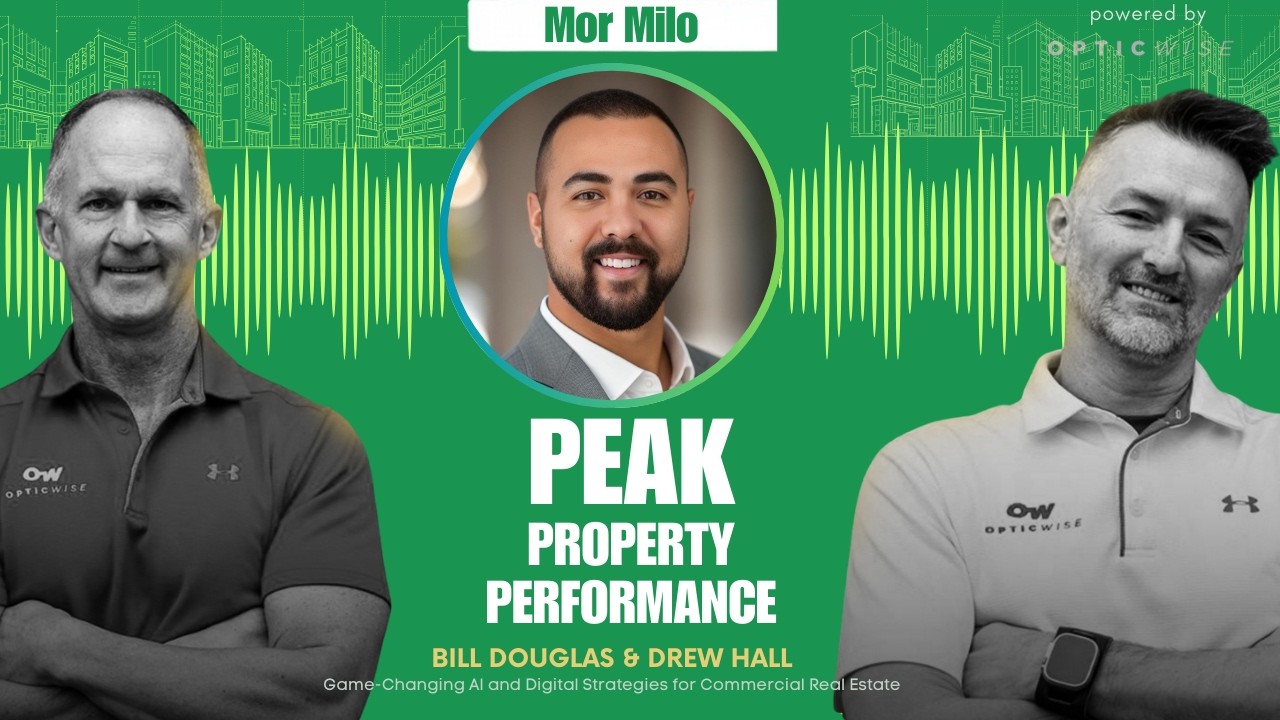
In the ever-evolving landscape of commercial real estate (CRE), the notion that capital is hard to come by is being challenged by a fundamental shift towards leveraging data and digital infrastructure. As we explored in our latest Peak Property Performance® podcast episode, “Reducing Risk and Friction with Better Data in Real Estate Investing,” the real barrier isn’t a scarcity of capital; it’s the opacity of data and the inefficiencies in how deals are structured and communicated. The episode dives deep into the dynamics of CRE financing, featuring insights from our special guest, Mor Milo. To get the full picture, listen to the full episode.
The Evolution of Real Estate Capital Markets
Real estate financing has traditionally been a realm shrouded in secrecy, where deals were often made behind closed doors. This model relied heavily on established relationships and track records, where the quality of a pro forma was more telling than any marketing pitch. As Mor Milo explains, “Up until maybe the last 15 years or so, deals have happened behind closed doors. Millions and billions of dollars is changing hands, and it didn't require a presence of a brand.” However, the landscape is shifting dramatically.
With the rise of social media and digital platforms, the marketplace has become increasingly crowded. Operators have now been compelled to build brands and establish online presences to attract and retain investor interest. This digital evolution of the marketplace has made transparency and data-driven decision-making not just advantageous, but necessary. “Operators that are full court press into technology, into marketing, into data, into systems, are seeing results,” says Milo.
This shift has been fueled by a dual force: the saturation of operators who have garnered capital through digital means and the changing nature of investor expectations. Investors now demand more visibility and comparability in their investment choices, challenging operators to provide standardized, comparable data rather than just narratives.
Understanding Retail vs. Institutional Investors
In the episode, we break down the critical distinctions between retail and institutional investors in CRE. Retail investors, often individuals or family offices, are becoming more prominent in the investment landscape as new regulatory vehicles expand access beyond traditional accredited investors. This shift is effectively democratizing the market, allowing a broader base of investors to participate in CRE deals.
Mor Milo emphasizes the importance of understanding these dynamics: “You're talking about the vast majority of Americans now being available as investors. It's a six X expansion.” This expansion is reshaping how operators approach capital raising, requiring them to cater to the needs and expectations of a more diverse investor pool.
For operators to succeed, they must adapt to this new reality by embracing data-driven strategies that ensure transparency and build trust among potential investors. This involves not only crafting compelling narratives but also providing the necessary data that allows investors to make informed decisions.
Leveraging Data for Brand Building in Real Estate
The podcast delves into how operators are now leveraging data and digital tools to enhance their brand building and investor relations efforts. Unlike the past, where a simple track record could suffice, today's operators must engage in consistent outreach and relationship-building activities.
Mor Milo explains, “Most operations in the real estate space, when it comes to investor relations, are kind of just... We picked up the phone once or twice, we sent out a couple emails, we have our newsletter. Nothing is tracked.” In an environment inundated with information, structured and consistent communication is key to standing out.
Operators are increasingly adopting methodologies akin to those used by Fortune 500 companies, systematizing their processes to nurture relationships from initial contact to active partnership. This shift not only helps in building a robust brand but also ensures that operators can effectively manage and leverage the data they collect to optimize their strategies.
“In order for you to break through that noise, you have to systematize your process associated with taking a stranger, building a relationship, and then turning them into an active partner that does business with you.”, Mor Milo
For those looking to dive deeper into how these changes are impacting the CRE landscape, listen to the full episode and join us as we continue to explore the ways data and digital infrastructure are shaping the future of real estate investing.
Leveraging Data for Brand Building in Real Estate
In today’s competitive real estate market, creating a compelling brand has become a necessity rather than a luxury. As Mor Milo highlighted in our podcast, "Operators are leveraging new tools and quantitative data to do more brand building." The shift isn't just about adopting modern platforms; it's about using data strategically to foster deeper connections with potential investors. Data empowers operators to craft narratives that resonate emotionally while being grounded in quantifiable metrics.
Many investors, particularly retail ones, are inundated with information. As Moor puts it, "Retail investors, whether accredited or non-accredited, buy with their emotions and justify with logic." Therefore, operators must systematize their processes to transform strangers into partners. This involves consistent and meaningful engagement, which is facilitated by data-driven insights.
Operators who succeed in this environment are those who consistently keep their content in front of potential investors and track every interaction. This approach not only builds trust but also increases the likelihood of capital commitments. The future of real estate investing lies in the hands of those who can master the art of data-driven relationship building.
Standardizing Deal Data for Better Transparency
Transparency isn't just a buzzword in real estate; it's a fundamental shift in how deals are structured and communicated. The transition from narrative-driven deals to data-driven ones marks a significant change. Drew Hall aptly stated, "When investors can finally compare deals apples to apples, what are the changes in underwriting, discipline, expectations?" This shift demands a new level of rigor in how deals are presented and evaluated.
Institutional investors, in particular, require precise, standardized data to make informed decisions. As Moor Milo pointed out, "If you don't have good data that you can deliver, especially to the institutional guys, you're not going to be able to compete." For retail investors, while relationships remain crucial, the availability of solid data has become a baseline expectation.
Creating a standardized platform for deal data is the next logical step. This involves developing tools that allow investors to seamlessly compare offerings, thereby reducing friction and increasing confidence in their investment choices. By centralizing data, we can provide the transparency needed to make informed decisions, ultimately benefiting both investors and operators.
Future Directions for Real Estate Investment Platforms
Looking ahead, the evolution of real estate investment platforms will be characterized by increased democratization and standardization. As Mor Milo explained, "Our goal is to centralize all the data in one place." This centralization will allow for a more streamlined investment process, where both accredited and non-accredited investors can participate more easily.
The introduction of regulatory frameworks like Regulation C, F, and A is paving the way for greater transparency and accountability. These frameworks require stringent auditing and reporting, which can lead to the standardization of data presentation and analysis. This is akin to how stock market data is analyzed, providing investors with a clearer picture of potential opportunities.
For operators, the future involves building robust systems that manage outreach and engagement with potential investors. As Moor Milo advises, "Build systems, build a CRM, have a repository that you can put your data into." By embracing these practices, operators can enhance their ability to attract capital, reduce friction, and ultimately achieve greater success in the market.
Actionable Takeaways for CRE Owners
The insights from our Peak Property Performance® Podcast highlight several actionable strategies for CRE owners:
- Embrace Data: Develop a data-first mindset in your operations. Utilize digital tools to collect, analyze, and present data in a way that enhances transparency and builds trust with investors.
- Build Relationships: Focus on relationship-building as a core component of your investment strategy. Use data to personalize your interactions and provide value to potential investors.
- Standardize and Centralize: Work towards creating standardized data presentations and centralized platforms to streamline the investment process. This will facilitate better decision-making and increase investor confidence.
- Invest in Systems: Establish robust systems for managing investor relations, including CRM platforms and automated communication channels. Consistency and volume in outreach are key to success.
For a deeper dive into these topics, be sure to check out our Peak Property Performance® book and explore more episodes on our Peak Property Performance® Podcast.
About OpticWise: OpticWise provides owner-controlled data & digital infrastructure for commercial real estate, from PPP Audits to portfolio-wide intelligence. See how we operate or read customer outcomes.
Peak Property Performance® Podcast
Have a story to share?
We're always looking for CRE leaders with real-world experience in data, digital infrastructure, and building operations.
Request to Be on the Show