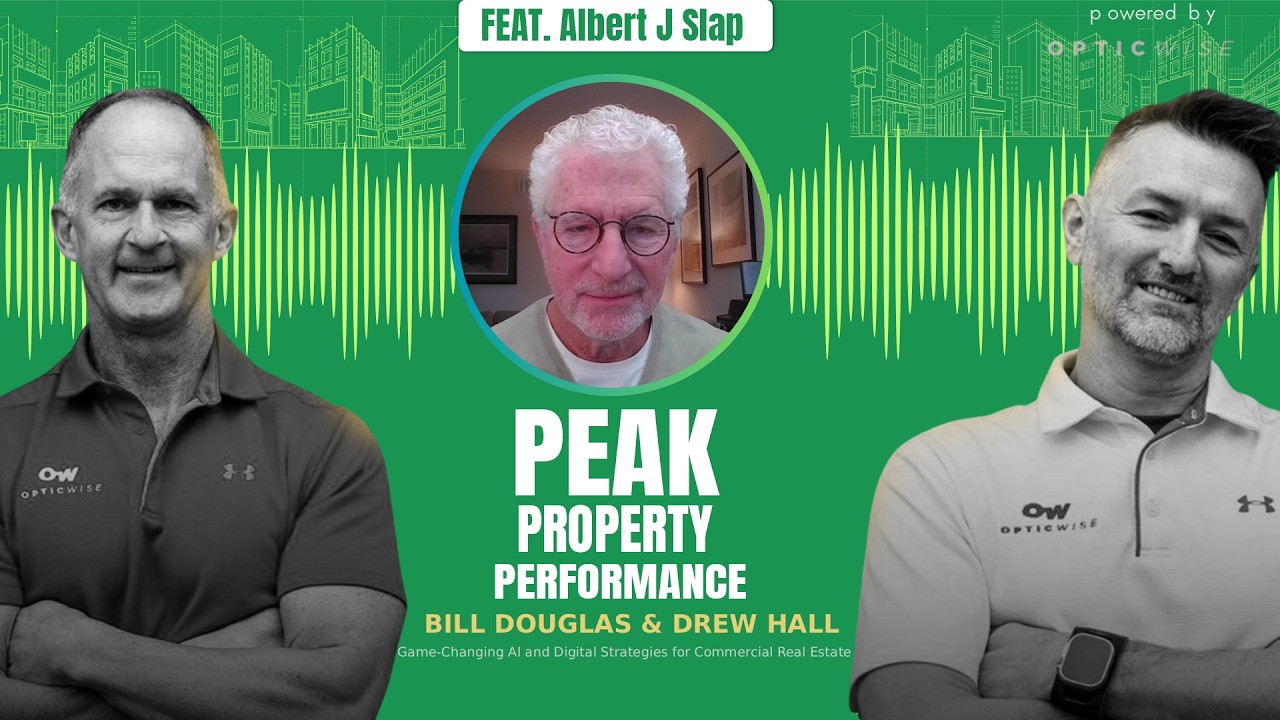
In the world of Commercial Real Estate (CRE), the unseen risks are often the most perilous. Traditional due diligence methods, once the gold standard, are quickly becoming relics in the face of modern threats like climate change and environmental hazards. This gap in risk assessment leaves property owners exposed, potentially jeopardizing their investments. The latest episode of the Peak Property Performance® Podcast tackles these concerns head-on, with insights from Albert J Slapp, a pioneer in environmental risk analysis. Slapp, along with our co-hosts Bill Douglas and Drew Hall, delves into why the CRE industry must evolve its due diligence practices or risk being blindsided by hazards that no balance sheet can reveal. Listen to the full episode for an in-depth discussion.
Challenges in Current CRE Due Diligence Practices
Albert Slapp, a seasoned environmental attorney and CEO of Risk Footprint, emphasizes that traditional due diligence tools, such as FEMA maps and standard appraisals, are outdated. These tools fail to account for building-level risks that modern technology can now illuminate. The gap in due diligence practices often leads to mispriced risks, which could result in significant financial losses if not addressed.
Slapp provides a historical context, recalling his early days as a law student where the principle of "caveat emptor" or "let the buyer beware" was a cornerstone of property law. He highlights how this principle has been overshadowed by consultancies that lack the legal rigor once associated with real estate transactions. "The due diligence standards have not kept pace with what technology can bring to us at our fingertips," Slapp notes, underscoring the need for a paradigm shift in how risks are assessed.
This gap is not just a theoretical problem. Slapp recounts how modern supercomputing, satellite imagery, and advanced modeling now allow for precise predictions of natural hazards, such as hurricanes and floods, at a building-level. Yet, many in the CRE sector, from owners to lenders, have not integrated these advancements into their due diligence processes. As a result, they remain reliant on static, generalized data that fails to capture the real and present dangers to their investments.
The Role of Standards and Organizations in CRE
While the industry as a whole may be slow to adapt, there are encouraging signs of progress. New standards, like the ASTM Property Resilience Assessment, provide a disciplined framework for comprehensive risk analysis. Slapp points out that these standards are a crucial step in ensuring that properties are not mispriced due to unseen hazards. Moreover, they offer a blueprint for how the industry can incorporate advanced risk assessments into routine due diligence.
Organizations such as the U.S. Green Building Council are also taking steps to integrate climate resilience assessments into their LEED certification process. This move indicates a growing recognition that environmental risks must be considered in property valuations and lending decisions. "It's not about predicting the future," Slapp asserts, "but understanding the risks that history and data tell us are possible."
Despite these advancements, barriers remain. Slapp explains that the cost of adopting new models and data, along with industry inertia, often impedes progress. Many stakeholders, from property owners to lenders, are hesitant to embrace these new standards due to perceived costs or the fear of uncovering issues that could affect property values. However, Slapp argues that the benefits of a more robust risk assessment process far outweigh the costs, offering greater protection and potentially lower insurance premiums.
Invisible Risks and Their Financial Implications
Invisible risks in CRE can manifest in various financial repercussions, from inflated cap rates to unfavorable insurance terms. Slapp shares a compelling case study of a high-end resort in Galveston, Texas. The resort, newly constructed in a storm surge zone, initially faced challenges securing favorable loan terms due to perceived flood and wind risks. However, by leveraging advanced risk modeling and assessments, the developers were able to demonstrate the building’s resilience against potential natural disasters.
The detailed assessment revealed that the resort's design mitigated potential flood damage, even in severe storm scenarios. This information allowed the developers to secure better loan terms and lower insurance premiums, directly translating into financial savings. "The kind of due diligence that is advanced can significantly impact the financial outcomes," Slapp emphasizes, illustrating the tangible benefits of adopting comprehensive risk assessments.
Such examples highlight the importance of integrating data and digital infrastructure into due diligence processes. Without these insights, CRE stakeholders risk overlooking significant vulnerabilities that could impact their bottom line. As Slapp aptly puts it, "If you don't own your data & digital infrastructure, your vendors do." This episode serves as a clarion call for the industry to embrace data-driven decision-making to safeguard investments and capitalize on opportunities for risk mitigation.
Invisible Risks and Their Financial Implications
The financial impact of unmeasured risk in CRE is significant, often manifesting in cap rates, insurance terms, and loan conditions. Albert Slapp shares a compelling example involving a high-end resort in Galveston. The resort was transitioning from a construction loan to permanent financing, and the bank needed more detailed assessments of flood and wind risks for eight new buildings on the site.
The consulting firm engaged Risk Footprint, who conducted a thorough analysis using advanced modeling techniques. They discovered that the developer had strategically elevated the structures, minimizing damage risks from potential hurricanes. This due diligence led to improved loan terms and insurance premiums, showcasing how understanding building-level risks can yield substantial financial benefits.
"What we found in our report showed was that because the builder, the developer had done such a good job on elevating the structures... there was minimal damage. And as a result of that, they got better loan terms in terms of the pricing and better insurance premiums." - Albert Slapp
Slapp's example underscores the importance of incorporating advanced risk assessments into the CRE due diligence process. By investing in comprehensive evaluations, property owners can secure more favorable financial conditions, reducing the long-term costs associated with unforeseen natural hazards.
Data Utilization and Best Practices in CRE
While the data necessary to assess environmental risks is available, many operators in the CRE industry are hesitant to utilize it. The reluctance stems from various factors, including the fear of uncovering financial responsibilities that might necessitate immediate action. However, this approach is short-sighted and potentially costly in the long run.
Albert Slapp highlights that the ASTM Property Resilience Assessment standard is emerging as a new best practice, urging CRE operators to adopt these standards proactively. By leveraging modern technologies, property owners can perform advanced due diligence without incurring exorbitant costs.
"The data is available. I think that most of the operators, as you call them, are not taking advantage of the data... The ASTM property resilience assessment standard is the new best practice." - Albert Slapp
Embracing data-driven insights enables owners to preemptively address vulnerabilities, ensuring that their properties are resilient against environmental threats. This proactive stance not only safeguards investments but also enhances the overall value of the properties.
Architectural Considerations and Building Codes
Architectural design and building codes play a critical role in a property's resilience to environmental hazards. The recent updates to architectural standards of conduct reflect a growing awareness of these issues. Bill Douglas emphasizes the importance of integrating environmental risk assessments into the architectural design process.
An example from Philadelphia illustrates the consequences of overlooking these considerations. A high-end condo building suffered severe flooding due to a poorly positioned switchgear for its pumps during Hurricane Ida. This oversight could have been mitigated by aligning the building's design with advanced risk models available today.
Albert Slapp suggests that architects and developers must collaborate closely with environmental risk experts to identify and address potential vulnerabilities during the design phase. By doing so, they can implement cost-effective solutions that enhance a building's resilience without compromising its architectural integrity.
"They could have made the switchgear submersible too. There's a cost to that... But the fact, your point is they never considered it." - Albert Slapp
Proactively integrating resilience measures into building designs can prevent costly damages and ensure that properties remain safe and functional even during extreme weather events. This forward-thinking approach is essential for the CRE industry to remain competitive and sustainable.
Actionable Takeaways for CRE Owners
For CRE owners, navigating the complexities of environmental risks and digital infrastructure is crucial to safeguarding their investments. Here are actionable steps to enhance property resilience:
- Leverage Advanced Risk Assessments: Utilize modern technologies and standards like the ASTM Property Resilience Assessment to evaluate building-level risks comprehensively.
- Integrate Risk Considerations in Design: Work closely with architects and risk experts to incorporate resilience measures into the building design process from the outset.
- Own Your Data: Remember the reframe: "If you don't own your data & digital infrastructure, your vendors do." Ensure you have access and control over critical data insights.
- Stay Informed: Keep abreast of industry standards and best practices by engaging with resources like the Peak Property Performance® Podcast and the Peak Property Performance® book.
By adopting these strategies, CRE owners can mitigate risks, optimize financial outcomes, and enhance the long-term value of their properties. Embracing data-driven insights and proactive risk management is no longer optional but essential for thriving in today's dynamic real estate landscape.
About OpticWise: OpticWise provides owner-controlled data & digital infrastructure for commercial real estate, from PPP Audits to portfolio-wide intelligence. See how we operate or read customer outcomes.
Peak Property Performance® Podcast
Have a story to share?
We're always looking for CRE leaders with real-world experience in data, digital infrastructure, and building operations.
Request to Be on the Show