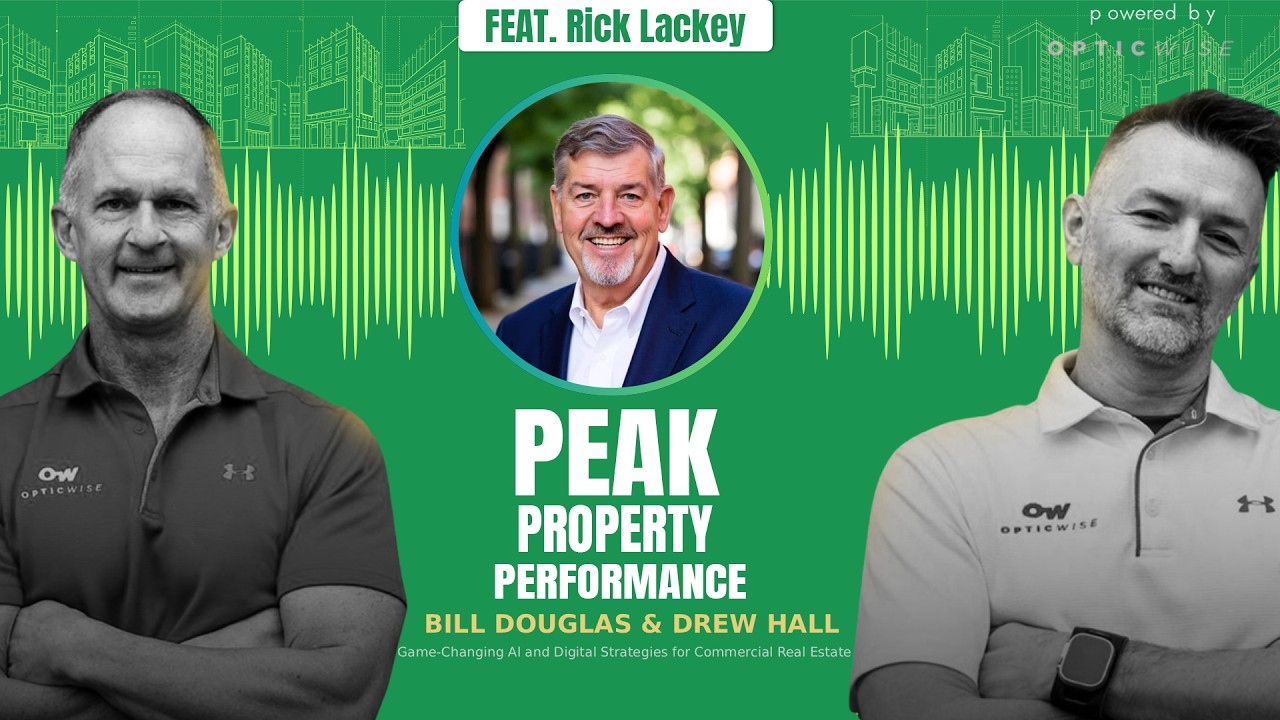
In the world of commercial real estate (CRE), there's a glaring issue that often goes unnoticed until it's too late: the disconnect between market data and the on-the-ground performance of assets. In episode 29 of the Peak Property Performance® podcast, we delve into these ownership blindspots, drawing wisdom from our guest, Rick Lackey, who lives and breathes in the deal-making trenches. As Rick points out, many owners find themselves relying on reports and conferences, but the true market signals are embedded in the actual deals where the rubber meets the road. If you don't own your data & digital infrastructure, your vendors do, a critical lesson in bridging the gap between insight and execution. To dive deeper into this discussion, listen to the full episode.
Market Intelligence and Deal Disconnects
Rick Lackey brings a wealth of experience to the table, highlighting a pervasive issue: the disparity between perceived market conditions and the reality of asset operations. As he explains, “The market always sounds better at the conferences than it does at the property level.” Owners often believe their properties are exceptions, expecting higher rents and faster leases than the market suggests. This disconnect stems from a reliance on polished reports and an aversion to facing the gritty realities of tenant feedback and deal dynamics.
Lackey emphasizes that a significant portion of these misconceptions arises from the way deals are underwritten. “Most every deal looks really good on an Excel spreadsheet,” he notes, “where things usually go wrong is people overestimating rent growth and underestimating down times.” It's a sobering reminder that while pro formas can paint a rosy picture, the real challenges emerge during operations when unpredictable variables like market saturation and operational hiccups come into play.
He illustrates the cyclical nature of these challenges with an example from his own experience. Multiple developers might see the same market drivers and propose new projects, all while underestimating competition and overestimating demand. The result? A glut of new buildings, concessions, and lower rents that can derail even the best-laid plans. As Lackey wryly observes, “There's always a bigger fool,” a nod to the inevitable cycle of optimism and correction in CRE development.
Operational Visibility in CRE Transactions
While deals may look great during the negotiation phase, it's the execution through operations where many falter. Drew Hall points out, “Deals are underwritten in spreadsheets, right? I want to add that they're executed through operations, but in our experience, that's where breakdowns happen.” The disconnect often arises because vital information about tenant needs and market conditions fails to transition from the deal-makers to the operational teams.
Rick Lackey highlights a common scenario: “The brokers who put the deal together, and the lawyers who put the deal together, and the asset managers in New York, they remember all the drivers. The why the tenant chose this building, or what their concerns were.” Yet, this knowledge rarely reaches the on-site teams responsible for delivering on those promises. It's a breakdown in communication that can lead to missed expectations and operational inefficiencies.
Bill Douglas adds to this by noting, “If there was a history through data of operational visibility, it would help with the new purchasers.” However, the challenge lies in balancing transparency with the desire to present a property in the best light. Sharing operational data might not always align with the polished narrative that sellers wish to convey. As such, the lack of comprehensive operational insight continues to be a blindspot for many CRE transactions.
Tenant Expectations and Market Cycles
The gap between expectations and reality is further compounded by tenant behavior and market cycles. As Rick Lackey explains, “Tenants are taking 40% less space every time they renew,” a trend exacerbated by the pandemic and a shift towards remote work. This flight to quality means B-class buildings are losing tenants to higher-grade properties, leaving owners scrambling to adapt.
In the multifamily sector, developers are grappling with a different set of challenges. While there's a recognized housing shortage, the most viable projects are luxury apartments, leaving a gap in attainable housing. Add unpredictable factors like tariffs on building materials, and the cycle of misalignment continues. Lackey recalls, “Mid-rise apartment complexes in Dallas that were already penciled aren't penciled anymore because the cost of lumber went up enough to where the numbers didn't work.”
These examples underscore the importance of listening to the market, not just through data but through the experiences of tenants and on-the-ground realities. As we navigate these cycles, the lesson remains clear: owning your data & digital infrastructure is not just advantageous; it's essential. For those committed to achieving Peak Property Performance®, understanding and overcoming these blindspots is a critical step.
Enhancing Tenant Relationships with Data-Driven Insights
In our conversation with Rick Lackey, we explored how crucial it is for CRE owners to move beyond financial spreadsheets and embrace a more holistic view of their properties. As Lackey pointed out, the key to success often lies in understanding tenant needs and maintaining open lines of communication. “The deal gets done, and everybody celebrates, but that's only half the story,” he said. This sentiment underscores the importance of involving operational teams early in the deal process to ensure that tenant expectations are not only understood but met effectively.
By integrating data-driven insights into daily operations, owners can anticipate tenant needs and mitigate potential issues before they escalate. This proactive approach not only enhances tenant satisfaction but also strengthens long-term relationships. Lackey emphasized, “The best owners are close to the deal. They are really close. It's not just reading reports and talking to their brokers. They've got to be, they need to know what's going on in the building and listening to the tenants themselves and adjusting fast.”
To truly own their data & digital infrastructure, CRE owners must invest in technologies that facilitate real-time data collection and analysis. This not only provides a clearer picture of tenant behavior but also allows for more informed decision-making. The culmination of these efforts leads to better tenant retention and ultimately, improved asset performance.
Bridging the Gap Between Market Data and Operational Reality
The disparity between market data and on-the-ground realities is a challenge many CRE owners face. According to Lackey, “Most every deal looks really good on an Excel spreadsheet. Where things usually go wrong is people overestimating rent growth and underestimating down times.” The solution? A robust framework that connects market insights directly to operational strategies, ensuring that assumptions made during underwriting hold true in practice.
Our PPP 5C™ framework (Clarify, Connect, Collect, Coordinate, Control) serves as a guide for owners seeking to bridge this gap. By clarifying market insights, connecting them to operational goals, collecting relevant data, coordinating across teams, and maintaining control over the entire process, owners can ensure that their assets perform at peak levels. This holistic approach to property management empowers owners to adapt quickly to changing market conditions and tenant needs.
Moreover, by owning their data & digital infrastructure, CRE owners can avoid the pitfalls of relying on outdated or misleading reports. As Lackey noted, “The real data is what's happening, what people are talking about. And by the time it gets to the report, it's old.” Proactive data management is key to staying ahead of market trends and ensuring optimal asset performance.
Actionable Steps for CRE Owners
For CRE owners looking to enhance their property performance and tenant relationships, the path forward involves active listening and data integration. “Listen, and I mean, actively listen,” Bill advised during the podcast. This involves not only hearing tenant feedback but also leveraging data to anticipate their needs and address issues promptly.
Owners should begin by evaluating their current data & digital infrastructure and identifying gaps in their information flow. Investing in technologies that facilitate real-time data collection and analysis is crucial. Furthermore, fostering a culture of collaboration between brokers, asset managers, and on-site teams ensures that valuable insights are not lost in translation.
For those seeking to deepen their understanding of these concepts, the Peak Property Performance® book offers comprehensive guidance on maximizing asset performance through strategic data integration. Additionally, tuning into the Peak Property Performance® Podcast provides ongoing insights from industry leaders navigating the complexities of CRE ownership.
Ultimately, the success of a CRE asset hinges on the owner's ability to own their data & digital infrastructure. By doing so, they can transform market insights into actionable strategies that drive tenant satisfaction and asset performance.
About OpticWise: OpticWise provides owner-controlled data & digital infrastructure for commercial real estate, from PPP Audits to portfolio-wide intelligence. See how we operate or read customer outcomes.
Peak Property Performance® Podcast
Have a story to share?
We're always looking for CRE leaders with real-world experience in data, digital infrastructure, and building operations.
Request to Be on the Show