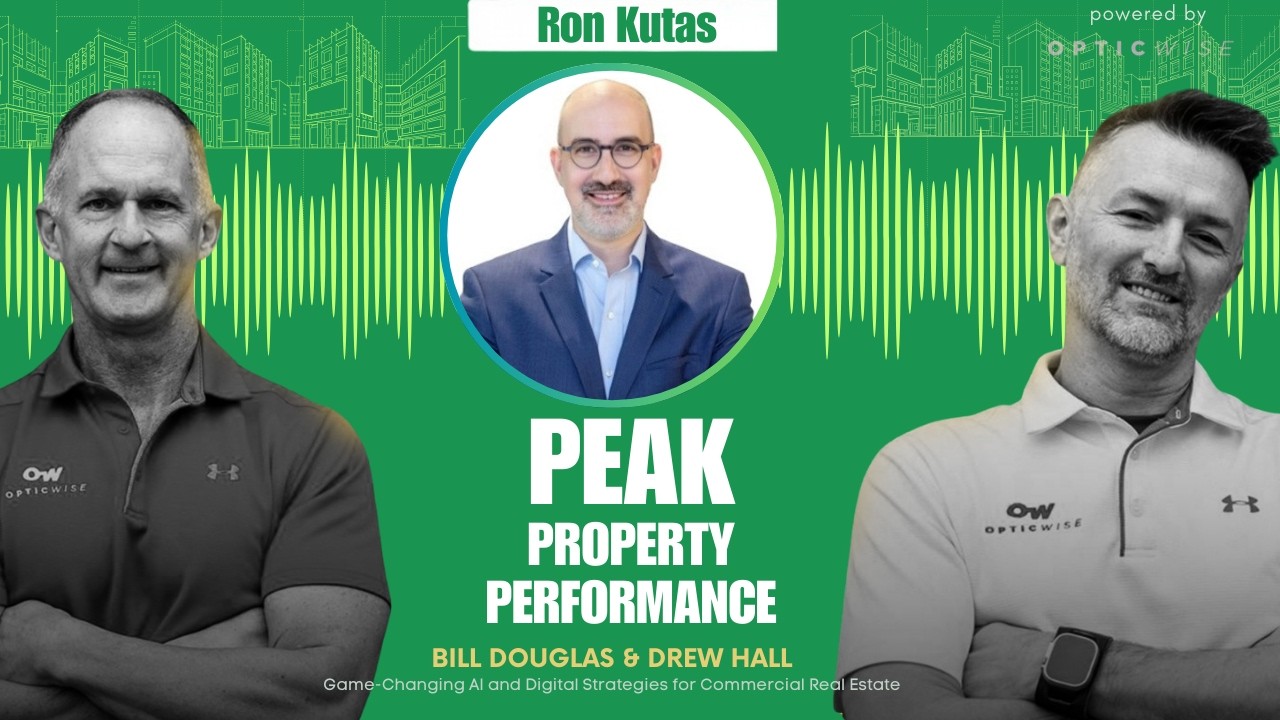
In the high-stakes world of workforce housing, where margins are razor-thin and every decision carries weight, the quality of data can make or break an operation. As we discussed in the latest episode of the Peak Property Performance® podcast, data discipline is not just a buzzword, it's a necessity. With Ron Kutas from OneWall Communities, we dove deep into how missing or inaccurate data can lead to costly mistakes and why a disciplined approach to digital infrastructure is crucial. If you're not in control of your data, your vendors are, and that's a risk no operator should be willing to take. Listen to the full episode for an in-depth look into these challenges and solutions.
Challenges of Low Margins and Data Errors
Workforce housing is often described as a "stress test" for data discipline. Ron Kutas shared insights into how low margins expose weaknesses in operational systems faster than other asset classes. "In workforce housing, it takes a really long time to unwind a mistake," Ron noted, highlighting the extended implications of data errors.
One example he gave was the costly fallout from placing an unqualified resident into a unit. The eviction process can take months, and the turnover costs are significantly higher in workforce housing compared to class A properties. Additionally, if a unit is turned over during a slow leasing season, the financial impact is even more severe.
Data integrity is equally critical in maintenance-heavy assets, where reliance on anecdotal evidence instead of solid data can lead to expensive mishaps. Ron illustrated this with a scenario where a recurring leak was "patched" rather than properly fixed, only for the issue to escalate into a major expense when the pipe eventually burst.
PropTech Overload and Custom Solutions
In today's market, the abundance of point solutions can overwhelm operators, leading to integration challenges and data fragmentation. Ron explained that many property management companies suffer from "PropTech overload," where multiple systems fail to communicate effectively, resulting in operational inefficiencies.
"We've had asset managers logging into five or six different systems, trying to compile reports just to identify a trend," Ron shared. This fragmentation forces teams to spend time piecing together data rather than focusing on problem-solving.
"What we've actually done is we've taken that upon ourselves to create our single source of truth," Ron stated, emphasizing the importance of a unified data platform. "We've partnered with another company to extract data from every technology solution we have into one place."
This approach allows OneWall Communities to streamline operations and maintain focus on community-building rather than administrative tasks. By demystifying data management, they empower their teams to act more effectively and make informed decisions.
Data Quality and Its Impact on Trust
During management transitions, the gaps in data quality often become glaringly apparent. Ron highlighted how missing demographic data can hinder operations, especially when transitioning between management companies. Surprisingly, basic information like income data is often incomplete due to either regulatory caution or system incompatibilities.
Furthermore, inaccuracies in data entry (such as incorrect rent figures) can persist without proper validation processes in place. "There are plenty of property management companies where no lease audit is getting done," Ron observed. This lack of oversight can lead to financial discrepancies and erode trust with investors and residents alike.
"A lot of these management companies on their way out... simply don't share or have a system that captures all relevant data," Ron pointed out, stressing the need for continuous data validation and transparency.
Ultimately, achieving data discipline not only supports operational efficiency but also builds trust with stakeholders. By controlling and coordinating their digital infrastructure, operators like OneWall Communities can mitigate risks and drive Peak Property Performance®.
For more insights on how data quality impacts trust and performance in workforce housing, listen to the full episode.
Standardization and the Quest for a Unified System
The conversation with Ron highlighted a key challenge within the industry: the lack of standardization across property management systems (PMS) and digital solutions. As Ron pointed out, "Every PMS has its own way of categorizing the data. They don't track things the same way." This siloed approach creates a significant hurdle for operators trying to streamline their data management.
OpticWise has been advocating for a unified data structure that can serve as a common language for all systems involved in property management. Bill noted, "If we can get the data structure the same across the board, it would go a long way to bring the industry forward." The current landscape, filled with disparate systems, often leads to inefficiencies and miscommunications.
The industry is slowly moving towards consolidation, as Bill observed, with point solutions being integrated into larger platforms. This shift is welcomed, as it promises a more cohesive and manageable approach to data and digital infrastructure. "The consolidation is welcomed," Bill added, emphasizing the need for solutions that are not just functional but also interoperable.
Prioritizing the Community Manager's Experience
Ron also discussed the innovative approach OneWall has taken to enhance the community manager's experience. By partnering with a tech company, they've prioritized creating a seamless interface that consolidates multiple systems into a single user experience. This focus allows community managers to spend less time on administrative tasks and more time engaging with residents.
"What if we could bring it all together and create the seamless workflows that align with the OneWall way, regardless of what technology is being used in the background?" Ron suggested, highlighting the importance of a user-friendly interface.
This approach not only enhances efficiency but also fosters a stronger sense of community among residents. By freeing up time for community managers, OneWall ensures they can focus on building relationships and maintaining a positive living environment.
Drew Hall, Co-Founder & Chief Architect at OpticWise, emphasized the importance of this transition, saying, "The community manager needs to get away from the desk and go talk to our residents, foster a sense of community. That's all we want."
Data as a Trust Infrastructure
Trust is a critical component in the relationship between property managers, owners, and investors. Ron shared a cautionary tale about how fragmented systems and inconsistent data can erode trust. "Before you know it, you start seeing that what we were providing in real time was different than the reports being pulled," he recalled, describing a scenario with a JV partner.
This discrepancy, often caused by system differences and outdated data, can lead to significant trust issues. "It never recovered," Ron admitted, underlining the importance of a consistent and reliable data source.
OpticWise's Bill Douglas added, "Inaccurate data is even more damaging and harmful than just incomplete data because you think you can lean on something that's there." The solution lies in creating a single source of truth, a concept that both Ron and OpticWise champion as a way to rebuild and maintain trust.
Actionable Takeaways for CRE Owners
As we wrap up our discussion, it's clear that the path forward for CRE owners lies in embracing data discipline and ownership. Here are some actionable steps to consider:
- Establish a Unified Data Platform: Invest in a system that consolidates data from various point solutions into a single, accessible platform. This will enhance transparency and improve decision-making.
- Prioritize User Experience: Streamline workflows for community managers to allow them more time to engage with residents and build a sense of community.
- Invest in Data Quality: Regular audits and validation of data can prevent costly errors and build trust with stakeholders.
- Embrace AI and Automation: Leverage technology to automate data analysis and reporting, providing real-time insights and reducing manual workload.
By implementing these strategies, CRE owners can better navigate the complexities of data and digital infrastructure, ensuring they remain in control of their operations. For more insights, explore our Peak Property Performance® book and visit the Peak Property Performance® Podcast hub for more episodes.
About OpticWise: OpticWise provides owner-controlled data & digital infrastructure for commercial real estate, from PPP Audits to portfolio-wide intelligence. See how we operate or read customer outcomes.
Peak Property Performance® Podcast
Have a story to share?
We're always looking for CRE leaders with real-world experience in data, digital infrastructure, and building operations.
Request to Be on the Show