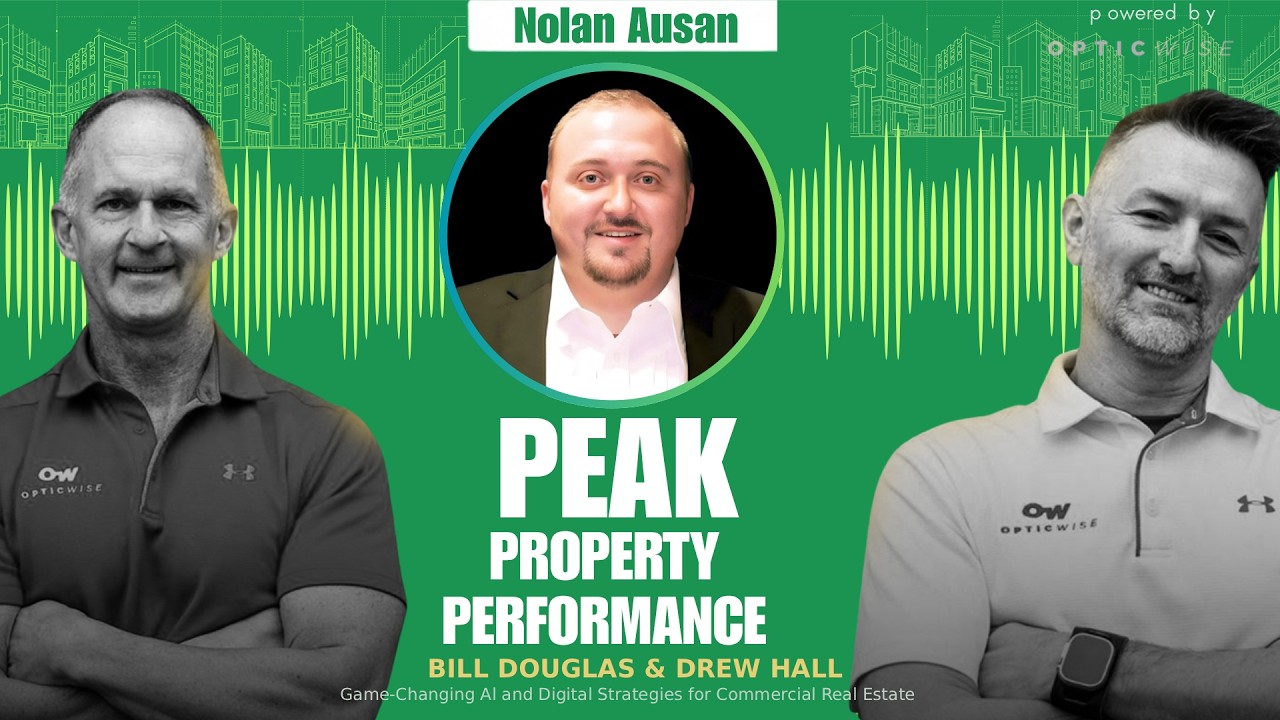
In the bustling world of commercial real estate, projects often stumble before they even get off the ground. It's a harsh reality that many developers face: the transition from design to operations is fraught with pitfalls that can derail even the most promising ventures. In our latest episode of Peak Property Performance®, we explored these challenges with Nolan Ausan, president of Rovo Industries Group. We delved into the fragmented nature of the construction process, where design decisions are made in isolation, leading to a cascade of operational headaches down the line. If you don't own your data & digital infrastructure, your vendors do. This episode is a must-listen for anyone looking to avoid the traps that can turn a dream project into a nightmare. Listen to the full episode.
Challenges in CRE: Lack of Integrated Data Models
One of the primary culprits behind project failures in commercial real estate is the lack of an integrated data model. Nolan pointed out that despite living in a digital age, the construction industry remains notoriously siloed. Each phase of a project (from pre-construction to development, and finally to construction) often operates in its own bubble, using disparate systems and data silos. This disjointed approach results in a lack of continuity, where critical information is lost or misinterpreted as it moves from one stage to the next.
The root of this problem, as Nolan explained, lies in the cultural and technological barriers within the industry. Many firms cling to outdated practices, unaware of more efficient, integrated solutions. "It's remarkable to me that we live in this digital age and there is such a siloed approach," Nolan said. The absence of a unified digital strategy not only leads to inefficiencies but can also cause costly delays and revisions.
“You spend all this time and money just to find out if the job is even possible, right? And it may not even be possible.”
To combat this, Nolan advocates for a more system-driven, scalable approach to construction, emphasizing the need for a persistent data model that carries from the initial concept all the way through operations. This cultural shift is essential for improving long-term performance and achieving Peak Property Performance® from day one.
Cultural and Technological Barriers in Construction
The construction industry is notorious for its resistance to change. Despite advancements in technology, many firms continue to operate as they always have, creating a significant barrier to the adoption of integrated data models. Nolan highlighted that this issue is twofold: a cultural reluctance to change and a technological gap where cohesive solutions are lacking.
He emphasized the importance of viewing a property as a living, evolving asset that requires consistent oversight and integration from inception through its operational life. "It's like a living being, this property. And it has an identity that starts with a piece of land and then becomes occupied with systems generating data," Nolan shared.
“Unless you're a more progressive company...very, very few are thinking in the means of how do we create this digital track that continues throughout the course of a project.”
To illustrate this point, Nolan recounted his experience in modular construction, where even in a controlled manufacturing setting, inconsistencies were rampant due to a lack of adherence to standard procedures. This example underscores the necessity for a paradigm shift where digital infrastructure is prioritized alongside physical construction to ensure consistency and efficiency.
Modular Construction: Benefits and Pitfalls
Modular construction promises a streamlined, efficient building process, yet it is not immune to the pitfalls of isolated data models and siloed processes. Nolan shared his firsthand experiences navigating these challenges, highlighting the discrepancies he faced when modular systems did not match their own documentation. This lack of standardization and communication was a significant source of frustration and inefficiency.
In his pivot from traditional construction to modular methods, Nolan expected a more predictable outcome. However, he quickly discovered that even within a manufacturing environment, variations and deviations were common. "The whole idea of working with modular offsite industry is that you get a repeatable process," he noted. Yet, without a consistent digital framework, these benefits were often lost.
To truly capitalize on the advantages of modular construction, it's essential to integrate a robust digital infrastructure from the outset. By doing so, developers can ensure that every component of the project aligns with the overall vision, minimizing costly errors and maximizing efficiency.
Bridging the Gap with AI and Digital Architects
The conversation with Nolan brought to light a critical point: the absence of digital architects in the construction process. As Bill pointed out, while we have architects for physical structures, the digital layer is often an afterthought. This oversight can lead to costly inefficiencies and miscommunication between teams. Nolan aptly described the scenario: "We're not hiring digital architects or digital engineers, and that delay in assigning responsibility can lead to avoidable problems."
To address this, Nolan suggests an agentic solution where AI models can help generalize initial concepts and provide a single source system for refinement. This approach would ensure that all stakeholders are working from a unified digital model, reducing the chances of miscommunication and costly revisions.
Incorporating AI into the process from the onset can streamline the transition from design to operations, allowing for a more cohesive project management strategy. This initiative not only enhances efficiency but also ensures that the digital infrastructure is owned by the project team, not the vendors.
Digital Infrastructure: An Asset, Not an Afterthought
Drew emphasized the need for commercial real estate owners to treat digital infrastructure as a core asset rather than an afterthought. The integration of data and digital systems can significantly enhance the property's value and operational efficiency. "It's nice when there is an honoring of the digital infrastructure as a true asset," Drew noted, highlighting the importance of a holistic approach to building management.
By viewing digital infrastructure as an integral part of the property, owners can avoid the pitfalls of siloed designs and ensure a seamless transition from one tenant to another. This proactive approach not only improves tenant satisfaction but also maximizes the return on investment for owners.
For a comprehensive guide on optimizing digital infrastructure in commercial real estate, consider exploring our Peak Property Performance® book, which offers actionable insights and strategies.
Data Ownership and Integrated Systems
Data ownership is a recurring theme in our discussions on Peak Property Performance®. If you don't own your data & digital infrastructure, your vendors do. This statement underscores the importance of having control over your project's data from the very beginning. "Without data, AI is useless," as Nolan reiterated. The foundation of successful AI implementation is a well-designed digital infrastructure.
Nolan shared his vision of a fully integrated process, emphasizing the need for standardized processes akin to those in the automotive industry. "We need to build buildings like we build cars," he suggested, advocating for a dynamic yet standardized environment that facilitates manufacturing and design.
By adopting an integrated system that spans from concept to operations, CRE owners can ensure that every phase of the project is aligned, ultimately leading to better outcomes. For more insights, tune into our Peak Property Performance® Podcast.
Actionable Takeaways for CRE Owners
As we wrap up this discussion, it's crucial for CRE owners to take proactive steps in managing their data and digital infrastructure. Here are some actionable takeaways:
- Assign a Digital Architect: Ensure that a digital architect is part of your project team from the outset to manage and integrate the digital layer effectively.
- Leverage AI for Initial Designs: Use AI models to create initial designs and refine them within a single source system to minimize miscommunication and revisions.
- Treat Digital Infrastructure as an Asset: View your property's digital infrastructure as a core asset that adds value and enhances operational efficiency.
- Own Your Data: Maintain control over your project's data to ensure seamless integration and implementation of AI and other digital solutions.
By taking these steps, CRE owners can achieve Peak Property Performance® from day one, ensuring their projects are not only successful but also sustainable in the long run.
About OpticWise: OpticWise provides owner-controlled data & digital infrastructure for commercial real estate, from PPP Audits to portfolio-wide intelligence. See how we operate or read customer outcomes.
Peak Property Performance® Podcast
Have a story to share?
We're always looking for CRE leaders with real-world experience in data, digital infrastructure, and building operations.
Request to Be on the Show