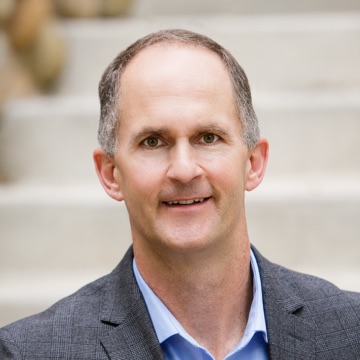
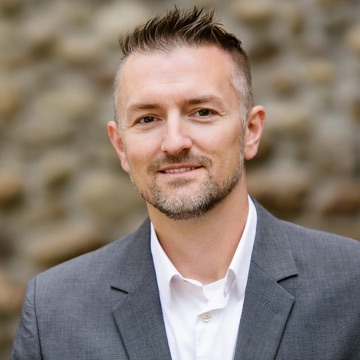
Commercial real estate likes to talk about assets, capital, leasing, and operations. But in this episode of Peak Property Performance®, Marcy Moneypenny brings the conversation back to the place performance often starts: the people making decisions every day. A property does not drift into stronger NOI, better tenant relationships, cleaner execution, or a smoother sale process by accident. It takes leaders who ask better questions, professionals who take responsibility for their own growth, and teams that stop treating each building as a static assignment. That is the thread running through Bill Douglas and Drew Hall’s conversation with Marcy, founder of The Moneypenny Collective. If commercial real estate wants better property performance, it has to build stronger operators, stronger advisors, and stronger owners of their own careers.
You can listen to the full episode here.
Career ownership is an operating discipline
Marcy’s path gives weight to the advice she offers. She has spent more than 35 years across commercial real estate, with experience in property management, construction management, leasing, landlord agency, tenant representation, capital markets collaboration, global client management, and office leadership. She described client management as her “major,” a useful phrase because it captures what many CRE careers actually require. Technical knowledge matters, but the work is relational, cross-functional, and constantly shaped by the ability to understand what clients, colleagues, tenants, and owners need before the issue becomes obvious.
Her career began in property management, taking tenant calls and learning how buildings actually behave. That foundation matters. Tenant calls are not just complaints in a queue. They are early signals about service quality, communication gaps, maintenance patterns, and whether the property team is building trust or losing it. From there, Marcy moved through firms and roles that exposed her to the full asset lifecycle. She worked alongside leasing teams, capital markets teams, investor-facing teams, and operators. By the time she ran a Denver brokerage office through the pandemic, she was not looking at CRE from one department’s view. She was seeing how all the pieces either work together or create friction.
That is why her work now starts with responsibility. The Moneypenny Collective is focused on helping people in commercial real estate build stronger careers, with particular emphasis on advancing women in the industry. But her point is not that people simply need encouragement. Her point is that professionals have to take ownership of their careers with the same seriousness owners bring to asset strategy. Waiting for a firm, a boss, or a market to create the next opportunity is risky. It puts career performance in someone else’s hands.
“The only person I’ve ever competed against has been myself.”
That line explains much of Marcy’s approach. She is not telling professionals to ignore external barriers. She is saying that confidence, visibility, communication, and the ability to ask for what you want are controllable disciplines. In the episode, she talks about helping people articulate their thoughts, make clear requests, and stop fearing the word “no.” Her phrasing is memorable: she does not hear “no.” She hears “no, not yet.” That distinction changes behavior. A flat no can make someone retreat. “Not yet” invites preparation, timing, learning, and another conversation.
The human shows up before the professional
One of the strongest parts of the conversation comes when Bill asks Marcy about something she said in the prep call: you cannot split the baby between personal and professional. In CRE, this matters because performance conversations often get narrowed too quickly. A professional is missing opportunities. A manager is struggling with communication. A broker is frustrated. A property leader feels stalled. The easy move is to treat the issue as a skill gap or a motivation problem. Marcy pushes deeper.
She starts with the human side. Where did someone grow up? Were they the oldest, youngest, or middle child? What were the family dynamics? What experiences shaped how they respond to authority, conflict, risk, feedback, or ambition? She is clear that this is not about being invasive. It is about understanding motivation and resistance. The professional pattern that shows up in a meeting often has a longer story behind it. If you do not understand that story, you may coach the symptom and miss the cause.
That has direct relevance for CRE leadership. Property management, leasing, asset management, and client service all depend on trust. A leader who treats employees as interchangeable job descriptions will miss the emotional and relational factors that affect performance. A manager who avoids hard conversations because of past experiences will create ambiguity for the team. A professional who never asks for visibility may not lack ambition; they may have learned somewhere that asking is unsafe. These are not soft issues. They affect execution, retention, succession, and client confidence.
“To me, the human shows up first. And then we get to see what an awesome professional you are.”
Bill connects this idea to work-life balance, calling it a facade. His point is not that boundaries do not matter. It is that people do not become different humans when they walk into a building, office, client meeting, or asset review. A person’s identity, responsibilities, pressures, and values come with them. Marcy agrees that work-life balance looks different depending on the person. Someone raising young children has a different reality than someone in a different life stage. The leadership lesson is simple, but often ignored: if you want better professional performance, you have to understand the person doing the work.
“We’ve always done it this way” is a performance risk
The episode also turns toward one of the larger operating problems in commercial real estate: the industry’s resistance to new ways of working. Marcy has seen enough cycles, roles, firms, and client expectations to know that the old playbook does not automatically carry forward. Markets change. Tenants change. Capital expectations change. Technology changes. Owner expectations change. Yet many teams still rely on the same habits, handoffs, assumptions, and departmental boundaries that worked in a different environment.
That resistance often hides inside competence. Experienced professionals know how to get things done. They have relationships, instincts, and pattern recognition. Those are valuable. But when experience turns into unquestioned routine, it can become a liability. A property team may keep solving the same maintenance issue manually instead of asking why it keeps happening. A leasing team may bring operations into the conversation only when a tenant issue becomes urgent. Capital markets may get involved late in the hold period, after years of decisions have already shaped the story a buyer will underwrite.
Marcy’s answer is not change for the sake of change. It is the discipline of asking why. She makes an important distinction in the conversation: asking “why” is not about questioning someone’s expertise. It is about understanding, learning, and moving the industry forward. That distinction matters because CRE can be hierarchical. Junior professionals may hesitate to ask questions. Property managers may avoid challenging a long-standing vendor process. Asset teams may inherit assumptions from prior ownership and treat them as fact. Over time, the property runs on precedent instead of clarity.
- Ask what a process is supposed to accomplish, not just who has always owned it.
- Ask whether a recurring tenant issue is a service problem, a communication problem, or a building systems problem.
- Ask whether teams are collaborating throughout the hold period or only when a refinancing, recapitalization, or sale is approaching.
- Ask what deferred maintenance is doing to future optionality, buyer confidence, and asset value.
This is where Marcy’s career development message connects directly to property performance. Professionals who take responsibility for their careers ask better questions. Teams that ask better questions expose assumptions earlier. Owners and operators who expose assumptions earlier make better decisions during the hold period. In the language of Peak Property Performance®, better performance does not come from dashboards or slogans. It comes from clearer ownership, better communication, stronger operating habits, and the willingness to challenge the practices that no longer serve the asset.
The human side of performance shows up in the building
One of Marcy’s strongest points is that career strategy cannot be reduced to title progression, compensation, or the next firm move. Those matter, but they are downstream of something more basic: the human being making the decisions. Her coaching work starts by understanding the person before diagnosing the professional challenge. That may sound soft until you connect it to property performance. Buildings are operated by people under pressure. Leasing conversations, tenant friction, budget discipline, vendor accountability, and owner reporting all improve when the people responsible for those decisions understand what drives them, what triggers them, and where they need better habits.
“You can't separate the human being from the professional.”
That line matters for CRE owners because management quality is not an abstract cultural issue. It affects renewal conversations, response times, how teams escalate problems, whether they challenge assumptions, and whether they bring owners useful information before it becomes urgent. A property manager who is afraid to ask hard questions may let vendor-controlled data & digital infrastructure drift for years. A leasing professional who does not understand tenant concerns may miss early signs of dissatisfaction. An asset manager who receives only polished reports may never see the operating patterns that are eroding NOI.
Bill connected this directly to the culture behind the Peak Property Performance® book. Work matters, but it should not become the whole identity. That distinction is not just philosophical. People who can live with clarity tend to lead with more clarity. They are less likely to hide problems, defend stale processes, or confuse busyness with progress. In an industry where many operating problems are allowed to persist because “that is how we have always done it,” healthy leadership becomes a practical operating advantage.
For owners, the takeaway is simple: do not evaluate operating teams only by whether the building is quiet. Quiet can mean stable, but it can also mean nobody is surfacing the right questions. Strong operators make the asset more legible. They help ownership see tenant experience, utilities optimization, service patterns, vendor performance, deferred decisions, and risk earlier. That is how people development becomes asset strategy.
Better questions break the 20th-century operating model
Drew asked Marcy why commercial real estate still carries so much of the “we’ve always done it this way” mindset. Her answer was candid. CRE can be slow to change. Many processes and habits were only forced into the present by the pandemic, when video calls, podcasts, and new communication formats became normal almost overnight. The deeper issue is not whether the industry can use new tools. It is whether leaders are willing to revisit the assumptions behind how they make decisions.
Marcy’s story about flying to meet a resistant professional captures the point. She was not there to criticize past success. She was there to help someone avoid becoming, in her words, “a dinosaur before your time.” That distinction matters. Experienced leaders bring judgment, relationships, market memory, and pattern recognition. Newer leaders often bring fresh questions, different communication habits, and less attachment to legacy process. The industry needs both. Progress slows when either side treats the other as a threat.
“What got you here won't get you there.”
That principle applies directly to property operations. A building may have performed well for years under one set of tenant expectations, utility costs, insurance assumptions, vendor contracts, and capital market conditions. But when those conditions change, old playbooks can become expensive. The owner may still have reports, dashboards, and monthly meetings, but the asset may lack owner-controlled data & digital infrastructure that makes the underlying performance visible and portable. You cannot optimize what you cannot see.
Marcy’s advice for introducing new ideas is useful for anyone trying to improve an asset without alienating the people who helped build its current performance. Ask questions. Honor what has worked. Invite experienced leaders to help sharpen the next version. In OpticWise language, this is the same posture we bring to a PPP 5C™ conversation. Clarify first. Do not assume the answer. Map what exists, understand who controls it, identify leakage, and then build a practical path forward.
Operate every property like it will need to be sold
One of the most actionable parts of the conversation came when Bill asked Marcy about a mindset she raised in the prep call: regardless of the expected hold period, teams should walk onto a property as if it will someday need to be sold. That does not mean operating in short-term mode. It means keeping the asset ready, legible, defensible, and improving from day one. The opposite is familiar across CRE. A team wins the assignment, stabilizes the work, and gradually shifts into maintenance mode. The property is running, but nobody is asking what would make the asset stronger if the owner had to refinance, recapitalize, or sell.
Marcy named practical examples. Bring capital markets into budget conversations before the sale process begins. Ask what they see in the building. Invite leasing and tenant representation perspectives into the operating conversation. Study what competing buildings are offering. Look at common areas, hallways, service quality, and additional revenue opportunities before the owner asks. This is not about making meetings larger. It is about giving the owner more useful operating intelligence while there is still time to act.
Her example of tenant estoppels is especially important. When a sale closes, estoppels reveal more than lease confirmation. They can show which tenants are satisfied, which ones have questions, and which ones signed despite frustration. A disciplined operator does not wait until disposition to learn that. Strong teams treat tenant sentiment as an operating signal throughout the hold period. That connects directly to occupancy, renewals, leasing confidence, and ultimately NOI.
The same logic applies to data & digital infrastructure. If the building’s systems, contracts, credentials, network diagrams, device data, and vendor dependencies are unclear during ownership, they become more painful during diligence. If you don't own your data & digital infrastructure, your vendors do. That can create friction when the owner needs clean information, defensible risk documentation, or a repeatable operating story. A PPP Review helps clarify those issues before the pressure of a transaction exposes them.
Actionable takeaways for CRE owners
For CRE owners and asset managers, Marcy’s message is not only about careers. It is about operating discipline. The people closest to the property shape how quickly problems surface, how clearly owners see the asset, and whether the team keeps improving or simply maintains what already exists. Better property performance starts with better questions, better cross-functional visibility, and a stronger standard for what “ready” means.
First, ask whether your property team is managing the asset for today’s checklist or tomorrow’s transaction. If the building had to go to market, refinance, or face lender diligence in the next six months, would your team have the operating story, tenant signals, vendor documentation, and data needed to defend value? If not, the issue is not only capital markets preparation. It is day-to-day operating visibility.
Second, bring more perspectives into the operating rhythm before there is a problem. Property management, leasing, capital markets, tenant-facing teams, IT, OT, and ownership should not live in separate conversations. IT is the brains of the company: email, property management systems, accounting, and reporting. OT is the nerves and muscles of the building: HVAC controls, access control, lighting, cameras, submeters, sensors, and the building systems that affect daily performance. You’ve got a plan for IT. We help you build a plan for OT, the tech that actually runs your buildings and drives NOI. The goal is IT + OT under an Owner Data Standard, not another disconnected tool.
Third, make career ownership part of asset ownership. Encourage professionals to ask for what they need, challenge assumptions respectfully, and understand the business beyond their department. That mindset helps teams see the building as a living operating asset, not a static assignment. It also creates the conditions for owner-controlled data & digital infrastructure to matter because people are ready to use better information when they have it.
For more conversations like this, visit the Peak Property Performance® Podcast. The best CRE leaders are not waiting for the market to make performance easier. They are building teams, operating standards, and owner-controlled capabilities that make each property more transparent, more resilient, and more valuable.
About OpticWise: OpticWise provides owner-controlled data & digital infrastructure for commercial real estate — from PPP Audits to portfolio-wide intelligence. See how we operate or read customer outcomes.
Peak Property Performance® Podcast
Have a story to share?
We're always looking for CRE leaders with real-world experience in data, digital infrastructure, and building operations.
Request to Be on the Show