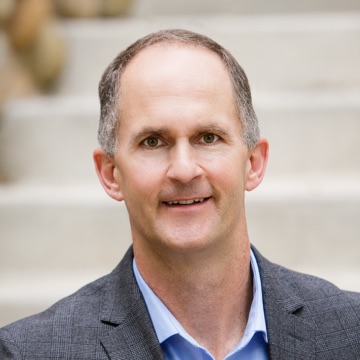
Commercial real estate does not have a technology problem. It has an adoption problem. That was the center of our conversation with Suman Gidwani on Peak Property Performance®, and it is a distinction every owner should sit with for a minute. Most portfolios already have plenty of technology: building automation systems, access control, tenant apps, meters, dashboards, work order platforms, lighting controls, Wi-Fi, cameras, sensors. The issue is not whether the tools exist. The issue is whether the people inside the organization understand why those tools matter, how they connect to daily operations, and who actually controls the data they generate. Because the reframe is still true: If you don't own your data & digital infrastructure, your vendors do.
In listen to the full episode, Bill Douglas and Drew Hall sat down with Suman Gidwani to talk about human-centered AI strategies, adoption, sustainability, organizational change, and the operational reality of innovation in commercial real estate. What emerged was a practical message for owners: the next wave of performance gains will not come from chasing the newest tool. It will come from building the internal clarity, systems, and trust required to make technology useful.
Innovation Is Happening at the Operating Level, Not in the Boardroom
One of Suman’s sharpest points was that meaningful innovation in commercial real estate is often not driven by developers. It is driven by the people closest to the building: asset managers, operating partners, engineers, energy providers, and technology teams. That should not surprise owners. Developers think in long horizons. Operators live in the daily reality of the asset. They see the tenant complaints, the comfort issues, the equipment alarms, the energy spikes, the move-ins, the odd usage patterns, and the “why is this still manual?” moments.
“Operators have the benefit of being able to do that because they’re learning from a building every single day.”
That line matters because buildings are not static investments. They are living, breathing operating environments. A building engineer dealing with a temperamental HVAC system every morning has a very different understanding of performance than an executive reviewing quarterly reports. The operating team sees friction first. They also see opportunity first. The question is whether ownership has created the structure for those observations to become decisions.
This is where Drew’s architect perspective comes in: innovation does not need to start with a massive enterprise software rollout. In fact, it usually should not. Start with one system, one building, one measurable pain point. If an HVAC system requires constant manual attention from the engineering team, that is a great place to look. If a lighting control system exists but has never been commissioned properly, that is a performance opportunity hiding in plain sight. If tenant experience complaints are tied to connectivity dead zones or access control friction, start there.
Bill brought up a real example from the field: a building audit uncovered a lighting control system that had been installed for seven years but never turned on. Once activated, that system saved roughly $70,000 in annual energy expense. Because the building had about 30% common area, more than $20,000 of that reduction went straight to the owner’s bottom line. That is not theory. That is not a trend. That is operating income recovered because someone looked under the hood and asked, “What do we already own that is not working for us?”
Digital Infrastructure Is an Asset, Not a Cost Center
Owners are right to ask about cost. Every new investment competes with other priorities: leasing, capital improvements, debt service, tenant improvements, staffing, and the constant pressure to protect NOI. But treating data & digital infrastructure as a pure expense is the wrong frame. Suman said it directly in the episode: owners should think of digital infrastructure as an asset, not a cost center. We agree completely.
That does not mean every platform deserves a blank check. It means the owner’s mindset has to shift from “What does this software cost?” to “What control, visibility, and performance does this infrastructure create?” A building’s network, sensors, systems integrations, data ownership model, and operational workflows increasingly determine whether the asset can perform in a modern market. They affect energy spend, maintenance efficiency, tenant experience, risk management, leasing differentiation, and future AI readiness.
“Once you invest in it, the upside is so much higher. What you learn from it, what you gain from it, is going to far outpace what you invested in it.”
This is also where the PPP 5C™ framework becomes useful. Owners need to Clarify the business problem first. Are we trying to reduce utility expense? Improve tenant retention? Cut manual labor? Reduce vendor dependency? Then they need to Connect the systems and stakeholders involved. That might include HVAC, lighting, access control, metering, network infrastructure, tenant-facing tools, and service providers. Next, they must Collect the right data in a usable format, not just let every vendor hold data inside separate portals.
From there, owners can Coordinate action across teams. Data sitting in a dashboard does not create value by itself. Engineers, property managers, asset managers, accounting teams, and executives need shared visibility and aligned workflows. Finally, owners must Control the infrastructure and the data model. That is the difference between owning an intelligent building and renting insight from vendors one contract at a time.
Sustainability Works Best When It Solves an Owner Problem
Sustainability conversations in commercial real estate often get trapped in the wrong language. Too many owners hear the word and immediately think of certifications, mandates, compliance costs, or expensive retrofit projects with unclear payback. But Suman brought the conversation back to a practical operating reality: buildings represent roughly 40% of U.S. carbon emissions, and most of the buildings that will define the next several decades already exist. That means the opportunity is not only in new development. It is in operating existing buildings better.
For owners, the most effective sustainability strategy is often the one that also improves the economics of the asset. Bill put it plainly during the discussion: think of sustainability as a selfish gainer. If you make the building more efficient, you spend less money. That benefits the owner. It benefits tenants. And yes, it also benefits the broader environmental picture. But the business case does not need to apologize for itself.
HVAC is a perfect example. Suman pointed to high-touch systems that require frequent troubleshooting or heavy personnel time. When a building engineer constantly has to adjust HVAC settings, respond to comfort complaints, or chase down equipment issues, the owner is paying in multiple ways: labor inefficiency, energy waste, tenant dissatisfaction, and long-term equipment strain. Better data & digital infrastructure can help identify patterns, automate repetitive adjustments, and surface issues before they become complaints.
Utilities are another obvious target. Energy is one of the biggest operating expenses in many assets, and it is also one of the clearest places where measurement changes behavior. As Suman said, you cannot manage what you do not measure. But measurement alone is not enough. Owners need systems that turn data into decisions: which equipment is running outside schedule, which tenant spaces are consuming unusually high energy, which setpoints are fighting each other, which assets are drifting from expected performance, and which vendor recommendations are actually backed by evidence.
Do you know which building systems are connected and which are isolated?
Do you own the data those systems generate?
Can your operating team act on that data without waiting on a vendor?
Are sustainability efforts tied to NOI, tenant experience, and risk reduction?
The owners who answer those questions clearly will be better positioned for AI, automation, reporting requirements, energy optimization, and tenant expectations. The owners who cannot answer them will continue buying tools without building control.
an access control system creates duplicate manual work for property management, start there. If utility bills arrive late, in inconsistent formats, with no clean way to compare usage across buildings, start there. The point is not to “transform” everything overnight. The point is to prove value in a visible way so the organization starts to believe change is possible.
Start Small, Prove It, Then Scale What Works
One of the most useful themes from the conversation was the idea of starting small. Owners often ask how fast they can move. The honest answer is: it depends. It depends on culture, internal capacity, vendor relationships, existing systems, data quality, capital planning, and the appetite for operational change. A portfolio can move quickly on paper and still stall in the field if the people expected to use the new system do not trust it.
That is why we do not recommend starting with the biggest, most complex initiative first. In the Peak Property Performance® book, we talk about the “big three plays,” but those should not be the first move for every organization. Start with something your team can see, understand, and measure. Let them break the process on a smaller initiative. Let the engineer, property manager, asset manager, and ownership team all see what worked, what did not, and what needs to change before you roll it across the portfolio.
“By starting small, by experimenting with one small piece of technology or one small part of the building, let’s prove this model out.”
That is a very practical adoption strategy. Pick one pain point. Define the desired outcome. Measure the current condition. Run a controlled pilot. Then decide whether it deserves more investment. This is where the PPP 5C™ framework becomes useful: Clarify the business problem, Connect the right systems and stakeholders, Collect the data needed to evaluate performance, Coordinate the teams responsible for action, and Control the outcome so the owner is not dependent on vendor black boxes.
For example, if you have a lighting control system that exists but is not being used properly, do not start by buying a new platform. First, find out what is installed, who has access, whether it is programmed correctly, and what data it is producing. Bill shared a real example from an audit where a seven-year-old lighting control system had never been turned on. Once activated, the building saved roughly $70,000 in annual energy expense. Because 30% of that office building was common area, more than $20,000 of that savings went directly to the owner’s bottom line. That is not theory. That is operational performance.
Sustainability Is Not a Silo. It Is an Operating Strategy.
Sustainability in commercial real estate is too often treated as a compliance category, a certification exercise, or a marketing topic. Owners hear the word and think about materials, reporting requirements, mandates, or fines. Those things matter, but they miss the larger opportunity. Sustainability is not separate from operations. It is deeply connected to cost control, tenant experience, equipment performance, risk management, and asset value.
Suman made the point plainly: buildings represent a massive share of U.S. carbon emissions, and most buildings that will exist in dense urban markets over the next several decades are already built. That means the real opportunity is not just in new construction. It is in improving the buildings we already own and operate. Retrofits, controls, automation, metering, analytics, and better operational discipline are where owners can make measurable progress.
“You can’t manage what you don’t measure. And so you need that digital infrastructure in order to collect the data that you need.”
This is where owners should reframe sustainability as a selfish gainer. If you reduce wasted energy, you reduce expense. If you improve comfort, you reduce complaints. If you detect equipment issues earlier, you reduce emergency repairs and downtime. If you understand how a system is performing, you can make better capital decisions. Yes, there may be environmental benefits. Yes, there may be regulatory benefits. But the owner also benefits directly through better operating economics.
Drew brought this back to performance with a sports analogy. Competitive swimmers do not wear caps and streamlined gear because it looks good. They do it because drag costs performance. Buildings work the same way. If a west-facing glass conference room on the 14th floor is overheating every summer afternoon, the question is not just whether tenants are uncomfortable. The question is what that condition is costing in energy, equipment strain, comfort calls, and productivity. The right data & digital infrastructure helps owners quantify the drag in the system and remove it.
What CRE Owners Should Do Next
Commercial real estate can learn a lot from other industries about adoption. Suman pointed to agile principles: decentralize decision making, iterate quickly, learn from mistakes, and bring diversified teams together. That is not jargon when you apply it to buildings. It means the engineer should have a voice. The property manager should have a voice. The asset manager, sustainability lead, IT team, and ownership group should not be operating in separate lanes with separate information.
Decentralized decision making does not mean losing control. It means giving the right people the right data so they can act faster and with more confidence. If every operational decision has to climb a ladder, the building will always move slower than the problem. But if systems are connected, data is trusted, workflows are clear, and authority is defined, teams can respond before a tenant complaint becomes a retention issue or before an equipment anomaly becomes a capital surprise.
A simple experiment can start today. Choose one building and one system. Lighting is often a good candidate. HVAC is another. Utility data is another. Establish a baseline: current cost, current usage, current complaint volume, current maintenance time, or current manual effort. Then make one targeted improvement and measure the result. Maybe that is enabling occupancy-based lighting controls. Maybe it is programming schedules correctly. Maybe it is pulling meter data into a usable format. Maybe it is documenting which vendor controls which system and whether ownership has access to the data.
Here are the takeaways for owners. First, do not wait for something to break before you care about innovation. Reactive ownership is expensive ownership. Second, avoid information overload by narrowing choices. You do not need 30 options; you need two or three well-vetted paths tied to business outcomes. Third, treat data ownership as an asset management issue, not an IT side project. If you do not control the data layer, you are negotiating from weakness. Fourth, build adoption into the plan from day one. Technology that does not get used is not infrastructure. It is shelfware.
The bigger message from this episode of the Peak Property Performance® Podcast is that performance improvement is not reserved for the largest portfolios or the newest buildings. It is available to any owner willing to clarify the problem, connect the right people and systems, collect useful data, coordinate action, and control the outcome. That is how data & digital infrastructure becomes more than a cost. It becomes a driver of Peak Property Performance®.
Bill Douglas is the CEO of OpticWise, where he leads the company's mission to help commercial real estate owners take control of their data and digital infrastructure. With over three decades of entrepreneurial experience and a track record of leading companies onto the Inc. 5000 list, Bill brings a systems-minded, owner-first approach to everything OpticWise delivers. He holds a mechanical engineering degree from Georgia Tech and is a graduate of MIT's Enterprise Forum Entrepreneurial Masters Program. Bill is the co-author of Peak Property Performance (Fast Company Press).
Drew Hall is the Founder and Chief Architect at OpticWise. He brings deep experience designing high-performance networks for demanding clients in both the commercial and federal sectors, including professional engagements with IBM and the US Department of the Interior. Drew's expertise is in extending advanced technologies to meet the unique needs of commercial real estate, and under his technical leadership, OpticWise has developed the SIC® engineering standard that powers owner-controlled data and digital infrastructure across properties. He holds a computer science degree from Baylor University and is the co-author of Peak Property Performance (Fast Company Press).
Your Next Step
Complimentary CRE Data & Digital Review Session
One building. Map who owns what, where data lives, who has permission to act on it, and where operational burden stacks up vs your KPIs.