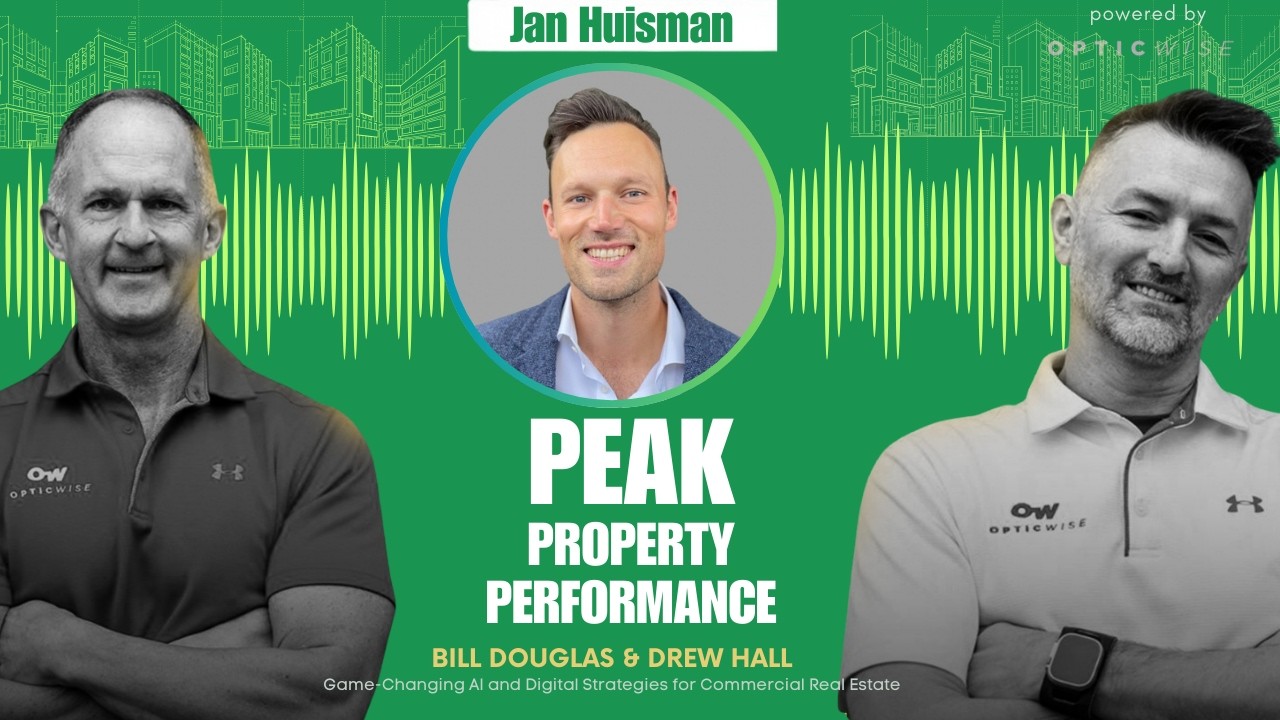
In the fast-evolving world of commercial real estate, the need for smarter, more profitable properties is more pressing than ever. As we continue to navigate the challenges of digitization and electrification, one thing becomes abundantly clear, if you don't own your data & digital infrastructure, your vendors do. In our latest episode of Peak Property Performance®, we sat down with Jan Heisman from Schneider Electric to delve into the intricacies of breaking down data silos and the powerful impact of digitization on property management. Listen to the full episode to get the complete picture.
The Architecture of Building Management Systems
The backbone of any successful digital transformation in real estate is a robust Building Management System (BMS). According to Jan Heisman, the architecture of a BMS is as crucial as the building itself. He highlights the importance of understanding the entire system rather than focusing on individual components. "Don't look at one piece of a system, but look at the complete system," he emphasizes.
For many properties, especially those built decades ago, existing BMS architecture tends to be outdated and underutilized. Jan notes that a significant amount of data is generated but not used effectively. This unused data represents missed opportunities for optimization and efficiency.
"A lot of data is being generated and not used... especially within the existing environment. There's a big opportunity with renovating them, making them more sustainable," Jan shares.
By integrating disparate data sources (from energy consumption to mechanical systems) property managers can unlock the full potential of their buildings, making informed decisions that drive sustainability and profitability.
The Silo Problem: Integrating Disparate Data
One of the most pervasive issues in building management is the existence of data silos. These silos prevent the seamless integration and analysis of data from various systems, limiting the ability to make data-driven decisions. In our conversation with Jan, he elaborates on how breaking down these silos can lead to significant improvements in both sustainability and efficiency.
Bill Douglas, our co-host, emphasizes the power of data integration: "Imagine if you control the digital infrastructure and the data that all of your property systems generated and looked across silos. You can start to triangulate or even more to the fourth, fifth, sixth system and see anomalies and correlations."
By connecting BMS data with utilities and occupancy data, property managers can uncover patterns that lead to cost savings and reduced environmental impact. This integration is not just about collecting data but coordinating it in a way that enhances control and drives Peak Property Performance®.
Electrification: Balancing Power Consumption and Grid Capacity
As we move towards an electrified future, the demand on power grids is increasing exponentially. Jan points out the challenges faced in Europe, where the push towards electrification often outpaces the available power infrastructure. This is a lesson for U.S. property owners, who can expect similar challenges in the coming years.
"We want to transform from fossil fuels to all electric, but the power that is needed to make those operations possible isn't always there," Jan explains. This creates a bottleneck where regulatory demands and tenant expectations outstrip the available power supply.
However, as Drew Hall highlights, this transition doesn't have to be overwhelming. "BMS doesn't have to be a major forklift upgrade. You can take hold of just HVAC or lighting, and step down and start to recognize some return," Drew advises. By taking incremental steps, property owners can gradually improve their buildings' efficiency without significant upfront investment.
"It's not about selling capex. It's about making the building operate better because everybody benefits, the environment, the local community, the tenants, and the owner," Bill adds, underscoring the interconnected benefits of strategic investment in digital infrastructure.
As we continue to explore the future of commercial real estate, it's crucial to remember that the path to smarter, more profitable properties lies in owning and optimizing the digital infrastructure that powers them. Stay tuned for the second half of our deep dive into breaking down data silos and achieving Peak Property Performance®.
Electrification and the Future of Utilities
As the conversation shifted to electrification, it became evident that the future of power in commercial real estate is both promising and challenging. Jan Heisman highlighted the emerging bottlenecks in power consumption and net congestion that are becoming increasingly prevalent on both sides of the Atlantic. "We want to transition from fossil fuels to all-electric systems, but the power needed isn't always there," Jan explained. This poses a significant challenge for property owners aiming to meet new regulatory standards and tenant demands for greener buildings.
Bill Douglas, drawing from his extensive experience with utilities, noted the pressure that this shift places on power generation and transmission. "We can distribute energy via electrical grids, but there are losses, especially at lower voltages," he shared. The conversation underscored the need for a balanced approach to energy distribution, considering both political and economic factors.
The dialogue further explored the importance of considering the entire lifecycle of electrification, including the environmental impact of power generation and battery disposal. As Bill thoughtfully put it, "It's a much bigger conversation than just switching to an electric car."
Integrating Systems for Improved Efficiency
Integrating disparate systems within a building is crucial for optimizing efficiency and achieving true autonomy. Drew Hall emphasized that without a unified data layer, smart buildings can fail to live up to their potential. "Most systems don't talk to each other, and most data isn't even shared," he noted, highlighting a common barrier to effective building management.
Jan Heisman elaborated on the importance of having systems like BMS, electrical, and HVAC communicate effectively. "It's crucial that these systems talk to each other for dynamic load balancing," he explained. This integration allows property managers to prioritize essential systems and make informed decisions based on real-time data.
"If we don't have a middleware to normalize data, it's almost like trying to communicate in different languages without a translator," Bill added. "Once set up, it smooths operations significantly."
For CRE owners looking to start integrating systems, Jan recommended beginning with an audit of existing setups to identify quick wins, such as ensuring lighting is shut off after hours or optimizing HVAC schedules.
ROI and the Case for Incremental Investment
The return on investment (ROI) is often the first question property owners ask when considering upgrades to their data & digital infrastructure. Jan Heisman addressed the common misconception that such investments are purely expenses. "Technology investments should be seen as assets, not expenses," he stated, emphasizing the long-term value they can bring.
Bill Douglas echoed this sentiment, advocating for a strategic approach to investment. "You don't have to do everything at once," he advised. "Consider a stair-step approach, investing incrementally to achieve sustained improvements."
As regulations tighten and utility costs rise, the pressure to modernize buildings is mounting. Jan highlighted the Dutch market's BOX regulation as an example of future-proofing requirements that are already impacting property values. By taking proactive steps now, CRE owners can enhance the sustainability and profitability of their properties, avoiding steep fines and maintaining competitive advantage.
Actionable Takeaways for CRE Owners
For commercial real estate owners looking to navigate the complexities of data & digital infrastructure, the path forward involves both strategic planning and practical execution. Start by conducting a comprehensive audit of your existing systems to identify areas for immediate improvement. Small, incremental changes can lead to significant gains in efficiency and cost savings.
Embrace the PPP 5C™ framework (Clarify, Connect, Collect, Coordinate, Control) to systematically enhance your property's performance. By clarifying your objectives and connecting disparate data sources, you can collect actionable insights that enable coordinated and controlled operations.
"Investments in digital infrastructure are not just about compliance or cutting costs," Bill emphasized. "They're about building better, more sustainable communities."
To delve deeper into these topics and explore case studies of successful digital transformations, consider exploring our Peak Property Performance® book and tuning into the latest episodes of the Peak Property Performance® Podcast.
About OpticWise: OpticWise provides owner-controlled data & digital infrastructure for commercial real estate, from PPP Audits to portfolio-wide intelligence. See how we operate or read customer outcomes.
Peak Property Performance® Podcast
Have a story to share?
We're always looking for CRE leaders with real-world experience in data, digital infrastructure, and building operations.
Request to Be on the Show