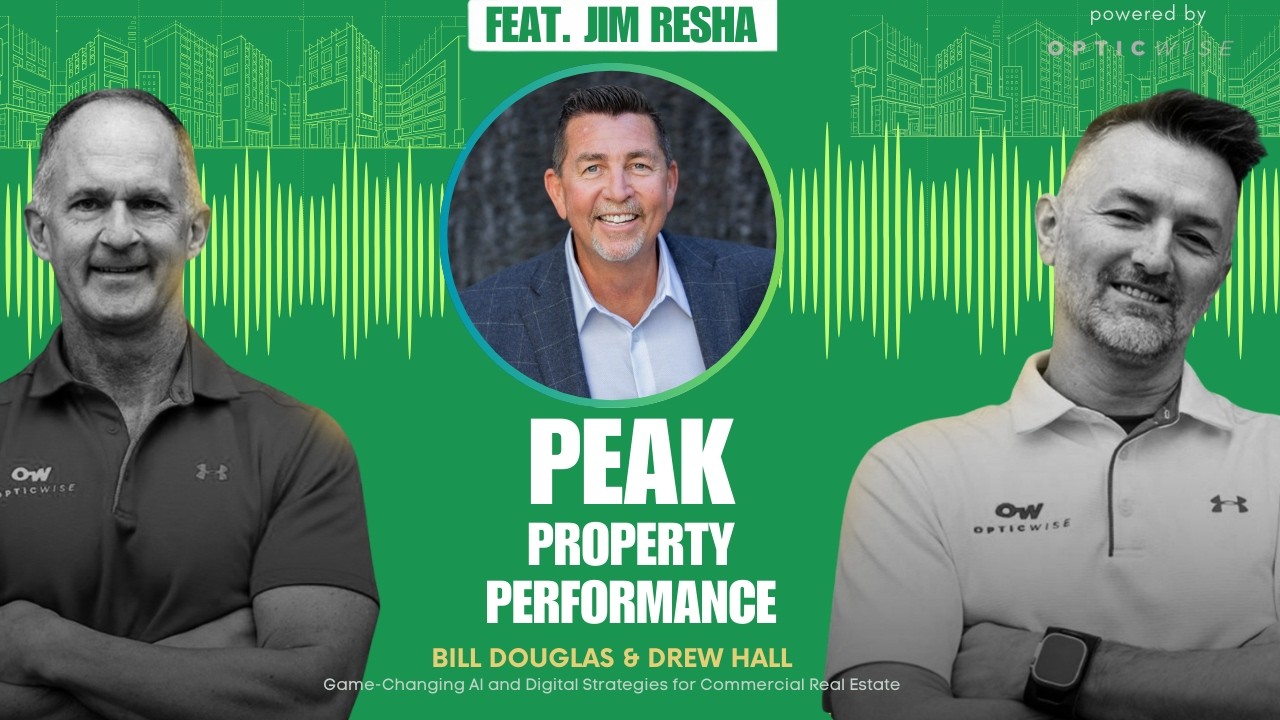
In today's rapidly evolving commercial real estate landscape, it's not just about having access to data anymore; it's about how you leverage it to create actionable insights. As Drew Hall pointed out in our latest episode of Peak Property Performance®, brokers, investors, and property managers are swimming in a sea of data, yet many struggle to transform this information into strategic advantage. We sat down with Jim Resha, a veteran in the investment sales sector, to dissect how digital discipline and technology audits are reshaping the industry. If you're not owning your data and digital infrastructure, your vendors likely are, and this episode deep dives into why that needs to change. Listen to the full episode.
The Importance of Data in Real Estate
Drew Hall kicked off the discussion by highlighting a crucial shift in the industry: the democratization of data. "In today's world, clients have access to most of the same data that brokers have had access to for a very long time," Drew noted. The challenge, however, lies not in accessing this information but in interpreting it effectively to guide decision-making.
Jim Resha, who has navigated the commercial real estate waters for over four decades, emphasized the transition from hoarding information to sharing and interpreting it. "Our clients have access to every piece of information that we have. Our job is to collect it, interpret it, and most importantly, be able to give it back to our clients in a way that they can do something with it," he explained. This shift necessitates a new role for brokers as trusted advisors, capable of turning raw data into actionable strategy.
This is where the 5C™ framework (Clarify, Connect, Collect, Coordinate, Control) comes into play. It offers a structured approach to managing the deluge of information, ensuring that brokers, investors, and property managers don't just collect data but also use it to enhance asset performance and strategic planning.
Conducting a Digital Infrastructure Audit
As Jim Resha shared his journey towards auditing his tech stack, it became clear that this practice is a game-changer for optimizing operations. "I have a CRM, and I use AI for this, and I use this program for this," Jim recounted. But he asked himself, "Am I using what I'm paying for to the best I can?" This introspection led to a comprehensive audit of his digital tools, aimed at maximizing their utility and aligning them with strategic goals.
By formalizing and auditing his technology stack, Jim was able to develop an operations manual for his team, detailing the purpose and usage of each tool. This initiative not only streamlined processes but also enhanced the overall efficiency of his operations. "It's helped me put together kind of an operation manual for the rest of the team that says, hey, our CRM, this is what we need to do," Jim explained, underscoring the importance of consistency and clarity in utilizing digital tools.
Drew Hall echoed the significance of such audits, stating, "It's a major premise of the book, to own and control your data and your digital infrastructure." For commercial real estate owners, similar audits can reveal opportunities for operational improvements, cost savings, and revenue generation, ultimately transforming technology from an expense into a valuable asset.
Enhancing Asset Value with Technology
Jim Resha shed light on how technology can directly impact asset valuation and marketability. When preparing properties for sale, a key focus is on benchmarking performance against competitors. "Where are rents compared to its competition? What needs to be done to get them closer to market rent?" Jim asked, illustrating the role of data in identifying and addressing gaps in property performance.
He recounted a scenario where a property owner faced challenges due to under-market rents and deferred maintenance. By leveraging data, Jim was able to present a clear picture of the property's current value versus its potential, guiding the owner on whether to invest in improvements or consider other strategic options.
Moreover, Jim emphasized the importance of tailoring property presentations to potential buyers. By understanding the buyer's profile and investment criteria, brokers can align property data and narratives to attract the right audience. "In order to do that, we've gotta look at your building and say, hey, this is where it is, this is what it's going to take to get it to stabilize," Jim advised, highlighting the strategic use of data in crafting compelling property stories.
Bill Douglas added another dimension to the conversation by asking about the role of building operations data in transactions. The integration of building automation systems and management tools can provide buyers with a clearer picture of operational efficiency, ultimately influencing purchase decisions. "Are you seeing a notable increase or an improvement in those types of data that helps drive improved success in the buy-sell process?" Bill inquired, sparking a discussion on the evolving expectations of data transparency in real estate.
"Our clients have access to every piece of information that we have. Our job is to collect it, interpret it, and most importantly, be able to give it back to our clients in a way that they can do something with it." - Jim Resha
"It's a major premise of the book, to own and control your data and your digital infrastructure." - Drew Hall
Leveraging Technology for Strategic Investment
Jim Resha provided invaluable insights into how technology can be leveraged for strategic investment. "The most important thing I need to be doing is talking to people about their real estate investment strategy," Jim explained. He emphasized that any task not directly contributing to this goal should be offloaded to technology or virtual assistants, allowing him to focus on core strategic conversations.
However, Jim also cautioned against complete abdication of responsibilities. "There's a certain piece of the process...that I have to say, I need to own that part," he noted. For example, when preparing a property valuation, it's crucial to personally handle the final review to ensure preparedness for client discussions. This balanced approach highlights the importance of using technology to streamline operations without sacrificing personal engagement and expertise.
This strategic use of technology aligns with the PPP 5C™ framework. By clarifying goals and connecting with the right tools, investors can collect essential data, coordinate strategies, and maintain control over their portfolios. It's about enhancing operational efficiency while preserving the human element that builds trust and drives successful transactions.
Enhancing Asset Value with Technology
Drew Hall expanded the conversation by exploring how digital infrastructure impacts asset value. "When you bring properties to market, what's typically missing from a data perspective that creates friction for buyers?" Drew asked. Jim's response was enlightening, pointing to a lack of data-driven decision-making in setting rental prices and improving property operations.
"Sometimes it's operations, sometimes it's deferred maintenance, sometimes it's just educating," Jim shared. He emphasized that understanding market trends and utilizing data can significantly enhance a property's value. For instance, failing to adjust rents in line with market conditions can cause a property to underperform, reducing its appeal to potential buyers.
Jim also highlighted the importance of tailoring property presentations to potential buyers' profiles, using data to match properties with the right investment strategies. This approach not only enhances asset value but also streamlines the sales process by aligning offerings with market demand. For more insights on how data can transform asset management, explore our Peak Property Performance® book.
Empowering Property Managers with Data Tools
The discussion then shifted to the crucial role of property managers and the need for appropriate data tools. Jim noted a concerning trend where property management decisions are increasingly delegated without adequate support. "We are seeing a lot more owners delegate technology and data choices to property management, and Lord help them, because they're not equipped for that," Jim observed.
Empowering property managers with the right tools and resources is essential for optimizing property performance. This empowerment ensures they can make informed decisions and provide accurate, timely reports without being overwhelmed by manual processes. By integrating advanced data systems, property managers can focus on strategic tasks that drive asset growth.
OpticWise has long recognized the importance of supporting property managers in this capacity. As discussed in our podcast, the right digital infrastructure can transform management practices and enhance operational efficiency. Discover more industry insights on the Peak Property Performance® Podcast.
Actionable Takeaways for CRE Owners
The insights from our discussion with Jim Resha underscore a vital truth: the successful integration of data and digital infrastructure is no longer optional, it's a necessity. By conducting regular audits of your tech stack and aligning tools with strategic goals, you can unlock your property's full potential.
Remember, if you don't own your data and digital infrastructure, your vendors do. Take proactive steps to clarify your objectives, connect with the right technologies, and maintain control over your operations. This approach not only enhances asset value but also positions you as a trusted advisor in the commercial real estate landscape.
For CRE owners, the path to success lies in balancing technology with personal expertise. Use data to streamline operations, but remain actively involved in strategic decisions. This dual approach ensures you stay prepared for client interactions and can confidently guide your investments toward peak performance.
About OpticWise: OpticWise provides owner-controlled data & digital infrastructure for commercial real estate, from PPP Audits to portfolio-wide intelligence. See how we operate or read customer outcomes.
Peak Property Performance® Podcast
Have a story to share?
We're always looking for CRE leaders with real-world experience in data, digital infrastructure, and building operations.
Request to Be on the Show