Digital Infrastructure · Vendor Independence · Data Ownership
When the OEM Owns the Brain, the Owner Doesn’t
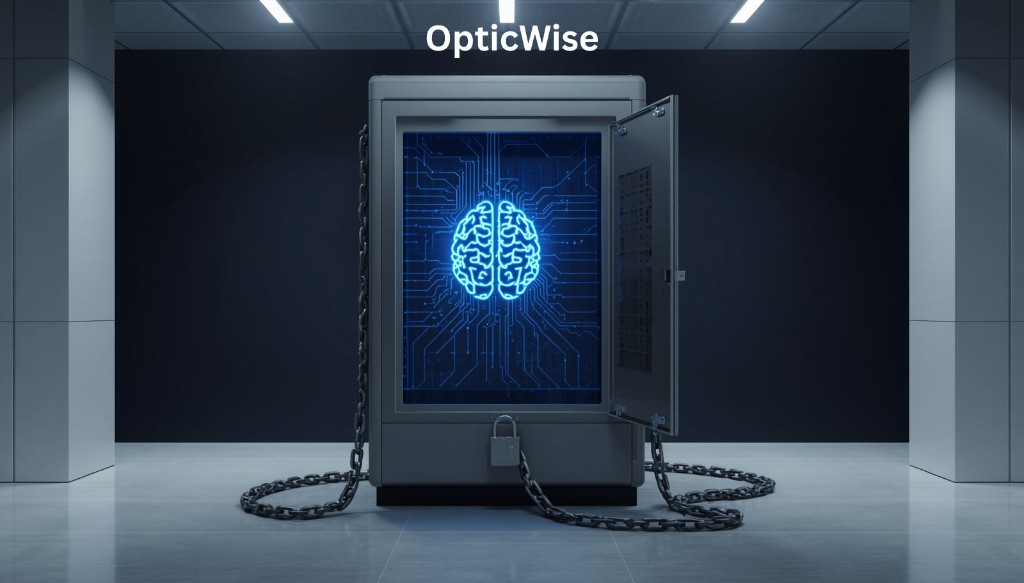
OEMs are absorbing AI brains into their platforms. The smarter the platform, the harder it is to leave. When the brain knows your portfolio and you cannot take it with you, the value just transferred to the vendor.
TL;DR: Johnson Controls announced the acquisition of Nantum AI to fold building-AI optimization into OpenBlue, one visible example of a broader pattern. BMS and controls OEMs, property platforms, dashboards, and CRMs are all bolting on AI that lives inside their environments. You cannot export the learned patterns on exit. If you don’t own your data & digital infrastructure, your vendors do, and your building’s intelligence becomes someone else’s asset. Three diligence questions for your next renewal are below; Property Brain™ / Portfolio Brain™ is the owner-controlled layer that keeps orchestration on your side of the contract.
Johnson Controls announced the acquisition of Nantum AI. The press release framed it as an enhancement to OpenBlue: AI-driven HVAC optimization, energy efficiency, real-time building operations. Read in isolation, it is a normal vendor M&A note. Read alongside the rest of this spring’s deal flow, it is something else. It is a pattern. The OEMs are absorbing the brains. That changes the question every CRE owner should be asking before they renew their next platform contract.
The pattern, plain
Five separate signals from the last month tell the same story. A major BMS and controls OEM acquires a building-AI startup and folds the optimization engine into its proprietary platform. A property management software platform launches an AI-native co-pilot that reads from its own database and only its own database. A smart-building dashboard adds an intelligent agent based on whatever data it already had. A leasing CRM bundles an AI tour qualifier into the next renewal. A leading energy management vendor announces an AI-driven optimization layer rolled into its managed service.
Every one of those announcements is good news for the vendor. Every one is a sharper version of the same risk for the owner. Because every one of those AI brains lives inside someone else’s environment, runs against data the owner cannot easily extract, and answers to permissions the owner does not control. The smarter the platform gets, the harder it is to leave.
The trap, named
The vendor sells you a platform. You spend a year configuring it. You connect ten systems. You train your team. You build dashboards. You renew. Then the vendor adds an AI brain on top. The brain reads your data, learns your patterns, and starts producing recommendations. Suddenly the value is not the dashboard. The value is the brain that knows your portfolio. Now try to switch.
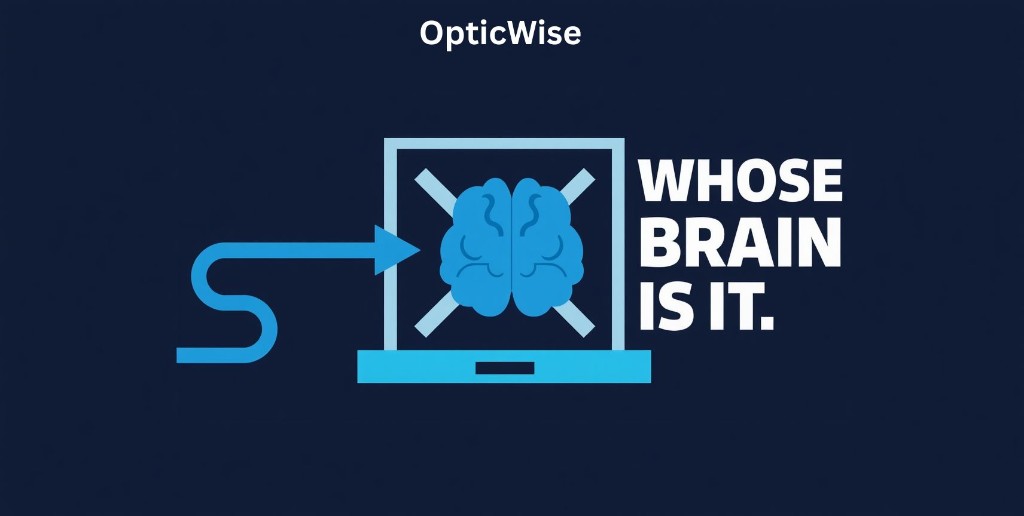
You cannot take the brain with you. You cannot easily export the patterns it learned. The institutional knowledge of how your buildings actually run is now sitting inside a vendor’s training set, on a vendor’s clock, under a vendor’s terms of service. If you don’t own your data & digital infrastructure, your vendors do, and your building’s intelligence becomes someone else’s asset.
The 3,000-mile car
The clearest way to explain this to an asset manager: legally, you own your data. Practically, you do not have it. It is like owning a car on the other side of the country. You could say you could drive to the store. No, you can’t. You do own the car. But it’s 3,000 miles away. When the AI brain is bolted to the vendor platform, the data underneath might still legally belong to the owner. But the patterns, the optimization logic, the predictive model, the institutional memory, all of that becomes the vendor’s proprietary asset. Not portable. Not transferable. Not yours.
What this means under the four moats
Per Stanford’s 2026 AI Index, the performance gap between open-source AI and frontier models shrank from roughly 8% to 1.7% in a single year. Cost to hit benchmark performance is falling 5–10x annually. The model is becoming a commodity. The owners with durable advantages will not be the ones who picked the best model. They will be the ones who built the four moats only the owner can build:
- Proprietary data, captured, normalized, owner-controlled, and portable.
- Operating workflows, the monthly and weekly plays that drive NOI, executed under the owner’s standard.
- Orchestration layer, the governed plane that decides which model, vendor, or decision engine acts under what rules.
- Institutional knowledge encoded into systems, the owner’s operating standard, made repeatable across the portfolio.
When the OEM owns the brain, the owner has none of those. The data is trapped, the workflows live in the vendor’s platform, the orchestration is the vendor’s choice, and the institutional knowledge becomes part of the vendor’s product. That is the inversion of every advantage the owner is supposed to be building.
Property Brain™ is the answer to the inversion
Property Brain™ is built specifically to sit above the platforms, not inside them. The data plane plus the trust plane stay with the owner. Any vendor’s decision engine (including the OEM’s, including the building-AI startup’s that just got acquired) can plug in under the owner’s permissions, under the owner’s audit logging, against data the owner can move anytime. Standardize once at the property level, and Property Brain™ becomes Portfolio Brain™. The intelligence compounds. Vendor changes do not reset the learning. M&A does not strand the owner. Vendor- and LLM-agnostic by design.
How to read the next renewal
Three diligence questions for every vendor renewal sheet. First: where does the AI run, and what data does it train on? Read the data export clause. Read the AI clauses you didn’t read last year. The Anthropic + Blackstone + Hellman & Friedman + Goldman Sachs announcement was a public confirmation that the largest capital allocators just decided this is worth a dedicated firm.
Second: can the AI’s outputs be replayed inside an owner-controlled environment? If the vendor cannot send you a clean stream of decisions, recommendations, and underlying signals in a portable format, the brain is not yours.
Third: who is accountable for orchestration across your other vendors? If the answer is “we are the platform,” that is a polite way of saying the vendor expects to be your orchestration layer. Decide whether you are renting one or building one.
Own your data & digital infrastructure. Operate with strategic foresight. Build for the long game.
References Cited
- Johnson Controls: “Johnson Controls acquires Nantum AI to accelerate AI-driven energy optimization and control capabilities within OpenBlue”: Johnson Controls press release (April 27, 2026)
- Blackstone: “Anthropic Partners with Blackstone, Hellman & Friedman and Goldman Sachs”: https://www.blackstone.com/news/press/anthropic-partners-with-blackstone-hellman-friedman-and-goldman-sachs-to-launch-enterprise-ai-services-firm/
- Stanford HAI: “Artificial Intelligence Index Report 2026”: https://aiindex.stanford.edu/