Digital Infrastructure · Data Centers · Building Networks
A Single AI Data Center Was Just Insured For $4 Billion. Your Building’s Wi-Fi Is Still An Amenity.
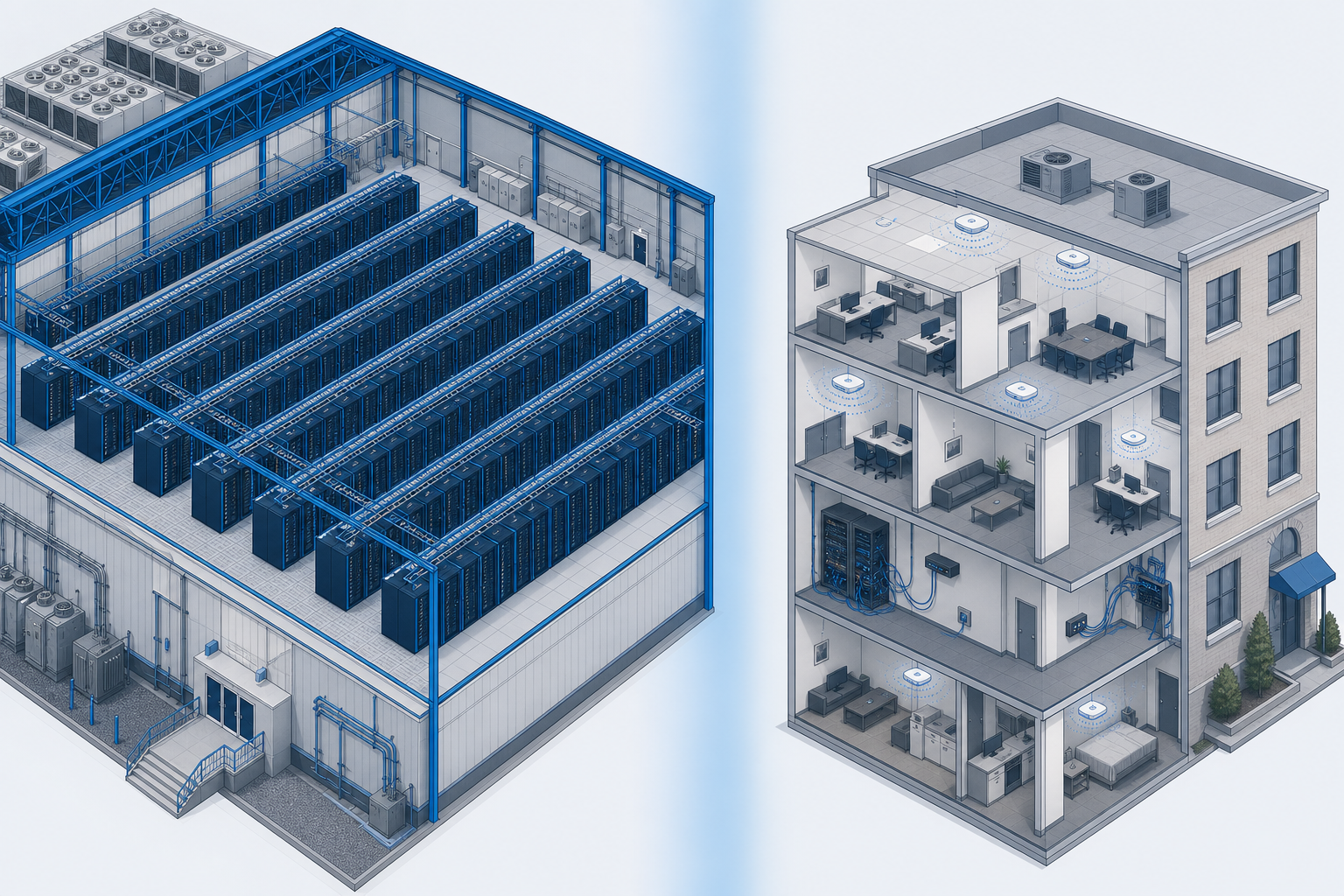
That mismatch is the story of the week in digital infrastructure, and it’s a problem for every CRE owner.
TL;DR: Five signals from one week. Meta and CBRE announced LevelUp, a multiyear program to train U.S. data-center technicians. EdgeCore secured $1.5B in construction financing for two Northern Virginia data centers. IMA placed a $4B property insurance program on a single AI data center. The U.S. government is moving toward mandatory data-center energy reporting. Switch Automation and Berkeley Lab are openly building “autonomous operations” for buildings. Hyperscalers are industrializing digital infrastructure, and every standard rolls downhill to CRE. If you don’t own your data & digital infrastructure, your vendors do.
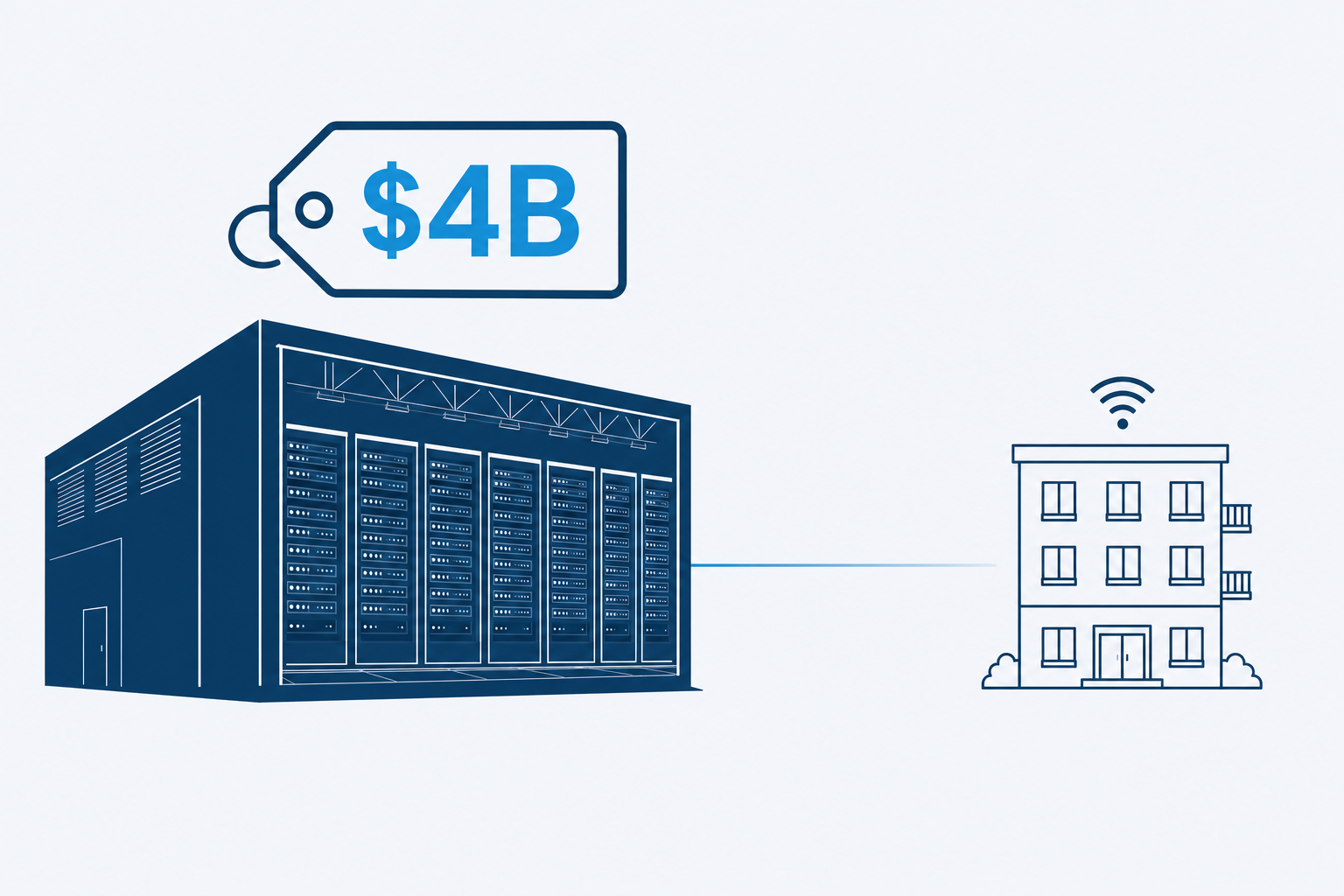
Let’s demystify what happened in CRE tech news this week, because it tells owners exactly where the bar is moving. Meta and CBRE announced LevelUp, a multiyear program to recruit and train technicians to build U.S. data centers. EdgeCore Digital Infrastructure secured $1.5 billion in construction financing for two Northern Virginia data centers. IMA Financial Group placed a $4 billion property insurance program on a single AI data center. The U.S. government is moving toward mandatory data-center energy-use reporting. And Switch Automation and Lawrence Berkeley National Laboratory released capabilities they are openly calling “autonomous operations.”
That is not five unrelated stories. That is an industry teaching itself, in public, how to operate digital infrastructure as mission-critical, with hyperscale capital, a skilled-labor pipeline, mandatory governance, and an autonomy story. Every one of those standards will roll downhill to CRE. Not in some vague “someday.” Already.
What’s the real problem we’re solving?
The hyperscalers have decided digital infrastructure is industrial-grade. They need skilled technicians, enough that Meta is building a training program. They need hyperscale capital, enough that single sites carry $4B insurance policies. They are accepting mandatory governance from the federal government. They are openly announcing autonomous operations. That is a new bar.
Every one of those standards will roll downhill to CRE. Your multifamily residents, your office tenants, your industrial users do not benchmark you against other buildings. They benchmark you against the connectivity they get at home, the apps they use at work, and the SLAs they read about in the news. When a resident’s video call on your Wi-Fi stutters, they do not grade you against other apartments. They grade you against the fiber they get at home. When an office tenant’s team cannot get to the app they need, they do not grade you against other office buildings. They grade you against AWS.
The problem for owners is arithmetic. You cannot staff a building the way Meta staffs a campus. You cannot insure a building the way IMA insured one AI data center. You cannot raise $1.5B for a single asset’s digital build. But you also cannot run the data & digital infrastructure inside your buildings the way it has historically been run, one engineer covering chillers and access control and the Wi-Fi, vendor dashboards that don’t talk to each other, a network never segmented because nobody ever asked.
Three things the hyperscalers are teaching
First, they separate architecture from operations. EdgeCore’s $1.5 billion buys design and build. Meta and CBRE’s LevelUp builds an operating workforce. Those are two different problems. Most CRE buildings collapse them into an overworked site engineer. That is how single points of failure and one-person dependencies become outage stories.
Second, they treat the data layer as the product, not the feature. Hyperscalers do not buy “AI inside the vendor platform.” They build owner-controlled data planes, then plug AI and automation in under their rules. Autonomous operations, which is where even traditional smart-building vendors are now headed, only work when the underlying data is trustworthy, portable, and governed. If it isn’t, “autonomous” just means “faster failure.”
Third, they price digital infrastructure for what it’s really worth. A $4 billion insurance policy on a single AI data center is not a normal CRE insurance line item. It is the market pricing in the cost of an outage hour. Most CRE buildings still treat connectivity as an amenity line item. That is a category error. Connectivity is a utility now, and tenants expect utility-grade reliability.
Mapping to the owner-controlled playbook
This is a Connect and Collect problem before it is a Control problem. The Peak Property Performance® 5C™ plan gives us the sequence. Connect, consolidate building connectivity onto a single, secure, segmented foundation. BoT® (Building of Things®) is the OpticWise approach: OT, IoT, tenant traffic, and guest all running on architecture the owner controls, not architecture a vendor rents back. ElasticISP® is the managed connectivity layer that gets CRE owners enterprise-grade uptime without building an enterprise network team.
Collect, capture and normalize operational data from your building systems into a warehouse you own. Coordinate, govern identity, access, lineage, and rules of use. Control, plug in Property Brain™ at the property level and Portfolio Brain™ across the portfolio, vendor- and LLM-agnostic by design.
Here is what it’s really worth. An owner-controlled data & digital infrastructure foundation costs a fraction of what hyperscale projects cost, and it protects NOI the same way they protect uptime, by keeping decisions, optionality, and risk inside the owner’s control. A portable data plane and a governed network foundation are the cheapest way to meet hyperscale-level expectations on a CRE budget.
What’s the owner move?
Data is king. Digital infrastructure is the means to get to it. The hyperscalers have been telling the market what mission-critical digital infrastructure costs and what it’s really worth. CRE owners can either translate that down to building scale, or keep paying vendors to make those decisions on their behalf.
If the last time you reviewed your building network, OT segmentation, vendor data exports, and operational data lineage was more than a year ago, the gap between your stack and the new bar is bigger than it looks on paper. If you had to segment your building network tomorrow (OT, IoT, tenant traffic, guest) would you know where to start? If your managed connectivity provider raised prices fifty percent at renewal, could you actually move? If a tenant asked you for a security and data-lineage summary of your building’s digital stack, could you produce it without a week of phone calls?
Find a better way. The move this quarter is a review of your building’s data & digital infrastructure against hyperscaler-grade principles, separate architecture from operations, map the data plane, segment the foundation. Pick one building. Apply the same rigor Meta applies to a new campus. That is the first move. The rest follows.
Own your data & digital infrastructure. Operate with strategic foresight. Build for the long game.
References Cited
- Realcomm / Business Wire: Meta and CBRE LevelUp data center technician training program: Business Wire (April 20, 2026)
- CommercialSearch: EdgeCore Digital Infrastructure $1.5B Northern Virginia financing: via Yahoo Finance
- Business Insider / Markets Insider: IMA Financial Group $4B single-site AI data center insurance program: Markets Insider
- CRE Daily: Prologis 2026 industrial leasing record and data center push: credaily.com
- Wired: U.S. government mandatory data center energy-use reporting: wired.com
- CRE Daily: Ares Management $300M energy-efficiency financing commitment: credaily.com
- Business Wire: Switch Automation and Lawrence Berkeley National Laboratory autonomous operations partnership: Business Wire (April 14, 2026)